
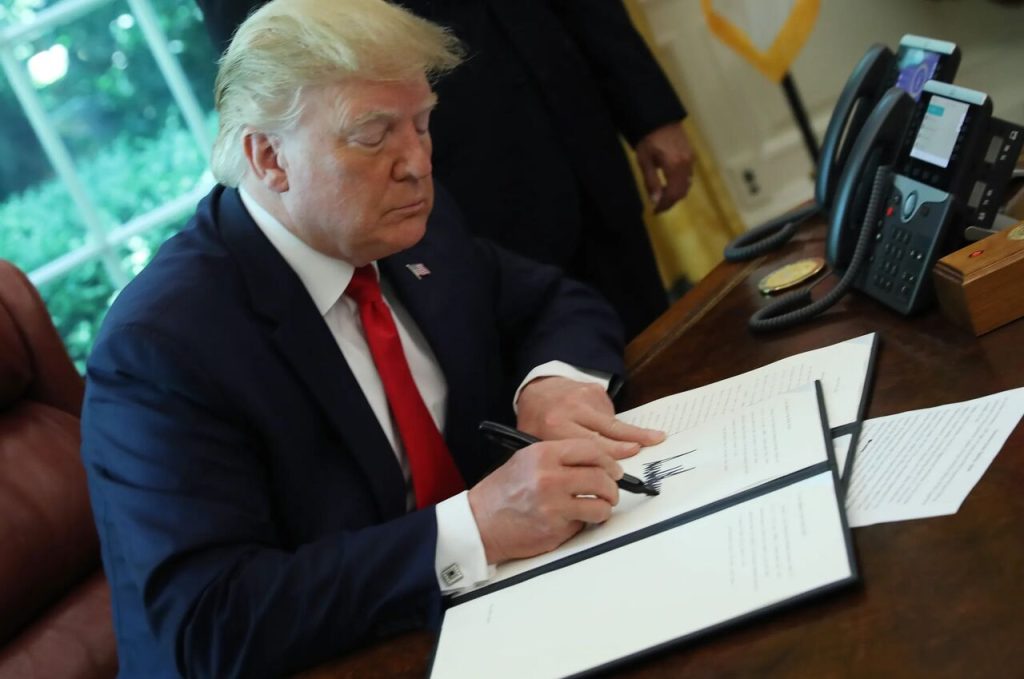
Trump signs $901 billion US defense budget.
In a lengthy statement released by the White House, Donald Trump said the legislation would advance his “peace through strength” agenda, strengthen America’s homeland security and defense industrial base, while eliminating “futile and excessive programs” that undermine the military’s morale.
The legislation is $8 billion higher than the Trump administration had requested.
Key provisions of the 3,086-page bill include $800 million for Ukraine over the next two years as part of the Ukraine Security Assistance Initiative and lifting of Caesar sanctions on Syria.
The bill allocates $600 million to Israel, including funding for joint missile defense projects such as the Iron Dome system.
The bill counters threats from China and ensures the success of projects in the Indo-Pacific region. The bill also includes $1 billion for the Taiwan Security Cooperation Initiative.
The National Defense Authorization Act allows the Department of War to collect funds from NATO allies to offset the cost of deploying U.S. forces in Eastern Europe.
The act requires the commander of U.S. European Command (EUCOM) to conduct an annual assessment of how well the U.S. and NATO are maintaining relative military superiority over Russia.
It also requires the Pentagon to assess the impact on U.S. security before reducing its forces in Europe to less than 76,000.
While Trump expressed support for the bill’s main goals, he said several parts of it raised constitutional concerns.
The president objected to provisions that he said sought to dictate U.S. positions on foreign and military affairs. The parts Trump objected to included requiring the disclosure of sensitive national security information to Congress and limiting the president’s authority over troop deployments, military resources, and executive branch management.
Trump said his administration would enforce the provisions of the law “in accordance with the President’s lawful authority” as commander in chief and chief executive.
The president added that several sections would be interpreted in a way that would not impair the president’s ability to conduct military missions, manage nuclear-related organizational structures, control criminal intelligence, or determine the timing and feasibility of informing Congress about military and diplomatic actions.