
Trump’s planned aggression towards Venezuela.
The deadly and illegal attack on Caracas on the night of January 3, which included the kidnapping of President Maduro and his wife, was planned at least six months, according to a chief of staff and a talkative president, both of whom spoke in a self-aggrandizing and arrogant manner.
However, the Venezuelan constitution, reflecting the country’s anti-colonial Bolivarian revolutionary roots, quickly allowed the government to avoid collapse. Vice President Delcy Rodriguez was immediately appointed to serve as the interim leader for three months. She continued to emphasize the government’s offer of constructive dialogue with the United States, even as Trump maintained his threats.
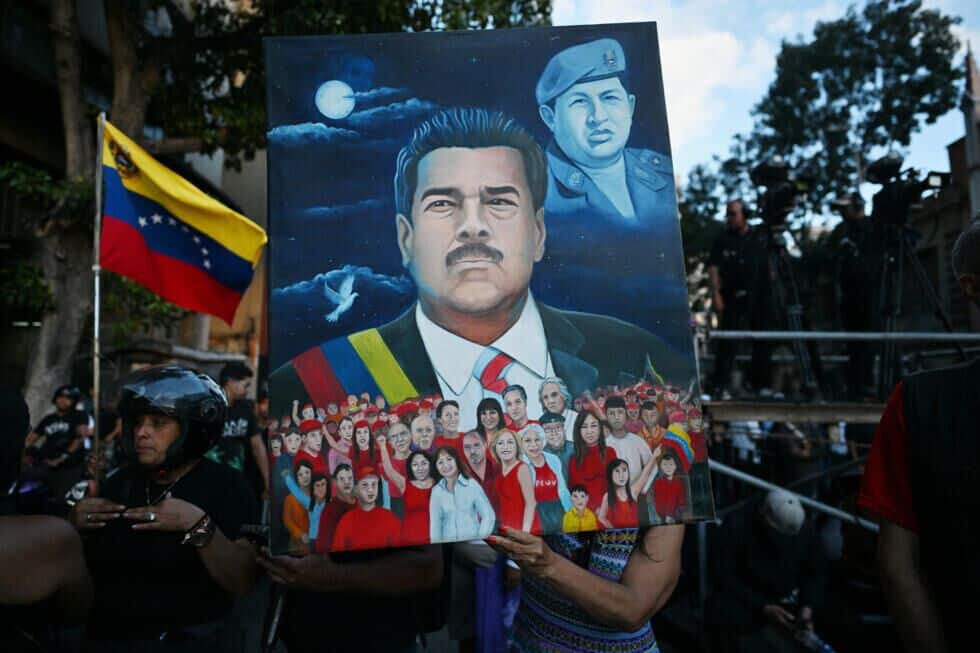
In the streets of Caracas, demonstrations were held to commemorate the fact that, in a disputed election influenced by foreign interference, Maduro had won nearly 30 percent of the vote—a figure higher than that of the current French president in the first round. As seen in other countries like Iran, Lebanon, or the occupied Palestinian territories, the criminal intervention of a foreign power often leads to greater cohesion among the people around their national consciousness and identity, which is deeply rooted in their history, education, and culture.
In Europe, most statesmen welcomed the fall of a president they deemed illegitimate, yet they all failed to address the root causes of the destruction of productive infrastructure, public services, widespread poverty, and massive migration waves. They also neglected to mention the impact of sanctions imposed by the United States, the European Union, and several other countries.
Venezuelan gold held at the Bank of England has been frozen, other assets within the European Union have also been frozen, and nearly all financial and trade transactions have faced significant obstacles. The September 2021 report from the UN Human Rights Council Special Rapporteur (A/HRC/48/59/Add.2) clearly outlined the devastating effects of these sanctions, demonstrating that they make it virtually impossible to exploit the country’s resources in a healthy, equitable, and efficient manner. Furthermore, the Venezuelan government filed a complaint with the International Criminal Court in February 2020, seeking to prosecute the effects of the sanctions as “crimes against humanity.”
International justice is, unfortunately, slow and deeply influenced by those in power. It’s worth recalling that the late Claude Chassonne, the former Socialist Minister of Foreign Affairs of France, stated on July 13, 1991, regarding the sanctions imposed on Iraq: “The continuation of the strangulation of a nation by blockade will one day be considered an unforgivable crime against humanity.” He added on April 6, 1992, “Nothing justifies the poverty and misery that we are imposing…”
It is important to remember that Venezuela, Iran, and Iraq—the three countries illegally targeted by the encroachment of U.S. Republican power—were among the five founding members of OPEC in 1960, established to challenge the dominance of the “Seven Sisters,” the Anglo-Saxon oil majors.
In 1953, the United States and Britain conspired to thwart Iran’s nationalization of oil, initially achieved in 1951. The U.S. only publicly acknowledged its mistake in overthrowing a democratically elected government in a speech by Barack Obama in Cairo in June 2009. Venezuela is estimated to have 300 billion barrels of oil reserves, though they are not easily exploitable. After a 1943 law mandated a 50-50 partnership between the government and foreign companies, Venezuela, along with other countries, participated in a global movement during the 1970s to restructure oil relations and raise prices.