
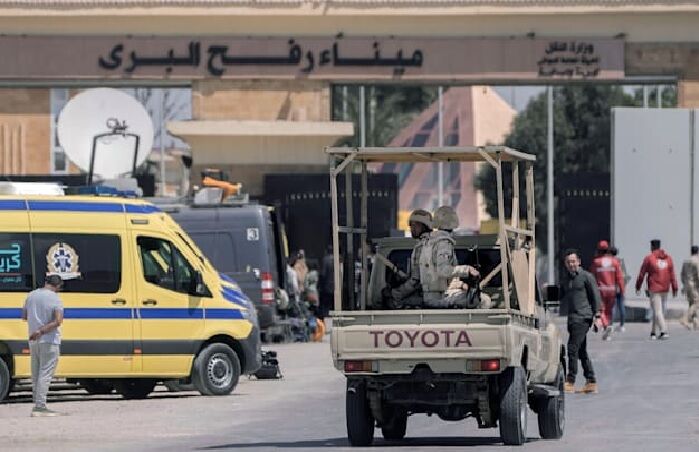
Unilateral opening of Rafah; Tel Aviv’s demand in exchange for a gas agreement with Cairo
The Ma’ariv newspaper reported that the Israeli regime plans to reopen the Rafah crossing only for the exit of Gazans after the gas agreement with Egypt on Wednesday. This move is seen in Tel Aviv as part of a broader effort to exploit the energy agreements with Cairo in the political and security arena, but in fact, it is part of the regime’s long-standing policy of systematically expelling Palestinians from their land.
According to informed sources, recent developments in Tel Aviv-Cairo relations have created a broader political infrastructure for putting pressure on Egypt, especially from Washington, to agree to the unilateral opening of the crossing after a long pause due to security considerations and regional sensitivities. This plan is in complete contradiction with the first phase of the US ceasefire agreement to end the Gaza war, which emphasizes the bilateral opening of the crossing and facilitating the entry of humanitarian aid.
In contrast, Egypt has repeatedly announced its opposition to this plan, considering it a red line. Cairo has stressed that the long-term responsibility for the people of Gaza should not be placed on Egypt’s shoulders and that it will only accept the entry of vital aid and the exit of patients.
Egyptian officials have warned that the unilateral opening of the Rafah crossing would, in practice, mean accepting the transfer of Palestinians and changing the demographic reality of the region, an issue that threatens Egypt’s national security and stability in the Sinai.
Israeli political sources claim that negotiations with Cairo are focused on striking a balance between Tel Aviv’s interests in the controlled exit of Gaza residents and Egypt’s desire to maintain the principles of sovereignty and national security. Within this framework, various models of international supervision and restrictions on the scope of movement have been examined.
This is while the people of Gaza are living in catastrophic conditions; thousands of patients need urgent transportation, but due to the closure of the crossing and the Israeli regime’s sabotage, only a few have managed to leave. Trucks carrying medicine, food, and medical equipment are stuck at the border, and the humanitarian crisis is deepening day by day. In addition, the shortage of food, medicine, and shelter, combined with the winter cold, has increased the risk of famine and deadly diseases.
The Zionist regime’s action is not only a clear violation of the ceasefire agreement and the principles of humanitarian law; it is also an attempt to change the demographic reality and undermine the right of return of the Palestinians. Arab countries and the international community have repeatedly condemned such policies; but Israel continues to pursue the path of expulsion and blockade, taking advantage of energy agreements and pressure from Washington. As a result, the Rafah crossing, instead of being a window for rescue and aid, has become a tool for expelling the people of Gaza.