
PNN – The director of the Gaza relief network outlined the biggest problems facing relief organizations in Gaza and their main priorities for helping the people.
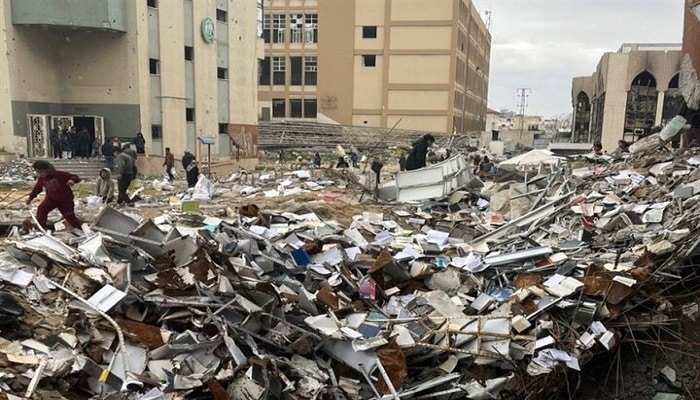
According to the report of Pakistan News Network citing the Palestinian Shahab News Agency, Amjad al-Shawa, director of the non-governmental organization relief network in Gaza, made statements emphasizing that one and a half million citizens residing in Gaza have lost their homes as a result of the Zionist regime’s attacks.
He stated: We need more than 300,000 tents to shelter the displaced, while only 60,000 tents have entered Gaza.
This senior Gaza relief official identified the biggest challenge facing the war-torn Gaza Strip as the Zionist regime’s obstruction of UNRWA aid entry, which has placed an additional burden on non-governmental organizations.
Read more:
Al Jazeera reports ongoing, systematic destruction in northern Gaza neighborhoods.
Al-Shawa announced the main priorities of non-governmental organizations as supporting female-headed households, the elderly, people with disabilities and amputations, orphans, and families living in flood-prone areas by providing equipment and shelter for the most vulnerable and needy groups.
Noting that the occupiers have destroyed most of the non-governmental organizations’ headquarters, he emphasized: We are currently continuing our activities from alternative headquarters or inside tents.
Amjad al-Shawa noted that Gaza relief organizations are suffering from reduced humanitarian funding, which directly affects their ability to respond to needs.
On the other hand, while Gaza’s Al-Awda Hospital stopped its services on Thursday night due to the complete exhaustion of fuel needed for generator operation and power outage, it announced that after receiving a limited amount of fuel from the World Health Organization, it has resumed its normal activities.
According to a statement from the Gaza government’s information office, from the beginning of the ceasefire agreement until December 21, only 394 fuel trucks have entered the Gaza Strip; whereas according to the agreement, 3,650 trucks should have entered. Statistics show that on average; only 5 fuel trucks enter Gaza daily, while according to the agreement, this figure should be 50 trucks per day. This means compliance with the agreements has been only 10%.
The severe fuel shortage has caused not only hospitals but also bakeries, water pumping stations, and sewage systems to be in a near-paralyzed state, multiplying the suffering and problems of civilians.