
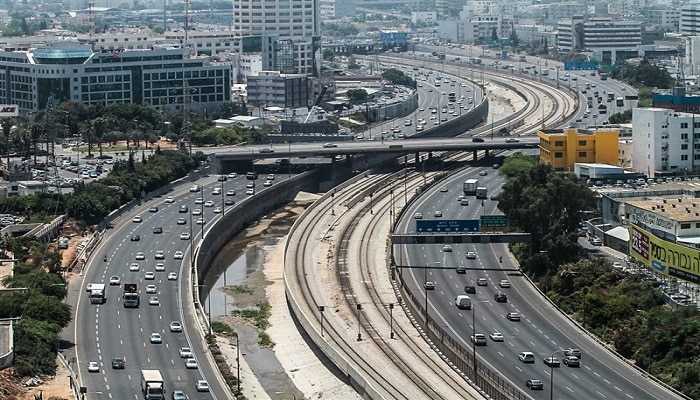
PNN – Vital points of the Israeli railway were exposed to the range of Iranian precision-guided missiles.
According to the report of Pakistan News Network, in continuation of the Zionist regime’s continuous crimes and the all-out support of the US for this regime in the region, the Zionist regime threatened to attack the Iranian railway network with airstrikes this morning, and a few hours ago, several points of our country’s railway network were hit by the regime’s projectiles.
This act, which violates international rules and targets civilian transportation infrastructure, raises the fundamental question of whether the Zionist regime itself has a secure and impenetrable rail network.
An examination of the Israeli rail network shows that, despite its claims of security, the regime has a centralized and highly vulnerable rail infrastructure. The Israeli railway network, operated by the state-owned Israel Railways, has approximately 1,138 kilometers of railway track (some sources say up to 1,500 kilometers). The network is heavily concentrated on Israel’s densely populated coastal strip, with branches to the south (Beer Sheva) and the north (Nahariya).
But the important point is the strategic role of this network in the Israeli regime’s logistical supply chain. According to expert analyses published in numerous international sources, a portion of rail freight transport in Israel is dedicated to heavy items and military equipment, and for this reason, this network is known as the regime’s “lifeline” and “national lifeline.”
It is noteworthy that the Israeli military itself is well aware of the strategic importance of this network. According to the Times of Israel, on October 8, 2025, the Israeli military announced in an official statement that it “considers the railway as a vital and strategic national infrastructure for the State of Israel” and that it has made “every effort to reopen the Ashkelon-Sderot rail line in the safest and most efficient manner possible.” This official admission by a military institution clearly demonstrates the importance and fragility of this network.
Yarkon Bridge
Strategic bottleneck and the only artery connecting the north to the south
The Yarkon Railway Bridge, located north of the Tel Aviv metropolitan area and over the Yarkon River, is the northern gateway to the vital artery of the railway network (Ayalon Corridor). From the perspective of the network topology, all railway lines extending from the northern coastal strip (including the ports of Haifa and the city of Herzliya) towards the center and south are bound to converge and cross this bridge. This geographical location has caused the Yarkon Bridge to act as a strategic bottleneck. Currently, in the event of any blockage at this bridge, the railway network is effectively divided into two completely separate parts, the north and the south, and the rail transport system has no alternative route (bypass) to bypass this point.
From an infrastructure engineering perspective, this bridge is by no means a single-track bridge, but rather designed to withstand the extremely heavy traffic of the main artery of the Ina Regime and currently consists of 4 parallel rail lines (multi-track). Despite this capacity, the traffic density at this point is so high that hundreds of passenger trains pass over it daily. Due to this heavy passenger traffic during the day, the capacity for freight trains and heavy equipment transit over the Yarkon Bridge is severely limited, and freight logistics operations are mainly postponed to midnight hours and quiet time windows of the network so that passenger traffic does not collapse.
Where is the infrastructure vulnerability?
The absolute dependence of the national network on the Yarkon Bridge is one of the biggest challenges and logistical vulnerabilities of the transportation system in this area. The simultaneous entanglement of passenger and freight traffic at this point has limited the capacity to develop the network. Precisely because of this vulnerability and to eliminate the dependence on the Yarkon Bridge and the central corridor, the Eastern Railway infrastructure project is being built. The goal of this new project is to create a parallel route east of Tel Aviv so that freight trains can travel north to south without having to cross the Yarkon River and the city center.

The Jezreel Tunnel; a Silent Artery in the Heart of the Haifa Mountains
Real Function; an East-West Corridor, Not a North-South
The Jezreel Valley Railway, contrary to popular belief, has no connection to the Haifa-Tel Aviv route, but is a completely east-west corridor in the north of the country. The line starts at the Haifa Bay on the Mediterranean coast and, passing through the agricultural and flat plains of the Jezreel region and the city of Afula, ends in the city of Beit Shean near the eastern border (near the Jordan River). The main purpose of the line is to connect the eastern interior to the western coast and does not feed the railway network in a north-south direction.
Strategic Importance; Land Transit Bridge to the East
The main importance of this rail route is in its regional logistics function as a “Land Bridge”. The cargo terminal located at the eastern end of this line (near the border) is designed to facilitate the transit of goods between the port of Haifa and Jordan, so that loads can be transferred directly from ship to train and then to the eastern border, without the need for trucks and mountain roads. Disruption of this line will stop trade/transit exchanges with the eastern border and suburban passenger traffic between the cities of the Jezreel Valley and the Haifa metropolis.
Engineering Realities; Flat Plains Instead of Mountain Tunnels
From an infrastructure engineering perspective, the new Yizre’el line, which was built in 2016 on the old historical route, runs mainly through flat plains. For this reason, unlike in mountainous areas, there are no long, strategic tunnels on this axis. The main engineering challenge in constructing this line has been the construction of dozens of bridges (nearly 40 bridges) to cross rivers, local roads, and agricultural lands in order to maintain train speeds. Therefore, the bottlenecks on this line mostly consist of bridges and grade-separated intersections.
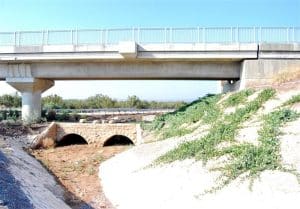
Rehovot Railway Station
Rehovot Railway Station is a very important and busy passenger station in the southern suburbs of the Tel Aviv metropolitan area. The station is located mainly on the route of suburban and intercity passenger lines (such as the Benyamina to Ashkelon axis) and, unlike hubs such as Lod, lacks heavy infrastructure for classifying and maneuvering freight trains. The main and vital function of Rehovot Station is to facilitate the daily movement of thousands of workers, employees and citizens who commute from the southern areas and satellite settlements to the commercial centers of Tel Aviv.
The strategic importance of this station lies not in the field of military or freight logistics, but in connecting scientific and technological centers to the country’s rail network. The Rekhvot station is located in the vicinity of important hubs such as the Weizmann Institute of Science, the Hebrew University’s Faculty of Agriculture, and the Tamar Science and Technology Park. For this reason, a large part of the daily passengers of this station are researchers, engineers from knowledge-based companies, medical staff from the nearby hospital (Kaplan), and students, which has turned it into a “university-travel hub.”
In terms of infrastructure, Rekhvot is a classic passenger station with covered platforms, connected bus terminals and Park and Ride systems. Due to the growth of the population of the city of Rekhvot and the development of technology companies around it, the passenger volume of this station has grown significantly in recent years. For this reason, projects have been defined and implemented to improve the local access of this station to science and technology parks, as well as to increase the passenger capacity during peak hours, in order to reduce the traffic load on the roads leading to the center of the country.

The importance of these three points (Yarkon Bridge, Yezreel Tunnel, and Rekhvot Station) is so great that the Chinese Embassy in Israel issued a notice on April 4, 2026, warning its citizens in Israel that “the Port of Haifa, Rekhvot Railway Station, Yarkon Bridge, and Yezreel Tunnel may be under threat and targeted.” This official warning from an international body clearly confirms the importance and fragility of these strategic points.
However, expert analysis shows that Israel’s rail network also has larger critical bottlenecks. According to data from the Israel Public Transport Network, the most important and critical rail stations and intersections are as follows:
- Ayalon Railway in Tel Aviv
This corridor, which includes the Savidor Center, Hashalom, and Hahagana stations, is the busiest and most vital part of Israel’s rail network. According to reports, it is the main arterial route through which all passenger and freight trains between the north and south, as well as the eastern lines to Jerusalem, inevitably pass.
Experts consider this corridor to be the narrowest bottleneck in the network, and believe that the two parallel rail lines on this route are “the only route through which trains can travel from northern Israel to the south and Jerusalem.” Specifically, the Ayalon Corridor accounts for about 80 percent of all rail travel in the country, and any disruption to it would paralyze traffic on the entire network.
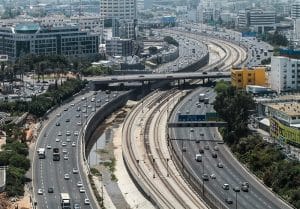
- Lod Railway Junction
Lod is the operational heart of Israel’s rail network. It is located in the center of the country, at the intersection of the north-south (Tel Aviv-Beer Sheva) and east-west (Jerusalem-Tel Aviv) lines. Lod’s importance goes beyond a simple junction; the $8.25 million Israel Railways Cyber Operations Center (CSOC) is located in the city and is responsible for monitoring, controlling, and protecting the entire rail system. The main depot, maintenance workshops, and many network control centers are also located in the area. Any disruption in Lod would affect the entire country’s supply chain.
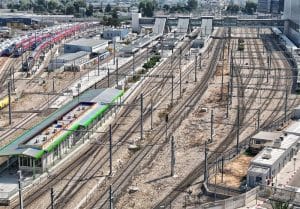
- Tel Aviv Savidor Central Station
This station is historically and structurally the heart of Israel’s rail network. Almost all major train lines running from north to south and vice versa pass through this station. With six platforms, more than any other station in Israel, and handling over 70,000 passengers daily, Savidor Central is one of the busiest rail hubs in the country and acts as a passenger distribution hub for various lines.
- Tel Aviv HaShalom Station
Although not a major hub, this station is usually the busiest station in terms of passenger numbers throughout the year. This is due to its proximity to Tel Aviv’s major commercial and administrative centers (such as the Azrieli Center) and the main base of the Israeli Armed Forces. It is a major artery for labor and military personnel.
- Haifa & Ashdod Ports
These two ports are the main gateways for goods, fuel, and military equipment into Israel. Haifa is Israel’s largest port, and a rail freight terminal on the port grounds plays a vital role in transportation logistics, with around 221,000 containers moving by rail through the port in 2018. Ashdod is also the country’s second largest port.
Rail connections to these ports are vital points for moving strategic cargo. During the Second Lebanon War in 2006, a missile hit a train garage near the port of Haifa, killing eight workers, demonstrating the vulnerability of this location.