
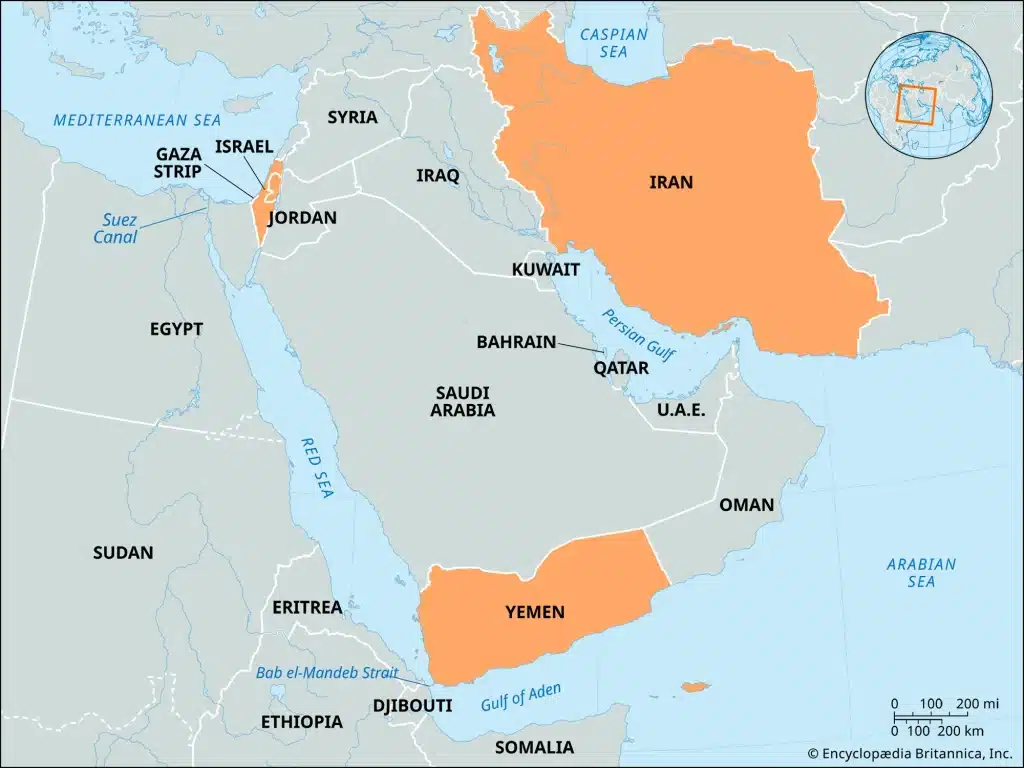
Yemen’s Developments: From Historical Unity to Contemporary Tensions.
Yemen is a country with a long and rich history, and has always been the scene of internal and external conflicts. To understand the current state of the country, we must first examine its historical roots.
North Yemen, known as the Yemen Arab Republic, was formed after the fall of the Ottoman Empire in the early 20th century, and it became a republic in 1962.
In contrast, South Yemen, or the People’s Democratic Republic of Yemen, was established after independence from Britain in 1967 and, as the only communist country in the Arab world, came under Soviet influence. The two parts, characterized by deep ideological and economic differences – the more traditional and agriculturally oriented north and the more industrial and socialist south – had lived separately for decades and occasionally experienced border conflicts.
The unification of the two Yemens in 1990 was a turning point in the history of the region. This unification, led by Ali Abdullah Saleh from the north and Ali Salem al-Bayd from the south, led to the formation of the Republic of Yemen.
This union aimed to create a single state with Sanaa as its capital and to exploit shared resources such as oil and the strategic location of Bab al-Mandab. However, this alliance was fragile and only four years later, in 1994, it led to a brief civil war in which the north overcame the south, and Al-Bayd was exiled. This apparent unity provided the basis for further tensions, as the South always felt deprived and discriminated against by the central government.
Currently, the territorial division of Yemen is complex and tense. The country is de facto divided into several controlled regions, none of which has complete control. The Ansar Allah forces, which control the north and west of the country, including Sanaa, cover a large part of the population.
In the south, the Southern Transitional Council (STC) controls areas such as Aden, Abyan, and Lahj, while Saudi-backed forces dominate the strategic eastern depths such as Hadramaut, Al-Mahra, and Shabwa. Also, the forces of Tariq Saleh, Ali Abdullah Saleh’s nephew, control parts of Taiz in the southwest.
These divisions are shown in different colors on the maps, red for Ansar Allah, yellow for the Southern Transitional Council, green for the Saudis, and purple for Tariq Saleh, the result of years of civil war and foreign intervention.