
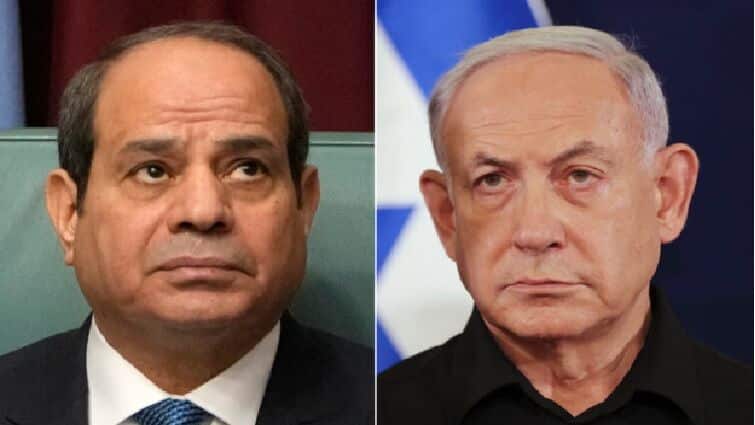
Zionist media: Qatar exploits gas deal impasse.
The Israeli news agency Globes, citing senior Israeli and Egyptian officials, claimed in a report that Qatar has exploited the Israeli regime’s three-month delay in issuing a final license for a massive $35 billion deal to export gas from the Leviathan gas field (located off the coast of Haifa) to Egypt and is trying to convince Cairo to replace Israel and supply the country with the huge volume of liquefied gas it needs.
The contract to export gas from the occupied Palestinian territories to Egypt, with a volume of 130 billion cubic meters of natural gas, was signed in August 2025. However, the Israeli Ministry of Energy stopped issuing the final license at the last moment by putting forward new demands, including “a mandatory extension of the export period beyond 2040” and “selling cheaper gas to the domestic market,” an action that Egyptian officials have described as “political hostage-taking.”
Israeli Energy Minister Eli Cohen is demanding that the partners in the Leviathan field (such as the American company Chevron with a 39.66 percent stake, Neomed with a 45.33 percent stake, and Rezio with a 15 percent stake) make a legal commitment to extend gas exports to Egypt beyond 2040, even if the reservoir reserves allow. This means that if there is excess gas in the Leviathan gas field, these companies cannot sell it to foreign markets (at a higher price); they must return it to the occupied Palestinian territories at a lower price.
A senior Israeli official claimed in an interview with Globes: Qatar is lying in wait for the Egyptians and telling Egypt, “We will supply as much gas as you want,” while Netanyahu has repeatedly promised the Americans and Egyptians that the issue will be resolved soon, but the delay continues. According to him, if Qatar becomes the supplier of 20 percent of Egypt’s consumption, it will be to Israel’s detriment.
An unnamed senior Egyptian official, angered by the Israeli regime’s actions, told Globus: “We are trading partners; if Israel wants to bring the agreement to a deadlock due to its domestic pretexts, Cairo will turn to Qatar or other gas suppliers.”
According to Globus, US President Donald Trump has personally intervened, along with US Ambassador to the occupied Palestinian territories Mike Huckabee and US Energy Secretary Chris Wright, to resolve the impasse.
However, the US Energy Secretary’s planned trip to the occupied territories for the final signing ceremony was canceled at the last minute due to Israel’s refusal to ratify the agreement.
Meanwhile, the US company Chevron (Leviathan’s largest shareholder with 39.66 percent) has protested; some executives of this oil holding have suggested transferring billions of dollars of planned investment to more profitable projects in the US, Kazakhstan or Australia if the delay continues.
Globes warned that the loss of the deal would not only be a severe blow to Israel’s export revenues, but could also permanently cede Tel Aviv’s strategic position as the main energy supplier to Egypt, a country facing a severe energy crisis, to Qatar.
By the time of publication, the Israeli Prime Minister’s Office had declined to comment, and the Energy Ministry said: “Discussions between the parties are continuing with the aim of developing solutions that will ensure the needs of Israel’s domestic economy while also allowing exports to regional countries. We will not agree beyond that at this stage.”
According to IRNA, while the massive $35 billion deal to export natural gas from the Leviathan field in occupied Palestine to Egypt is on the verge of collapse due to the direct intervention of Israeli Prime Minister Benjamin Netanyahu, diplomatic tensions between Cairo and Tel Aviv have reached an unprecedented level.
Netanyahu, who has been withholding final approval of the deal since September 2025 on the pretext of Egypt’s violations of the Camp David peace treaty, including military reinforcements in Sinai and Cairo’s positions in response to the Gaza war, has turned the deal into a tool for political leverage, ordering that no progress be made without his personal approval.
This policy, implemented by the energy minister and including demands such as guaranteed lower prices for the Israeli domestic market, has not only delayed the expansion of Leviathan’s production from 12 to 21 billion cubic meters per year, but has also pushed Egypt towards alternative suppliers such as Qatar in the midst of an energy crisis, challenging the “energy interdependence” model that has underpinned bilateral economic relations since 2020.