

PNN – The simultaneous emergence of fabricated narrative-building in American media—concerning a potential chemical attack on Washington and the characterization of Iranian dams as military assets—points to a desperate attempt to repeat the threadbare Iraq scenario and lay the groundwork for aggression.
Amid rising tensions between Tehran and Washington, the publication of two controversial reports in American media—alleging a potential Iranian chemical attack on the U.S. capital and a link between Iran’s dams and its underground missile bases—has drawn a response from officials of the Islamic Republic of Iran.
Although these two fabricated narratives address different subjects, they share a common thread: the presentation of security-related allegations—devoid of any public evidence—aimed at portraying Iran as a threat. An examination of these manufactured narratives, particularly when viewed through the lens of the historical precedent of the U.S. invasion of Iraq, reveals significant dimensions of the “war of narratives” being waged against the Islamic Republic of Iran.
Replicating the “Weapons of Mass Destruction” Scenario Regarding Iraq
A report by CNN—alleging that Iran has been planning an attack on senior officials of the Donald Trump administration in Washington using a “dirty bomb” or chemical weapons—serves as a recent example of media-driven fear-mongering directed against Tehran.
Citing seven anonymous U.S. officials, the report claims that American intelligence agencies have uncovered indications that such a scenario was being considered. However, even according to CNN’s own account, there is disagreement among U.S. officials regarding Iran’s capability and intent to carry out such an operation.
An important point is that the content of the CNN report—contrary to the impression conveyed by its headline—does not indicate the existence of an imminent threat. The sources cited by the network have described the alleged movements more as an effort to develop potential options, rather than as a sign of a definitive decision to launch an attack.
Furthermore, the White House spokesperson has stated that there is currently no credible or reliable threat against U.S. territory. On Wednesday (November 18), Secretary of State Marco Rubio also indicated—in response to a question regarding the possibility of an imminent attack on Washington—that he does not foresee such a threat. Consequently, there is a significant gap between speculation based on anonymous sources and the official assessment by U.S. authorities regarding the existence of an actual threat.
In response to these reports, Foreign Minister Seyyed Abbas Araghchi dismissed the claims as “utter nonsense.” Drawing a parallel to the propaganda used during the Iran-Iraq War, he emphasized the role of the Zionist regime in orchestrating this atmosphere.
Foreign Ministry Spokesperson Esmaeil Baghaei characterized the recent allegations published by The New York Times—along with CNN’s account regarding a “dirty bomb”—as part of an effort by the instigators of aggression against Iran to lay the media groundwork for future actions. Meanwhile, Mohammad Baqer Ghalibaf, Speaker of the Islamic Consultative Assembly (Parliament), described these developments as a rehash of warmongering scenarios, presented under a new media guise.
Comparing this trend to the case of Iraq in 2003 is particularly significant. The administration of George W. Bush—along with his Secretary of State, Colin Powell—highlighted claims regarding the existence of weapons of mass destruction in Iraq, thereby cultivating the necessary political and media environment to garner support from the public and allies for a military invasion. Yet, following the occupation of the country, no credible or reliable evidence was ever found to substantiate the existence of the alleged weapons stockpiles.

Furthermore, the allegation that Iran might employ a “dirty bomb” or chemical weapons—leveled without the presentation of any public, independent evidence—raises concerns that an unproven security scenario is once again being used to manipulate public opinion and justify warmongering policies.
Iran’s Dams in the Crosshairs of U.S. Media-Driven Threat Construction
In another instance of such fear-mongering, The New York Times claimed in a report that a portion of Iran’s network of dams and water-transfer projects may have been constructed to support underground missile facilities!
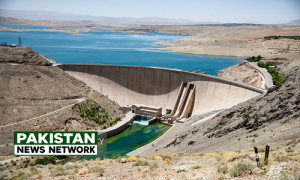
Drawing on the perspectives of several experts in water resources and military affairs, this report identifies a geographical overlap between the locations of certain dams and areas targeted during attacks by the United States and the Zionist regime. Nevertheless, the report itself acknowledges that a direct link between Iran’s water projects and its missile infrastructure has not been proven and remains merely a hypothesis.
To bolster this hypothesis, The New York Times examined the locations of at least 533 dams in Iran and compared them with sites targeted during the recent military aggression. Some experts cited by the newspaper have argued that the proximity of military facilities to reliable water and power sources could help sustain the operations of underground complexes.
However, even if one accepts the possibility that certain infrastructure could be used for military purposes, such an argument does not, by itself, prove that the primary objective behind the construction of these dams and water-transfer projects was to support military activities. The geographical proximity of two facilities does not necessarily imply an operational connection between them.
This framing is significant because dams and water infrastructure serve, first and foremost, as vital assets for supplying drinking water and water for agriculture, generating electricity, and sustaining the lives of millions of citizens. Furthermore, due to its climatic conditions and limited water resources in many regions, Iran has been compelled to implement extensive water resource management and water transfer projects.
Consequently, transforming an unproven hypothesis—regarding the proximity of dams to military installations—into a narrative that characterizes water projects as inherently military in nature risks overshadowing the essential functions of this infrastructure and could potentially compromise its security.
In this regard, responding to this line of reasoning, Ghalibaf pointed out that it could be extended to infrastructure in other countries; he emphasized that, based on such an argument, any dam, port, or power plant located near an American or Israeli base could also be classified as a facility with a dual-use function.
Psychological Operations and Laying the Groundwork for a New Aggression against Iran
The emergence of two narratives—one concerning a “dirty bomb” and the other involving dams with potential missile-related functions—within a short span of time warrants close attention from the perspective of media warfare and psychological operations. The first narrative portrays Iran as a threat to U.S. domestic security and the lives of high-ranking American officials, while the second seeks to frame certain critical infrastructure in Iran as part of the country’s military and missile activities.
Taken together, these two images can help shape a more comprehensive narrative, in which the Islamic Republic of Iran is portrayed not merely as an external threat to U.S. interests, but also as a direct danger to the safety of citizens and civilian infrastructure.

Such framing can serve several purposes:
– First, instilling fear among the American public and heightening societal sensitivity toward Iran.
– Second, lowering the political cost of decisions to intensify pressure or undertake military action.
– Third, aligning Washington’s allies with a more hardline policy against the Islamic Republic of Iran.
In this context, the use of anonymous sources, the positing of unproven hypotheses, and the highlighting of threatening scenarios facilitate the creation of the psychological climate necessary to justify confrontational policies—even without the provision of independent, public evidence to substantiate the claims.
The historical experience of Iraq demonstrates that the consequences of such narrative-building should not be underestimated. In 2005, the U.S. Commission on the Intelligence Capabilities of the United States Regarding Weapons of Mass Destruction characterized the performance of the American intelligence community in assessing Iraq’s weapons program as a major intelligence failure.
Furthermore, the U.S. Senate Intelligence Committee stated in its report that a significant portion of the key pre-war assessments regarding Iraq’s weapons programs were either stated with excessive certainty or lacked sufficient supporting intelligence.
This experience demonstrated how flawed assessments and unsubstantiated claims can transcend the realm of intelligence reporting and become the basis for strategic and military decision-making.