
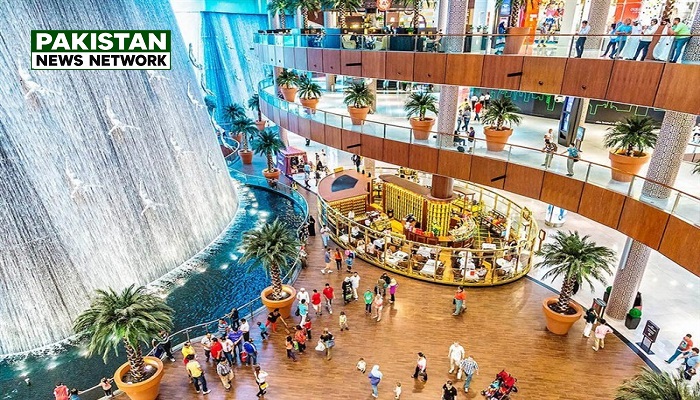
PNN – An Israeli media outlet has examined the impact of a potential U.S.-led war in the region on shopping centers across the Persian Gulf.
According to the report of Pakistan News Network; the Hebrew-language business newspaper Calcalist published an analytical report assessing how a war or aggression by the U.S. and the Zionist regime against Iran would affect the economic conditions of residents in the southern Persian Gulf sheikhdoms. The report analyzes the status of shopping centers in the region and notes a decline in purchasing and consumption among the residents of these states.
The introduction to this report states that the war has had a significant negative impact on tourism in these countries; the prices of imported goods have risen, and consumer confidence in the Gulf sheikhdoms has declined. Retail chains (which are named in the report) report a drop in revenue, and Dubai’s free market has experienced a downturn. Retailers are laying off staff, while consumers are shunning expensive brands in favor of cheaper alternatives.
The report states that consumers in the Persian Gulf region have reduced their spending in the wake of the Iran conflict—a conflict that has damaged consumer confidence and driven up import costs. This situation places additional pressure on the region’s largest retail companies, which are simultaneously grappling with a decline in the number of tourists and a drop in tourist spending.
One of the region’s largest operators of major retail chains announced earlier this month that a “decline in consumer confidence” has negatively impacted sales of non-food items, resulting in a 28% drop in the company’s profits over the first nine months of the year.
In this regard, the Zionist media outlet added that the company’s revenues for the first half of the year fell by 6% compared to the same period last year—a development that reflects the “more difficult conditions facing consumers, particularly in the UAE.”
A manager at one of these retail outlets stated: The persistence of geopolitical uncertainties will likely lead consumers to exercise greater caution in their spending—particularly regarding what are classified as non-essential expenditures.
The war, which began on February 28 following a joint Israeli-American attack on Iran, has become a major obstacle for the tourism sector. According to data compiled by the firm Alpen, revenue from duty-free shops in Dubai fell by 25.3 percent during the first seven months of the year, driven by a decline in the number of travelers.
Over the past two decades, Persian Gulf countries have made extensive investments to develop non-oil sectors—such as tourism and retail—in an effort to reduce their reliance on a single source of revenue. Cities like Dubai and Doha have constructed massive shopping complexes designed to attract the more affluent segments of society, particularly high-spending tourists.
However, a sustained decline in consumer spending could pose yet another obstacle to the growth of this economic model, especially as the ongoing conflict has also impacted the aviation and commerce sectors. This downward trend may compel companies to cut costs by laying off staff and halting recruitment and expansion plans—a development that would further erode the foundations of the economy.
Furthermore, shoppers in Dubai’s malls have noticed a decline in the number of regular customers at luxury goods stores.
Given the heavy reliance of Gulf countries on food imports, the partial closure of the Strait of Hormuz has forced companies to turn to alternative—and more expensive—land or air transport options, which has driven up costs.
A representative for one of these companies stated: Any increase in transportation and logistics costs could lead to higher retail prices; this puts pressure on consumers’ purchasing power and may negatively impact demand.
Executives and analysts in this sector say that the domestic consumer base in Saudi Arabia and the United Arab Emirates has helped, to some extent, to mitigate the economic impact of the war. However, they warn that inflation—driven by rising transportation costs—is damaging consumer confidence as the war enters its ninth month.