
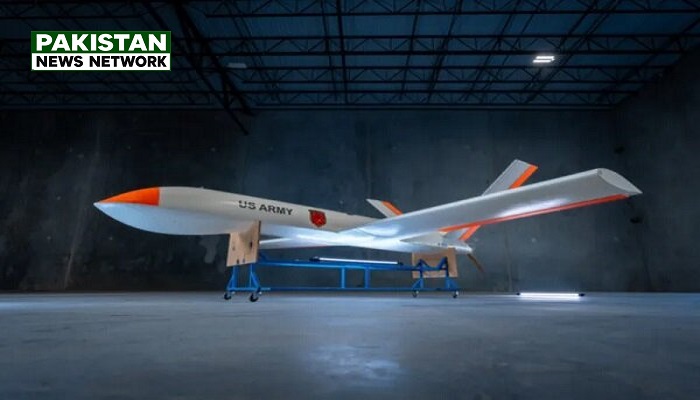
PNN – In a report, the Al Jazeera news outlet examines the “navigation disruption” mechanism that enables Iran to capture American drones.
According to the report of Pakistan News Network; the Al Jazeera news network—referencing Iran’s recent successes in bringing down American drones—notes that while little information is available regarding Iran’s specific actions in this regard, one can conceptualize a drone as a “flying computer” to understand how such an event might occur. Such a device is equipped with sensors to measure movement and altitude, as well as tools for positioning, and it likely maintains a connection with a ground station, exchanging commands and data. Some drones require continuous human intervention, while others follow a pre-programmed route or make decisions autonomously.
Drone Detection and Monitoring
Before any countermeasure can be employed against a drone, the device must first be detected and tracked. At this stage, a combination of tools—such as radar, thermal cameras, and receivers that monitor wireless signals—is used to identify small drones.
This coordination is crucial, as detecting a small drone can be quite challenging. Even monitoring communications may fail to identify a drone that does not emit detectable signals. Consequently, multiple detection methods must be employed simultaneously to identify such a drone.
Disrupting Drone Communications
Now that ground-based monitoring systems have pinpointed the drone’s location, the simplest way to take it out of service is to disrupt its communications. This mechanism is akin to trying to hear someone’s voice amidst an intense, overwhelming din. As the quality of the link between the drone and its control station degrades, commands may fail to reach the drone, or the video feed—upon which the operator relies for navigation—may be cut off.
In this scenario, the jamming device does not become a substitute controller; instead, the drone reacts according to its own design and programming. It might return to its starting point, attempt to land, wait for the connection to be re-established, or continue its mission using its autonomous capabilities.
Another type of interference targets satellite navigation signals, such as GPS. These signals reach the ground with low power, and radio interference can render them inaccessible to the drone; consequently, the drone loses one of its key sources for determining its own position.
From Navigation Spoofing to Full Control
The method of “navigation spoofing” goes beyond merely blocking information; it involves providing false—yet seemingly authentic—data. In this approach, a drone’s navigation system receives fabricated signals, leading it to believe it is in a location different from its actual position. Consequently, while the flight software continues to perform its functions, the data upon which it acts has been rendered misleading.
A third avenue involves interfering with the control system. If an attacker can exploit vulnerability in the command-source authentication mechanism or within the software, the drone might accept commands other than those issued by its legitimate operator. In fact, there are systems capable of simulating control signals, thereby influencing the behavior of certain drones and steering them in a desired direction.
Vulnerabilities may also exist outside the drone’s airframe—for instance, within the operator’s equipment, the fleet management system, or associated software. Since a drone is part of a comprehensive information system, compromising any single component can impact various other parts of the entire system.
Iran’s Capabilities in Electronic Warfare
Of course, infiltrating these systems at any of the aforementioned levels is no simple task, as drones are equipped with protective measures. For instance, encryption safeguards the content of communications, while authentication mechanisms verify the identity of the command sender and the validity of the commands themselves.
To counter jamming, some communication systems employ technologies such as frequency hopping—a process in which both the transmitter and receiver simultaneously switch between different frequencies. While these methods make disrupting communications more difficult, they are not entirely foolproof.
Navigation systems can also reduce their reliance on satellites by integrating data from inertial sensors—which measure acceleration and rotation—or by utilizing cameras and ground-based landmarks. However, these alternatives also have limitations: errors in inertial navigation accumulate over time, while camera visibility can be affected by lighting and weather conditions.
Each of these methods carries its own specific costs and risks, and no drone is entirely immune to electronic warfare systems—particularly integrated ones.
Al Jazeera adds that Iran’s primary advantage lies in the capabilities of its air defense and electronic warfare systems, which combine the detection and identification of electronic signals with the ability to subsequently interfere with a drone’s communications or navigation systems.
There is no precise information indicating exactly which Iranian system or specific technical capability enabled the seizure of control over the drones in these incidents; however, three relevant capabilities can be identified.
The first factor is the disruption of navigation and communication systems. A 2020 report by the U.S. Department of Defense Inspector General cited an intelligence assessment indicating that Iran possesses the capability to disrupt GPS signals and satellite communications.
Iran also possesses the capability to detect signals before they are subjected to interference. During its 2024 military exercises, the country demonstrated its ability to employ radars, drones, information processing systems, and electronic warfare assets in a coordinated manner.
Al Jazeera concludes that the “drone war” resembles an ongoing, endless conflict between the two adversaries, with each side continuously developing its capabilities to adapt to the other. Drones are becoming increasingly stealthy, while electronic warfare equipment is growing more precise and more capable of intercepting signals.