PNN – Extraterritorial sanctions and the new “Iron Gate” initiative indicate that Washington has intensified its strategy of pressuring Tehran’s trading partners, with the aim of restricting Iran’s economic lifelines—a policy that faces significant obstacles.
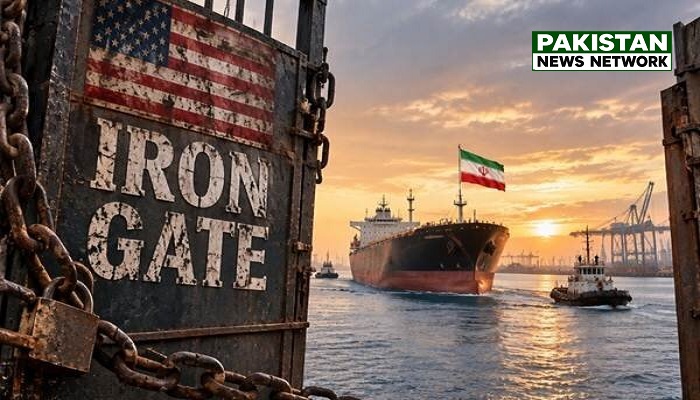
Amidst the persistence and intensification of tensions between Tehran and Washington, the Donald Trump administration is expanding the scope of economic pressure on Iran—ranging from sanctioning foreign financial and commercial networks to imposing restrictions on the country’s maritime and land-based trade routes. The establishment of the “Iron Gate” task force—aimed at restricting land routes and access via the Caspian Sea—alongside a naval blockade and operations described as “economic exclusion,” underscores Washington’s efforts to broaden the geographical reach of this pressure and target the vital links connecting Iran’s economy.
Under this strategy, banks, shipping and insurance companies, commercial intermediaries, and governments partnering with Tehran are also drawn into the sphere of U.S. pressure—a policy that seeks to establish a form of extraterritorial economic blockade by restricting exchange channels and increasing the costs of cooperating with Iran; however, it faces serious challenges arising from the interests and considerations of regional and international actors.
Changing the Playing Field: From Sanctions to Targeting Iran’s Connectivity Networks
In recent months, Washington has sought to extend the scope of pressure on Iran’s economy beyond conventional sanctions, focusing instead on the channels and networks that enable the country to sustain its foreign trade. A naval blockade of Iranian ports, pressure on the oil-shipping fleet, and the targeting of intermediaries involved in sales and the transfer of foreign currency revenues are all components of this approach.
However, the announcement by U.S. Central Command on November 7 regarding the establishment of the “Iron Gate” task force indicated that Washington intends to extend its pressure to land routes and the Caspian Sea region.
This task force—comprising approximately 20 military and civilian personnel and based in Tampa, Florida—is tasked with collaborating with various U.S. government agencies to disrupt the movement of advanced weaponry, dual-use technologies, sanctioned goods, and what Washington terms “illicit revenue” across land borders and the Caspian Sea.
Therefore, “Iron Gate” does not entail the deployment of U.S. forces to Iran’s borders or the physical blocking of transit points; rather, it serves as a mechanism for intelligence coordination, surveillance, and the exertion of pressure on the country’s supply and trade routes.
This approach is also being pursued in the financial and commercial spheres. As part of an “economic exclusion” campaign launched in August 2026, the U.S. Department of the Treasury has targeted banking networks, currency exchange houses, shipping companies, oil sales intermediaries, and entities involved in vessel registration and maritime services. For instance, the sanctioning of banks and financial networks linked to Iran—both within the region and beyond—alongside pressure exerted on companies operating within the “shadow fleet,” demonstrates that Washington’s objective extends beyond merely blocking a specific transaction or sanctioning an individual Iranian firm; rather, it seeks to deter the very entities that underpin and support Iran’s trade from engaging with Tehran.
In fact, the distinguishing feature of this phase is a shift in the geography of sanctions and the blockade; essentially, any foreign actor—ranging from banks and shipping companies to commercial intermediaries and governments cooperating with Iran—can become part of the arena in which U.S. pressure is applied. The ultimate objective is to increase costs and hinder Iran’s access to alternative routes—a strategy whose success will depend less on the issuance of sanctions lists and more on the cooperation or resistance of the countries hosting these networks.
How does Washington target Iran’s trading partners?
The primary source of U.S. power in expanding extraterritorial sanctions lies not in the ability to directly control Iran’s trade, but rather in Washington’s influence over the international financial system and the dependence of a vast number of global banks and companies on access to the U.S. dollar.
Washington leverages this position to increase the cost of engaging with Iran for foreign actors—forcing even those companies and institutions that do not operate on U.S. soil to choose between continuing their cooperation with Iran and maintaining their access to the U.S. financial system.
Within this framework, secondary sanctions are considered the most significant instrument of pressure. Unlike primary sanctions—which primarily restrict U.S. persons and transactions involving the United States—secondary sanctions can expose foreign financial institutions and companies to penalties for engaging with sanctioned sectors of the Iranian economy. The U.S. Department of the Treasury’s warning to foreign banks in October 2026, regarding the possibility of sanctions being imposed without prior notice, serves as an example of how this tool is utilized to establish deterrence within the international banking network.
This pressure has not been limited merely to verbal threats. The sanctioning of Turkey’s Golden Globe Bank, along with measures taken against an Egyptian-Emirati bank’s access to correspondent accounts in the United States, demonstrated Washington’s intent to jeopardize a foreign financial institution’s connection to the U.S. banking network by targeting it directly.
Nevertheless, the reach of U.S. sanctions does not imply unconditional compliance from all nations. China, Russia, Turkey, and the UAE each maintain distinct economic relations and political considerations regarding Iran; consequently, their levels of alignment with Washington’s pressure vary.
Consequently, the U.S. strategy relies less on simply severing Iran’s economic ties with the rest of the world and more on instilling fear and uncertainty among Tehran’s trading partners. Washington strives—even before the imposition of actual sanctions—to compel foreign actors to limit their cooperation with Iran by threatening them with exclusion from the U.S. dollar system and the American market.
Alternative Networks: Capacities and Limitations of a Sanctions-Evasive Economy
Decades of experience regarding the ineffectiveness of sanctions have demonstrated that, while U.S. pressure increases the costs of Iran’s foreign trade, it does not necessarily result in a complete severance of the country’s economic ties with the rest of the world. Over time, Iran has developed a set of alternative trade, financial, and transport routes that allow for the continuation of certain exchanges outside of the conventional channels subject to U.S. influence. Key mechanisms in this regard include expanding cooperation with China and Russia, leveraging the potential of neighboring countries, broadening cross-border trade, and utilizing transit routes to the north and east.
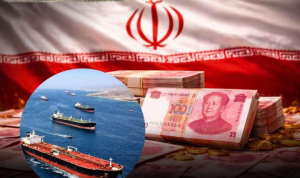
In the financial sphere, the use of national currencies, the barter of goods, and reliance on networks of exchange houses and commercial intermediaries have helped reduce the dependence of certain transactions on the U.S. banking system. A Reuters report from September 2026 revealed a mechanism between Iran and China whereby Iran’s oil revenues are converted into credit for the purchase of goods from Chinese companies. This approach diminishes the need for direct monetary transfers through international banks and enables the continuation of a portion of bilateral trade.
Cooperation with Russia also represents a key avenue for this policy. Linking the two nations’ interbank messaging systems and increasing the use of the ruble and the rial in transactions have created opportunities to reduce reliance on Western financial networks. Furthermore, routes across the Caspian Sea and the North-South Corridor can help meet a portion of Iran’s trade and import requirements.
Washington’s Strategic Paradox: More Sanctions and the Erosion of U.S. Financial Hegemony
The expansion of extraterritorial sanctions against Iran, coupled with intensified economic pressure, carries another strategic consequence: it strengthens the incentive for other nations to reduce their dependence on financial infrastructure controlled by the United States.
By leveraging the status of the dollar and its own banking network, Washington forces foreign companies and institutions to choose between cooperating with Iran and maintaining access to the U.S. market; however, the persistence of this approach could gradually reinforce the perception among governments and economic actors that dependence on the U.S. financial system has itself become a political and economic vulnerability.
This concern is not merely a theoretical assumption. Research recently published by the University of Chicago and Northwestern University indicates that, in recent years, financial sanctions have restricted the access of targeted banks to international payment networks, pushing certain financial institutions in distressed economies toward alternative channels—most notably, the use of the yuan.

The contradiction in Washington’s policy becomes evident here: while the United States leverages the power of the dollar and the international financial network to maintain its economic supremacy, the extensive and repeated use of these tools incentivizes independent actors to develop alternative pathways. From this perspective, the short-term success of sanctions in raising the costs of Iran’s transactions does not necessarily equate to a strategic victory for the U.S.; in the long run, it may actually facilitate the expansion of infrastructures that will be far more difficult for Washington to control.