
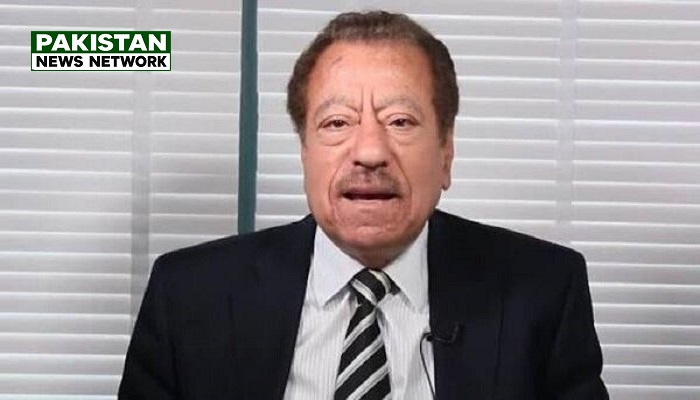
PNN – Abdel Bari Atwan described Iran’s decision to halt negotiations—pending the fulfillment of the seven conditions of the previous agreement—as a shrewd move, asserting that the parties styling themselves as “mediators” are, in fact, acting in accordance with U.S. strategy.
According to the report of Pakistan News Network; Abdel Bari Atwan, an analyst of regional strategic affairs, wrote in a recent article for Rai Al-Youm that all indications suggest the Islamic Republic of Iran will not wait for a new U.S. military aggression to launch a military response; rather, it will preemptively react to the enemy’s aggressions with large-scale missile and drone strikes.
Meanwhile, Washington seeks to push Iran to the brink of exhaustion through a total economic and livelihood blockade. They harbor the vain hope that, in this way, they can destabilize the regime from within and—by inciting popular unrest—overthrow it.
Pointing to two key indicators of Iran’s new strategy of preemptive warfare, he wrote:
The first indicator involves an intensification of attacks on oil tankers—carried out via missiles or the deployment of naval mines along the “illegal” southern route—as well as the downing of American drones using highly advanced Iranian missiles; to the extent that not a single day passes without several oil tankers being destroyed or set ablaze.
The second indicator lies in the major victories achieved by Yemen’s Ansarallah movement, which should be viewed within the context of the implementation of the “Unity of Fronts” strategy. These advances include the movement of Yemeni forces toward the south, the capture of the Dhubab airport, and the seizure of the Bab al-Mandab region, located west of the city of Taiz. Forces from this movement are now only a few miles from Aden—the capital of the Saudi-backed puppet government in Yemen, which is supported by Saudi Arabia and the Persian Gulf states.
He identified the dismissal of the commander of the military coalition in Yemen as the most significant sign of this victory, emphasizing that Ansarallah has gained near-total control over the western coast and the Bab al-Mandab Strait—the gateway to the Red Sea—while also severing the supply and communication route between this area and Aden.
Pointing out that Iran—unlike Cuba or Venezuela—will not yield to U.S. pressure, Atwan asserted that Iran has stood firm in every conflict and will never surrender. Even the presence of American aircraft carriers—including three such carriers and over 20 other warships—cannot intimidate Iran, as its suicide naval assets are poised, awaiting the order to strike.
The Arab analyst adds that if Yemeni missiles have managed to target and disable the aircraft carriers Lincoln and Ford—compelling Trump to plead for a ceasefire with Ansarallah—then Iran is certainly capable of achieving the same.
Iran’s Astuteness in Halting the Negotiation Process
Referring to Iran’s call to halt negotiations—and its decision to close its doors to parties styling themselves as “mediators”—Atwan noted that the frequent visits by these individuals to Tehran over the past eight months have created a false impression that progress has been made in peace talks. This process serves the U.S. strategy of prolonging the war while masking the country’s true, aggressive, and hidden intentions.
He added that this is the very same sinister strategy that, unfortunately, was also successfully implemented in the Gaza Strip by these same mediators. The current situation in Gaza—characterized by ongoing war and persistent genocide through starvation and destruction—serves as evidence for this claim.
Atwan noted that he fully grasps the depth of Iran’s shrewdness and its highly successful management of the situation in the face of this war of aggression—on both the Israeli and American fronts. He understands why officials in Tehran insist on the full fulfillment of their seven conditions before returning to the negotiating table, and why they have no desire to waste time entertaining these so-called “mediators.”
He further stated that Trump has failed, and has himself acknowledged that Iran’s steadfastness and resilience were the primary factors behind this defeat. The same holds true for Netanyahu, who has turned Israel into the most reviled and isolated regime in the world; Tel Aviv has suffered defeat on all seven fronts where Netanyahu claimed to be waging war.
The article concludes by stating that Iran now occupies a position to steer regional developments and has emerged as a major regional power—one that others fear confronting.
Atwan considers it unlikely that Trump—who has lost his domestic and popular legitimacy following his election defeat—would dare to launch an attack on Iran. Consequently, the deployment of a third aircraft carrier to the Arabian Sea is likely nothing more than a desperate, noisy, and performative gesture—a type of action we have witnessed repeatedly over the past eight months.