

PNN – The film NAZA, which documents the crimes and genocide committed by the Zionist regime in Gaza, transcends the nature of a mere work of art; it has sparked a global controversy—one that is further intensified by its screenings for international politicians.
The screening of the documentary film NAZA at various festivals, the awards it has garnered, and the controversy surrounding it have, in recent weeks, evolved into a political, media, and ethical issue that transcends the borders of Israel and Palestine. Furthermore, given the producers’ decision to screen the film for international officials and politicians, it is set to remain a focal point of global public attention.
This film was produced by two Israeli directors, Yuval Abraham and Rachel Szor, as part of a journalistic documentary project associated with the British newspaper The Guardian. It is based on accounts provided by military personnel and members of the Zionist regime’s intelligence services—some of whom participated in military operations or were familiar with the decision-making processes behind them.
In a report discussing this film, political researcher Dr. Mostafa Al-Ghashi writes that the documentary NAZA does not merely present images of destruction in Gaza; rather, it seeks to examine the mechanisms that produce this destruction, revealing the relationship between military technology and human decision-making, as well as the connection between the calculation of military objectives and the lives of Palestinian civilians. In this piece, we intend to explore 10 significant, strategic points derived from the film and the discourse surrounding it.
Point 1: The Nature of the Revelations in the Film NAZA
The title “NAZA” is derived from a Hebrew military acronym meaning “collateral damage”—a term used in military parlance to describe civilian casualties that are anticipated or occur in conjunction with military operations.
The film, which runs for approximately 80 minutes, features accounts from 24 individuals—either former or current personnel within Israel’s military and intelligence apparatus. To ensure their protection, their identities and faces have been concealed. The interviews were filmed at night on rooftops in Tel Aviv, creating a clandestine and tense atmosphere surrounding the testimonies.

These accounts examine the following topics:
– The mechanism for determining military targets in the Gaza Strip.
– The use of artificial intelligence and data analysis systems to identify adversaries.
– The employment of digital surveillance systems and data extracted from mobile phones and communications.
– The extent of civilian casualties anticipated when targeting specific objectives.
– The nature of human oversight regarding bombing decisions.
– The relationship between military directives and ethical and legal considerations.
One of the most significant topics addressed in the film is the “Lavender” system, which previously sparked widespread controversy following reports regarding its use to identify targets during the war in Gaza. The film’s importance lies in the fact that it shifts the focus from a mere tally of casualties to an examination of the mechanisms and institutions responsible for the decisions that lead to those deaths.
Point Two: Awards and International Screenings of the Documentary Naza
Since its premiere at the Venice International Film Festival in September 2026, the film has enjoyed a remarkable presence. At the festival, Naza received a 25-minute standing ovation—one of the longest recorded in the festival’s history. The film was also honored with the Special Jury Prize at the 83rd Venice Film Festival, a significant testament to its documentary and artistic merit.

Reputable international film and cultural publications also welcomed the film, describing it as a combination of robust investigative journalism and an impactful cinematic structure. Furthermore, it was decided that the film would be screened in over 50 countries to broaden its global reach, and subsequently made available for free via The Guardian’s website.
Point Three: Why did “Naza” spark a media and political controversy within Israel?
Had this film been made by Palestinian, Arab, or foreign directors, it might have simply been regarded as a critical documentary. However, because it was produced by two Israeli directors and relies on accounts originating from within the Zionist regime’s military establishment, the film has become highly unwelcome within Tel Aviv’s official discourse.
Some Israeli officials believe that the film damages the image of the Israeli army and presents a narrative that serves the regime’s enemies; conversely, supporters of the film argue that its primary significance lies precisely in the fact that it offers a critical perspective from within Zionist society.
Benjamin Netanyahu, the Prime Minister of the Zionist regime, criticized the film and its creators, raising the possibility of revoking the citizenship of individuals accused of “harming Zionist sovereignty” or “defaming its soldiers.”

The Israeli military rejected the claims presented in the film, arguing that the testimonies of unidentified individuals do not allow for a proper assessment of their identities, positions, or responsibilities.
Naftali Bennett, the former Prime Minister of Israel, described the film as a form of “blood libel” against the country, stating that leveling accusations against the military in international forums serves the interests of Israel’s enemies. The backlash escalated to the point where the filmmakers were accused of treason and subjected to incitement campaigns and threats—raising concerns for their personal safety.
Point Four: International Defenders of the Film
The international reaction to the film was not one of opposition; rather, the work garnered widespread support from journalists, human rights activists, directors, and intellectuals. They believed that the film transcended the confines of the film industry, becoming a tool to challenge the human conscience.
Human rights organizations and movements, journalistic and media circles, cultural and artistic institutions and figures, as well as critical voices from within the occupied territories, were among the film’s most prominent defenders on the international stage.
Point Five: Can Naza serve as the basis for an indictment against Israel?
Documentary works, however powerful they may be, must still be evaluated based on criteria of verification, rigorous scrutiny, and methodical accountability. The film relies on the accounts of 24 individuals—presented anonymously due to the sensitivity of the subject matter and the risk of retaliation against the witnesses—which raises questions regarding the independent verification of their identities, military ranks, organizational positions, and the extent of their direct knowledge concerning the decisions they discuss.
One of the most significant issues addressed in this documentary is the relationship between artificial intelligence and military decision-making. While AI plays a role in target identification, this does not necessarily mean that the machine makes the final decision to kill individuals; furthermore, the mere presence of a human “rubber stamp” does not absolve officials of their legal and ethical responsibilities. Consequently, attributing responsibility solely to artificial intelligence does not obscure the role played by the human, the institution, or the military force making the decision.
Although this film presents information that raises serious questions regarding the potential for widespread violations of international law and international humanitarian law in Gaza, establishing the commission of war crimes, crimes against humanity, or genocide requires the submission of evidence, the conduct of independent investigations, the determination of individual and institutional responsibility, and the substantiation of the specific legal elements of each crime; however, the Zionist regime, through its intensive military presence in Gaza, prevents any such investigations from taking place.

Point Six: Nazaa Exposed the Crisis within Israeli Media
One of the most significant points worth considering is that the crisis in Tel Aviv did not arise solely due to the film’s content; rather, it stemmed from the contradictions that the work brought to light within Israel’s media and political landscape. The film revealed a rift across three levels of Zionist society:
The first level: The official narrative, which asserts that the Israeli military targets armed groups, implements measures to minimize civilian casualties, and conducts military operations in accordance with the law.
Level Two: Intra-organizational narratives—encompassing the accounts presented in the film regarding the nature of targeting systems, calculations concerning civilian casualties, and the decision-making mechanisms within the military establishment.
Level Three: The international narrative—which emerges from journalistic investigations, human rights reports, footage from Gaza, testimonies from Palestinians and Israelis, and international inquiries.
Perhaps the most dangerous aspect of this crisis is that a portion of Israel’s political response—rather than focusing on examining the evidence and narratives or addressing them—shifted toward questioning the legitimacy of the film’s creators, tracking their sources, and exposing their identities.
Point Seven: Gaza and the Battle of Narratives in the War on Gaza
Since October 7, 2023, the war on Gaza has transcended a purely military confrontation, evolving into a battle over narratives, imagery, memory, and interpretation. In this context, the Zionist regime faces not only military and political challenges but also a deepening crisis regarding its international image—exacerbated by the scale of the destruction, the high civilian death toll, and mounting international calls for investigations and accountability.
In this arena, digital media, investigative journalism, and documentary cinema have emerged as influential tools for conveying the unfolding realities to the global public.
Under these circumstances, the significance of the film Naza can be examined from three perspectives:
First: Breaking the monopoly on the narrative. When individuals from within the Israeli military establishment speak about the mechanisms of war, the discussion can no longer be confined merely to a clash between two opposing narratives—the Israeli and the Palestinian.
Second: Shifting the focus to institutional responsibility. The film does not limit the issue of crimes in Gaza to the conduct of a single soldier or field commander; rather, it raises questions regarding the systems of surveillance, targeting, planning, and command.
Third: Internationalizing moral responsibility: The film makes it clear that the issue is no longer limited solely to Israel’s right to self-defense or the Palestinians’ right to resist occupation; rather, it also concerns the limits on the use of force, the protection of civilians, and the extent to which the rules of international humanitarian law are upheld.
Point Eight: Why do Zionist leaders fear the widespread distribution of this film?
The release of this film across dozens of countries poses a challenge for Tel Aviv that extends well beyond the realm of cinema. It presents an account to international audiences—based on the testimonies of Zionist military personnel and officials—framed within the context of the genocide and destruction perpetrated by the Zionists in the Gaza Strip.
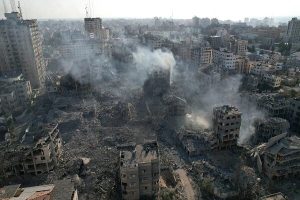
Even attempts to prevent the film’s screening or to punish its creators could backfire, drawing greater public attention to it and transforming the film into a global symbol of resistance against political censorship. This further highlights the impasse facing the Zionist regime.
Point Nine: The Film’s Significance for the Arab World and Palestine
It would be a mistake to view the film Naza as an Arab or Palestinian media victory simply because it criticizes the Zionist regime’s military establishment. Rather, a true victory depends on transforming the narratives and information presented in the film into documented knowledge, a legal defense, and historical memory.
From this perspective, several responsibilities arise:
- Arab media institutions have a responsibility to move beyond the mere republication of images and emotional statements, shifting instead toward producing investigative reports and rigorously tracking narratives and documentation.
- Universities and research centers are responsible for examining the transformations brought about by artificial intelligence in modern warfare, as well as assessing the implications for international humanitarian law and the ethics of technology use.
- Human rights organizations bear the responsibility of independently verifying information, documenting rights violations, and linking evidence to international legal avenues.
- The responsibility of Arab filmmakers and intellectuals is to produce documentary works that go beyond merely recording current events, and instead contribute to the creation of a historical and human narrative.
Point Ten: When Cinema Becomes a Tribunal for Human Conscience
In this context, five fundamental conclusions can be drawn from the Naza case:
First: This film serves as a sophisticated example of integrating investigative journalism with documentary cinema, where narratives are transformed into a tool for holding institutions accountable.
Second: The controversy surrounding the film within the occupied territories reveals the depth of the divisions regarding the war in Gaza, as well as the extent of internal criticism directed at the military establishment.
Third: The use of artificial intelligence in warfare necessitates a profound re-evaluation of the legal and ethical norms governing the use of force—particularly when it concerns the identification of human targets.
Fourth: Freedom of expression is not put to the test when a journalist or artist praises their own country; rather, it is measured when they reveal truths that political power does not want the public to hear.
Fifth: The historical value of the film will be determined in the future based on the extent to which its testimonies can be verified, the findings of independent investigations, and its contribution to achieving accountability and justice.