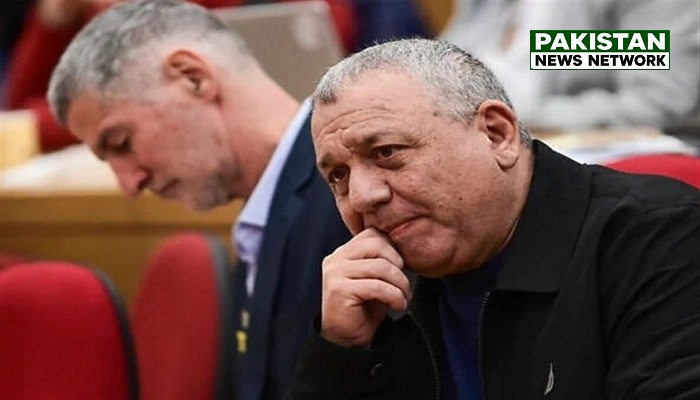
PNN – Gadi Eizenkot, leader of the Yashar party, faces a challenging path ahead in forming a new cabinet for the Zionist regime.
According to the report of Pakistan News Network; Isaac Herzog, the president of the Zionist regime, announced on Sunday—within the legally mandated timeframe—that he has tasked Gadi Eizenkot with forming a new cabinet. This decision followed consultations between Herzog and representatives of the parliamentary parties; Eizenkot secured the task after obtaining the endorsements of 67 lawmakers. Notably, Benjamin Netanyahu received only 47 endorsements, while the Haredi party “United Torah Judaism”—which holds 7 seats in the Knesset—decided not to endorse any candidate for this term.

However, the crucial point is that entrusting this task to Eisenkot does not signify the formation of a cohesive coalition against Netanyahu; rather, it involves three distinct political factions—each with its own calculations—that have opted to support Eisenkot for the time being. Meanwhile, Netanyahu’s camp is attempting to fracture the opposition coalition from within by highlighting the risks of a cabinet reliant on the support of Arab parties, as well as the contentious issue of military conscription for the Haredim. This is particularly effective given that the “Change Bloc” itself remains divided over how to form a government and the extent to which it should show flexibility toward the Haredi parties. In this context, the Arab parties are also leveraging the current situation to enhance their own parliamentary bargaining power.
The issue is that, as a result of the election, the right-wing faction secured 53 seats, the “Change Bloc” won 48 seats, and Arab parties garnered a total of 19 seats. Given that no coalition managed to reach the 61 seats required to form a cabinet, the Change Bloc needs the support of the Arab parties to achieve this goal and to replace the Speaker of the Parliament. Currently, Eisenkot has 28 days to form a cabinet, a period that the regime’s president can extend by an additional 14 days. However, the right-wing bloc intends to prevent this from happening.
Obstructionism by Netanyahu’s faction to thwart the formation of an Eisenkot-led cabinet
A significant development in this process was the decision by the Haredi party, United Torah Judaism (UTJ), to abstain—meaning it did not endorse any candidate. The party secured 7 seats in the election; however, unlike in several previous election cycles, it did not join a coalition with Netanyahu. During the election campaign, its leaders had emphasized that they would no longer support Netanyahu, citing the unresolved status of the law regarding the exemption of Haredim from mandatory military service in the Israel Defense Forces (IDF). In effect, United Torah Judaism intends to leverage its new position to extract concessions concerning these military service exemptions. The party’s primary condition for cooperation is the passage of legislation that preserves the exemption for seminary students from IDF services—a stance that stands in direct opposition to one of Gadi Eizenkot’s core campaign promises.
Nevertheless, Avigdor Liberman—leader of the Yisrael Beiteinu party, who has been a staunch opponent of aligning with Haredi parties since 2018—stated that an agreement could be reached with them. Should this occur, there would be no need for the cooperation of Arab parties to form a cabinet—not even within the framework of a minority government. However, Shas—another Haredi party—officially declared that it belongs to the right-wing bloc, dismissing reports of it joining an Eisenkot-led cabinet as false. This distinction is highly significant; to secure the 61 seats required for a majority, Eisenkot would need the cooperation of both Haredi parties, not just United Torah Judaism. Otherwise, Eisenkot would likely look toward the Arab parties for support—a prospect that stands in direct opposition to Liberman’s position.

Against this backdrop, Netanyahu has proposed the formation of a unity government. This move followed the tasking of Eisenkot with forming a cabinet. In doing so, Netanyahu emphasized the necessity of cooperation among nationalist and Zionist parties—a stance that stands in contrast to the idea of leveraging the potential of the Arab population. He further accused Eisenkot of intending to form a government with parties that he claims support terrorism.
In response, Eisenkot’s party stated that if Netanyahu truly desires unity, he could—instead of maintaining his coalition with extremist parties—accept Eisenkot’s principles and conditions and join a cabinet led by him. This stance indicates that, for the time being, Eisenkot has no intention of accepting Netanyahu’s proposal for a rotating or coalition cabinet; rather, he is seeking to place the responsibility for the failure of the negotiations squarely on Netanyahu himself.
Under these circumstances—where Arab parties have signaled their alignment with the “Change Bloc” regarding the replacement of the Speaker of the Knesset, and are expected to show similar support for the formation of a minority government—Netanyahu’s most significant political asset lies in the internal divisions within the Change Bloc. These rifts manifest on three levels: disagreement over cooperation with Arab parties; conflicting views regarding the extent of concessions to be granted to Haredi parties concerning mandatory military service; and disputes over whether to accept or reject the inclusion of right-wing factions that broke away from the previous coalition.
According to the latest statement by Lieberman, released on Sunday evening, he is willing to make concessions regarding military service exemptions for the Haredim; however, this very issue could create a serious rift between the Yesh Atid and the Democrats on one side, and Lieberman’s Yisrael Beiteinu party on the other. In the same statement, Lieberman characterized Arab parties as supporters of Hamas, asserting that relying on them would jeopardize Israel’s security. This stance poses a significant obstacle to the formation of a minority government—an option that Eisenkot views as a promising solution for navigating the current situation.
Against this backdrop, Netanyahu hopes that should Eisenkot fail to form a cabinet, he might gain another opportunity to negotiate with opposition parties and reconstruct his own coalition—or, in a worst-case scenario, trigger yet another election; an election that, in Lieberman’s view, could result in Netanyahu securing 70 seats.
The central theme currently uniting the opposition spectrum—comprising both Arab and Zionist parties—is simply opposition to the continuation of Netanyahu’s cabinet. This point was also raised a few days ago by Isaac Herzog, who remarked that mere opposition to Netanyahu is not a sufficient path forward.
Meanwhile, the stance of Yair Golan, leader of The Democrats party, has also gained significance in recent days. Departing from his previously hardline approach regarding the Haredim, he has stated that he does not seek to penalize this group and is, in fact, open to cooperation. Nevertheless, three issues remain to be addressed: military service for Haredi men, the integration of the Haredi community into the labor market, and the recognition of a secular lifestyle on Saturdays (Shabbat).
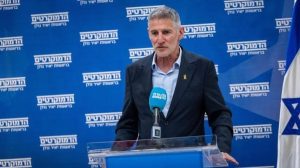
In this regard, Eisenkot has proposed four principles for the formation of an emergency cabinet: recognizing Israel as a Jewish and democratic state; accepting the values of Israel’s Declaration of Independence; committing to mandatory military or civil service; and recognizing Hamas as a terrorist organization.
These conditions effectively establish a framework for defining the boundaries of a future coalition. The requirement for military or civil service does not entirely rule out cooperation with Haredi parties, but it compels them to make concessions regarding the policy of exempting Haredim from military service. The fourth condition is particularly problematic for Arab parties, as the leaders of the Joint List and Ra’am have thus far been unwilling to accept Eisenkot’s stance regarding the definition of Hamas.

Given this, while the “change bloc’s” efforts have yet to result in the formation of a cohesive alternative coalition—and the United Torah Judaism party has not endorsed any candidate—Netanyahu could still potentially succeed in forming a cabinet in the next phase. By securing the support of United Torah Judaism’s leaders—bringing his total to 53 seats—he might also be able to win over the “Together” coalition, led by Naftali Bennett and Yair Lapid; notably, Bennett has never explicitly ruled out working with Netanyahu, leaving the possibility of securing his cooperation still on the table.