
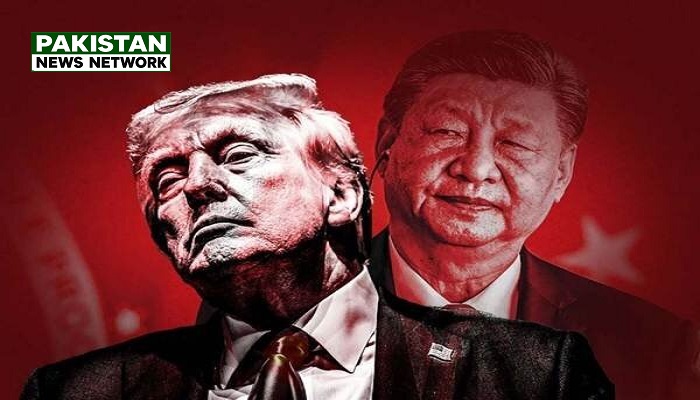
PNN – While reaching an agreement to reduce tariffs, Washington has simultaneously restricted the export of aircraft parts to China—a contradiction that reveals how, beneath the trade-related smiles of Trump and Xi, the competition for levers of power persists.
Just days after Donald Trump and Xi Jinping reached an agreement on the mutual reduction of tariffs, Washington slowed down the export of aircraft components to China—a move intended to gain greater leverage in negotiations concerning strategic minerals. The fact that this action coincided with the announcement of trade agreements raises a fundamental question: are the two nations seeking to resolve their differences, or are they aiming to continue their strategic rivalry at a lower cost by maintaining leverage over one another?
Trade Agreements: A Ceasefire without Resolving Disputes
The recent agreements between the United States and China should be viewed within the context of efforts by the world’s two largest economies to prevent a resurgence of a tariff war. The escalation of tariffs and retaliatory measures in 2025 demonstrated that trade confrontation has the potential to disrupt supply chains and the strategic planning of international corporations. Consequently, the extension of the ceasefire until January 10, 2027, serves less as a sign that the disputes have ended, and more as an opportunity to continue negotiations and avert an intensification of tensions.
One of the outcomes of the negotiations is an agreement on a framework for the reciprocal reduction of tariffs on approximately $30 billion worth of goods from each side. According to China’s Ministry of Commerce, more than 90 percent of the goods covered by this framework are set to be exempted from additional reciprocal tariffs. Toys, household appliances, and products intended for children are included in the list of Chinese exports to the United States.
Conversely, agricultural products, medical equipment, healthcare goods, and coal are among the items of interest to China. The implementation of this framework is contingent upon the completion of domestic legal procedures; therefore, this preliminary agreement should not be equated with the full implementation of the tariff reductions.
The purchase of American products has also become a bargaining tool for the Trump administration. In May 2026, the White House announced China’s commitment to purchase at least $17 billion worth of U.S. agricultural products annually between 2026 and 2028—a figure that excludes purchases of soybeans. Additionally, the initial acquisition of 200 Boeing aircraft was included in the list of announced agreements. While these commitments hold economic and political significance for American farmers and industries, their true value depends on the fulfillment of these pledges and the placement of firm orders.
Despite these developments, disagreements persist regarding the trade balance and the economic structures of the two nations. Washington criticizes the limited access American firms have to the Chinese market, as well as Beijing’s industrial policies; conversely, China views U.S. trade and technological restrictions as obstacles to the competitiveness of its own companies. Reducing tariffs on certain goods does not resolve disputes concerning the terms of competition, the role of the state in the economy, or market access for each other’s firms.
Chips and Minerals: Reciprocal Levers of Power
While tariffs serve as an overt instrument of economic pressure, advanced technologies and strategic minerals operate at a deeper level of the rivalry between the two nations. Washington is seeking to restrict China’s access to technologies that contribute to the development of advanced computing capabilities and military applications. Beijing, for its part, views these restrictions as an attempt to slow its technological progress and is pursuing the development of domestic capabilities in the fields of semiconductors and artificial intelligence.
Advanced artificial intelligence chips are a clear example of this dispute. U.S. export policy makes Chinese companies’ access to certain chips and semiconductor manufacturing equipment contingent upon specific licenses and conditions. From Washington’s perspective, these restrictions serve as a tool to control the transfer of sensitive technologies; however, for American firms, restricted access to the Chinese market could result in the loss of revenue and business opportunities. Meanwhile, by supporting domestic manufacturers, China is seeking to reduce its reliance on American suppliers. Consequently, the dispute over chips is not merely a commercial issue; it is tied to the competition for the future of the artificial intelligence industry.
Strategic minerals represent the other side of this equation. China holds a significant position in the extraction and processing of certain rare earth elements—materials used in electronic devices, electric vehicles, energy systems, and the defense industry. Establishing alternatives to China’s supply chains would require substantial time and investment. Consequently, Beijing’s export restrictions could influence Washington’s strategic calculations—much in the same way that U.S. restrictions on technology exports affect China’s industrial plans.
Both countries are investing to reduce their own vulnerabilities. The United States seeks to diversify its sources of mineral supplies and strengthen domestic processing capacity, while China pursues the development of indigenous technologies. However, achieving self-sufficiency in these areas is neither quick nor inexpensive, as advanced production relies on technical know-how, capital, and infrastructure. Consequently, while trade agreements may facilitate the flow of goods, strategic competition will persist as long as the two sides remain at odds over export controls and access to sensitive technologies.
The Cost of Escalation: Why Are Both Sides Agreeing to Limited Deals?
The United States and China are aware that an escalation of the trade war could impose significant costs on their respective domestic economies. A renewed hike in tariffs could drive up the cost of imported goods and production inputs in the U.S.; furthermore, certain sectors of the American agricultural and industrial landscape rely on the Chinese market to sell their products. Consequently, reaching an agreement on the purchase of agricultural products, aircraft, and industrial goods could represent both an economic and political achievement for the Trump administration.
However, experts argue that the Trump administration must strike a balance between demanding economic concessions from Beijing and maintaining the restrictions it deems necessary to protect sensitive technologies. National security concerns, coupled with pressure from factions critical of making concessions in the technological sphere, further limit Washington’s room for maneuver. Consequently, the United States may offer concessions on trade-related matters while maintaining a stricter stance in areas it views as directly linked to national security.
Despite its efforts to reduce dependence on the United States, China continues to benefit from access to the U.S. market and the stability of global trade. While an escalation in tariffs could put pressure on exports from certain Chinese industries, Beijing is unwilling to allow trade agreements to become a vehicle for accepting broader restrictions on the development of its domestic technology. Maintaining a truce and negotiating over specific goods allows China to alleviate immediate pressure on its exports while continuing to advance the development of its own technological capabilities.
Many experts believe that a trade agreement does not equate to the resolution of political and security disputes. Issues such as Taiwan, technology restrictions, and the competition for regional influence remain complex matters that require more difficult forms of consensus. While direct meetings between leaders and joint mechanisms can reduce the likelihood of misinterpretation and unintended escalation, they cannot, on their own, eliminate conflicts over strategic interests. Consequently, both sides seek to make limited concessions in areas where agreement is possible, without relinquishing their primary sources of leverage.
The Outlook for Agreements: Which Developments Will Be Decisive?
The durability of the understanding between Washington and Beijing hinges on several developments, including the actual implementation of tariff reductions, the extent to which China fulfills its commitments to purchase American goods, the status of exports of strategic minerals, and U.S. decisions regarding export licenses for microchips. Furthermore, the performance of joint trade and investment mechanisms will determine whether these bodies can resolve implementation-related disputes or if they will merely serve as a channel for continued negotiations.
The U.S. midterm elections could also influence the decision-making climate in Washington in the coming days—particularly regarding technology exports and the extent of concessions to China—though the outcome of these developments cannot be considered a foregone conclusion.
The extension of the ceasefire until January 10, 2027, provides a defined timeframe for continued negotiations. Whether this opportunity leads to a broader agreement, or results in the two sides once again extending limited understandings, will depend on the fulfillment of commitments and the ability to manage core differences.