
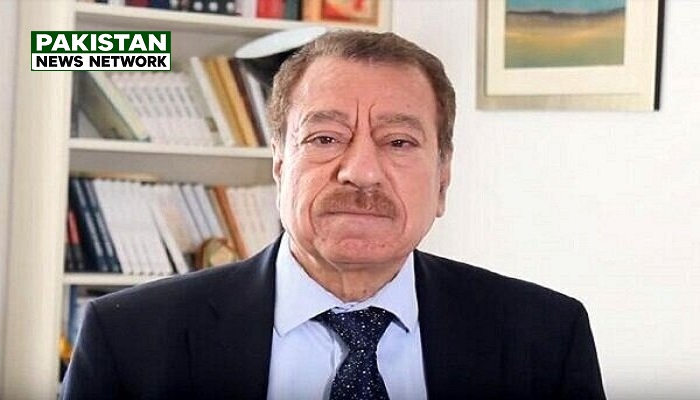
PNN – A prominent Arab analyst, noting growing concerns in Europe regarding the possibility of a war with Russia, has outlined eight indicators that he believes may suggest such a conflict is imminent.
According to the report of Pakistan News Network; prominent Arab analyst Abdel Bari Atwan, writing in the newspaper Rai Al-Youm, addressed concerns about a potential Russian military attack on Europe—stemming from European financial and military support for Ukraine. He noted that U.S. President Donald Trump—whose country had encouraged the Ukrainian government to initiate the conflict—has now distanced himself from the war and stepped back from coordinating with European leaders.
Pointing to the convergence between Trump and Putin in recent months, Atwan wrote that by describing Putin as a “dear friend” on the sidelines of the latest trilateral meeting in China, Trump dealt a heavy blow to his European allies. The meeting, which was attended by the presidents of China and Russia and lasted eight hours, contained no mention in its final statement of the ongoing wars in Iran and Ukraine, nor any discussion regarding ways to resolve these conflicts through diplomatic or military means.
8 Signs of a Potential Russian Attack on Europe
Atwan further outlines several indicators which, in his view, suggest that a Russian attack on the European continent may be imminent in the coming weeks and months:
First: The expansion of the scope of the war by Ukraine: By broadening the conflict geographically and militarily, Zelensky has sought to provoke Russia, launching attacks against the Crimean Peninsula and one of its most critical bridges.
Second: The attack on two Russian warships in Libya: The destruction and sinking of two Russian naval vessels in the Libyan port of Benghazi is viewed as a precursor to extending the war into the European continent and targeting Russian bases located there.
Third: Russia’s threat of a nuclear response: Dmitry Medvedev, Deputy Chairman of the Security Council of Russia, has warned that Moscow will deliver a decisive response to Zelensky’s provocative actions. He emphasized that the attack on Russian vessels in Benghazi justifies the use of the nuclear deterrent, in accordance with the provisions of Russia’s nuclear defense doctrine.
Fourth: Increased British Military Readiness: Over the past two days, the UK has declared a state of emergency within its military, heightened the defensive and offensive readiness of its forces, and called up 100,000 reservists. Furthermore, the country’s combat aircraft have been relocated to reinforced hangars, and anti-drone defense systems have been deployed.
Fifth: Incursion of Russian Missiles and Drones into Polish Airspace: Russian cruise missiles and drones have entered Polish airspace near the Russian border—areas situated close to European (and specifically British) bases where military exercises are conducted.
Sixth: Cyber-attacks on European Countries: Several European nations—including the UK, France, Germany, and Poland—have been targeted by cyber-attacks aimed at their communication systems. Most of these incidents have not been publicized, and it is suspected that Russia-linked operatives are behind them.
Seventh: Failure of Abu Dhabi Talks on the Ukraine War: A meeting held in Abu Dhabi, mediated by European and US parties and attended by representatives from both sides of the Ukraine conflict, failed to reach a ceasefire agreement. Sources present at the meeting attributed this outcome to the uncompromising stance taken by the Ukrainian side.
Eighth: Escalating the war in Ukraine to mask the failure in the war against Iran: Benjamin Netanyahu and Donald Trump are currently escalating the war in Ukraine in order to conceal their failure in the war against Iran, and perhaps to pave the way for a new attack on Iran.
Russia Will Not Remain Silent in the Face of Provocative Actions
In another part of his commentary, Atwan writes: The Russian leadership—having been embroiled in the war in Ukraine for nearly five years—cannot sit idly by in the face of provocative actions by Zelensky, the Zionist regime, and their backers, whether these actions take place in the open or behind the scenes. The recent attack on Russian naval vessels, which had stopped in the port of Benghazi to refuel, was the final straw for Russia’s patience.
This Palestinian analyst revealed that the growing rifts between European leaders and Trump—which have led to divisions within NATO—work to Russia’s advantage and may provide a golden opportunity for Moscow to bring the war in Ukraine to a conclusion in its favor through military means.
Warning Issued Regarding Potential War in Europe
Pointing to the emergence of warnings about war in Europe—particularly in the United Kingdom—Atwan writes that over 70 million citizens and residents of the UK have been advised to stock up on food, water, and medicine to last for several days, in order to be prepared for any potential emergency. No further details were provided regarding the parties involved in a possible conflict. Similar warnings have also been issued in other European nations, including France, Germany, Italy, and Belgium.