
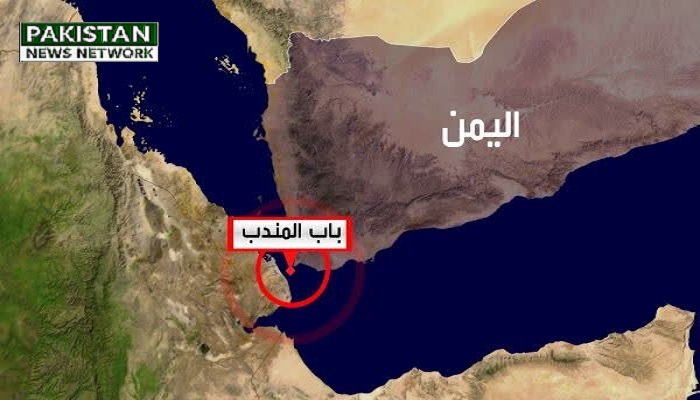
PNN – Amidst security developments in the Red Sea and intensifying rivalry between regional and extra-regional powers, Yemen’s position within the equations of West Asia has undergone a transformation.
In the turbulent landscape of Southwest Asia, a nation defined by its mountainous terrain and extensive coastline plays a role that extends far beyond its own borders. Yemen is not only home to one of the Arabian Peninsula’s oldest civilizations but—by virtue of its control over the Bab al-Mandab Strait and the eastern shores of the Red Sea—has also emerged as a pivotal player in global trade and energy security dynamics.
The significance of this maritime chokepoint becomes even clearer when considering that a substantial portion of global maritime trade passes through the Red Sea and the Bab al-Mandab Strait—a route connecting Europe to Asia and the Middle East, and serving as a vital corridor for the transport of energy and goods between East and West.
Moreover, this region has long been a theater of rivalry among extra-regional powers. In recent decades, the military presence of the United States, the United Kingdom, and the Zionist regime in the waters surrounding Yemen has shaped the security dynamics of the Red Sea; however, developments in recent years—particularly following Operation Al-Aqsa Flood and the entry of Yemeni forces into the Red Sea equation—have challenged the established order.
Today, Yemen has evolved from a nation mired in war and internal crisis into a strategic lever within regional dynamics. By leveraging their missile and naval capabilities, Ansarullah and Yemeni armed forces have demonstrated that the country’s geographic position can serve as a tool to alter the calculations of both regional and extra-regional actors.
Furthermore, Yemen’s strategic alignment with the Islamic Republic of Iran and other “Resistance” movements has heightened its significance in West Asian geopolitics—a role that, in recent years, has transcended mere defense to be defined, within the discourse of Yemeni factions, through the concept of “active deterrence.”
In this context, a Mehr News Agency correspondent conducted an exclusive interview with Abu Mahdi, spokesperson for Yemen’s Mustaqbal al-Adalah (Future of Justice) movement, to examine various aspects of the country’s developments: relations between Sana’a and Riyadh, the role of the United States, the strategic significance of the Bab al-Mandab Strait, Yemen’s support for Palestine, and the future outlook for war and peace in the country.
Memories of War: A Narrative Spanning Decades
To understand the current perspective of Yemeni political factions regarding Saudi Arabia, one must look back to the years preceding the recent war—a period when political and border disputes between the two nations were repeatedly shaped by Yemen’s internal developments and the rivalries of regional powers.
Abu Mahdi believes that Saudi Arabia’s interventions in Yemen have a long history, and the war of recent years cannot be analyzed in isolation from this historical background.
Elaborating on this perspective, he notes that Saudi Arabia has attacked Yemen roughly every twenty years. It first occupied parts of Yemeni territory in 1934, and subsequently—in 1954, 1974, and 1994—consistently sought to weaken Yemen by instigating civil and political conflicts.
The spokesperson for the Mostaqbal al-Adala movement interprets even the political developments of 1994 within the context of this regional rivalry, stating: “The 1990 unification agreement between North and South Yemen was concluded without coordination with Saudi Arabia or the UAE—a move that displeased them—prompting them to immediately attempt to destabilize Yemen by sowing discord.” Ultimately, this narrative hinges on a key factor: Yemen’s geography.
Noting that the significance of Yemen’s coastline and the Bab al-Mandab Strait has played a major role in the calculations of foreign actors regarding the country, Abu Mahdi adds: Saudi Arabia’s long-standing objective has been to occupy Yemen’s strategic coastlines and gain control over the Bab al-Mandab; however, this time, a vigilant ‘Resistance Yemen’ has stood firm against these schemes.
Yemen Today: A Far Cry from the Early Years of the War
While years of war, blockade, and conflict have inflicted extensive damage on Yemen’s infrastructure, Abu Mahdi believes they have simultaneously fostered the development of capabilities that now factor into regional security calculations.
Describing recent developments as a strategic turning point, he states: We had been under a ceasefire with Saudi Arabia since 2018; yet, not only did Saudi Arabia fail to honor its commitments regarding reconstruction and withdrawal, but it also consistently sought to undermine Yemen by providing financial and military support to affiliated groups.
In his view, the key difference lies in the capabilities Yemen has acquired throughout the years of the war. Abu Mahdi emphasizes: The Yemen of the Resistance is no longer the Yemen of the early years of the aggression. Today, we possess missile capabilities, naval deterrence, and intelligence superiority—factors that have shifted the strategic balance in our favor.
Given that Yemen’s proximity to one of the world’s most vital maritime routes amplifies the significance of developments within the country far beyond its borders, he warns: If Saudi Arabia seeks to launch a new war, it will face a far heavier price than in the past; for we have the capacity to carry the conflict into their strategic depth—specifically, their oil-rich regions and vital infrastructure.
When the US and Other Powers Enter the Yemen Conflict
Abu Mahdi’s account of the war in Yemen extends beyond Saudi Arabia alone. In his view, the events unfolding in the country are part of a broader rivalry among regional and extra-regional powers over the Red Sea and Yemen’s coastline.
The spokesperson for Yemen’s Mostaqbal al-Adalah (Future of Justice) movement identifies the United States as a key player in this arena, stating unequivocally: There is no doubt that the US is behind all of Saudi Arabia’s actions in Yemen.
According to Abu Mahdi, US involvement has gone beyond mere military and intelligence support; he alleges the direct presence of American forces in strategic areas of Yemen. He asserts: They are directly present on the ground—not only through intelligence and arms provision but also through a physical presence at the Bab al-Mandab Strait, in the Red Sea, on the island of Socotra, and even in the city of Aden.
He also states that there is ongoing communication between Saudi and US military commanders regarding the presence of Israeli and British forces in the region.
Ultimately, Abu Mahdi identifies control over Yemen’s coastlines as the objective behind these maneuvers, emphasizing that the primary goal of the US and Israel is to occupy Yemen’s strategic coasts and dominate the Bab el-Mandeb Strait; however, he asserts that Yemen has thwarted these plans by relying on its own deterrence capabilities.
Iran and Yemen: Strategic Cooperation or Dependency?
Yemen’s relationship with the Islamic Republic of Iran has consistently been a key topic in analyses of developments within the country. Critics of Yemen’s resistance movements view this relationship as a sign of dependency, whereas factions aligned with the resistance describe it as a form of strategic cooperation and convergence.
In response to these criticisms, Abu Mahdi draws a clear distinction between cooperation and dependency, stating: The accusation of dependency on Iran is a repetitive and baseless narrative propagated by those who are themselves beholden to Saudi Arabia.
At the same time, he does not deny leveraging Iran’s experience and capabilities, adding: We utilize Iran’s strength and expertise to bolster our own defensive capabilities; however, our decisions remain entirely independent and grounded in Yemen’s national interests.
From his perspective, the relationship between Tehran and Sana’a is defined within a broader framework centered on confronting the United States and the Zionist regime.
Abu Mahdi states that the cooperation between Iran and Yemen in the military, intelligence, and political spheres represents a natural convergence rooted in a shared hostility toward the Zionist regime and American hegemony.
He points to the coordination structure among the “Resistance” factions, noting that—following the martyrdom of Sayyid Ali Hosseini Khamenei and under new leadership within the Axis of Resistance—enhanced coordination has emerged among Yemen, Lebanon, Iraq, and Iran, elevating operational coordination to an unprecedented level.
Abu Mahdi believes this coordination has altered the established dynamics: whereas groups previously operated in isolation, the “unity of the battlefield” has now created unprecedented deterrence against the enemy.
Palestine: When a Foreign Issue Becomes a Domestic Concern
Perhaps the most significant shift in Yemen’s regional policy in recent years is the increasingly prominent role of the Palestinian cause—an issue that, following the war in Gaza, became more deeply intertwined than ever with the country’s foreign and security policies and emerged as a central pillar of the Yemeni leadership’s stance.
Abu Mahdi asserts that for Yemen, support for Palestine is not merely an ideological matter; it has evolved beyond a purely emotional or ideological position to become a strategic principle of Yemen’s national security.
In this context, he highlights the pivotal role played by Yemen’s leader in fostering a wave of public support for Palestine, noting that his call for public solidarity with the Palestinian people paved the way for mass rallies and widespread popular mobilization across the country.
According to Abu Mahdi, the Yemeni leader’s call for public demonstrations in support of Palestine was met with an enthusiastic response from Yemeni society, with significant crowds taking to the streets in support of the people of Gaza.
He stated: During the Gaza war, we witnessed nearly a million Yemenis participating in popular mobilizations and taking to the streets.
The spokesperson for Yemen’s Mostaqbal al-Adalah (Future of Justice) movement added: The Yemeni leader proposed that the public come out to support Palestine, and the people embraced this call. This massive turnout demonstrated that the Palestinian cause is not merely a political issue in Yemen, but has evolved into a matter of broad public demand.
According to Abu Mahdi’s account, this widespread public presence ultimately influenced Yemen’s political and security decisions; support for Palestine transcended mere declarations of stance, leading to Yemen’s direct involvement in the dynamics surrounding the Gaza war.
He states that supporting the Palestinian resistance entails shifting the conflict from the domestic arena to the external sphere and imposing costs on regional and international adversaries.
Thus, as described by the spokesperson for the Mostaqbal al-Adalah movement, the Yemeni leader’s call for public support of Palestine became a key factor in generating a massive wave of social mobilization within the country—a wave that subsequently transformed support for Gaza from a mere political position into an integral part of Yemen’s regional engagement.
What is the secret behind Yemen’s resilience?
If there is one recurring theme in Abu Mahdi’s narrative that stands out above all others, it is resilience—a concept he defines not merely as military strength, but as a combination of social, ideological, and political capacities.
Abu Mahdi encapsulates this in three terms: national unity, religious faith, and shifting the war to external fronts.
In his view, this shift in the geography of the conflict has caused the pressure of the war to move beyond its traditional confines.
He states: We have shifted the war from the alleyways of Yemen to the oceans and the enemy’s bases.
Furthermore, by comparing the endurance of Yemen with that of Saudi Arabia and the UAE, Abu Mahdi asserts that Yemeni society possesses a greater capacity to withstand pressure due to its long experience with war.
He states that Yemen has a history of twenty years of imposed war, whereas Saudi Arabia and the UAE lack the ability to bear the costs of a prolonged conflict.
The spokesperson for the Mostaqbal al-Adalah movement also makes claims regarding the economic situations of Saudi Arabia and the UAE—specifically, that Saudi Arabia has borrowed $8 billion from the International Monetary Fund and the UAE has requested financial aid from the United States. In his view, the issue ultimately boils down to a war of attrition centered on endurance.
Two Paths for Yemen: Agreement or Escalation
Ultimately, when it comes to the future, Abu Mahdi links the fate of developments in Yemen to broader regional dynamics—specifically the relationship between Iran and the United States. In his view, however, the reason for this connection lies in the role the U.S. plays in Saudi Arabia’s regional policy.
Abu Mahdi believes that Saudi Arabia is not a fully independent actor in its decision to enter the war; rather, the Kingdom’s military policy regarding Yemen is heavily influenced by U.S. decisions and preferences.
He states: Saudi Arabia does not enter the war of its own volition; it fights at the behest of the United States. Consequently, should an agreement be reached between Iran and the U.S., it could directly impact Saudi Arabia’s conduct regarding Yemen.
Accordingly, he believes that the future of the war in Yemen cannot be analyzed solely within the framework of relations between Sana’a and Riyadh; he states that everything hinges on a potential agreement between Iran and the United States.
In the first scenario, he believes an agreement between Tehran and Washington could pave the way for de-escalating regional tensions and, consequently, easing military pressure on Yemen.
Abu Mahdi says: If Iran and the US reach an agreement, the war in Yemen will subside, and Saudi Arabia will be compelled to accept an honorable agreement with us.
However, regarding the second scenario—continued confrontation and escalating conflict between Iran and the US—he envisions a different future: If the conflict between Iran and the US persists, the Yemeni theater will become a primary battleground, and we will be forced to strike deep into Saudi territory with greater force.
Nevertheless, he emphasizes that the continuation of the war is not Yemen’s preferred option, stating: We are prepared for both scenarios; however, our preference is a dignified peace in which Saudi Arabia pays the price for its eight-year-long crimes and ceases its support for domestic factions.
Abu Mahdi also estimates the damages inflicted upon Yemen by Saudi Arabia at approximately $300 to $400 billion.
Yemen at a Turning Point in the Regional Equation
The conversation with Abu Mahdi offers more than just an account of an internal conflict; it presents a perspective held by a segment of Yemen’s political landscape regarding the country’s new regional standing—a view in which Yemen has transformed from a nation mired in internal and external wars into an actor capable of influencing the security dynamics of its surrounding region.
In this narrative, Yemen’s geography and the Bab al-Mandab Strait, its military capabilities, years of wartime experience, social mobilization, and ties to aligned regional movements constitute the key components of Yemen’s newfound power.
The reality, however, is that Yemen’s position has shifted in recent years. The war in Gaza, developments in the Red Sea, and direct confrontation with the United States and the United Kingdom have elevated the country’s standing in regional calculations, demonstrating that events in Yemen are no longer merely an internal matter.
The country’s future now lies at the intersection of several major issues: relations with Saudi Arabia, the situation in the Red Sea, the war in Gaza, Iran-US relations, the presence of foreign powers, and Yemen’s internal situation.