
PNN – Recently, media outlets opposed to Ansarallah published reports regarding changes to certain religious rituals in parts of Taiz province.
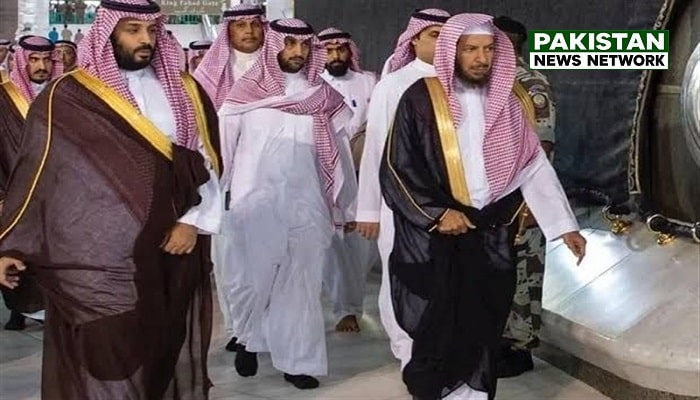
According to the report of Pakistan News Network; the government of Saudi Arabia has for years utilized its role as custodian of the Two Holy Mosques in Mecca and Medina as a tool to consolidate its political power and advance its regional objectives. By positioning itself as the “Servant of the Two Holy Mosques” and the “Mother of Cities” (Umm al-Qura) for the Islamic world, Riyadh seeks to equate opposition to its policies with opposition to Islamic sanctities, leveraging its religious standing to sway Muslim public opinion in its favor.
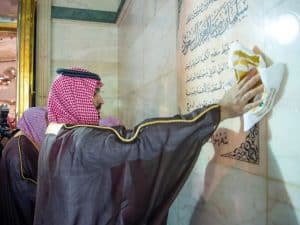
This claim is made against a backdrop where, in recent years, the Saudi government has deliberately moved to strip the public sphere of religion. By curtailing the role of religious institutions, weakening the influence of traditional scholars, and promoting entertainment programs and cultural models that diverge from Islamic values, the state is redefining Saudi Arabia’s social identity in alignment with the political and economic priorities of the ruling family. In other words, while the government restricts the traditional role of religion domestically to consolidate its own centralized power, it simultaneously seeks to leverage that same religion—and Islamic sanctities—internationally as a tool to legitimize its policies.
The war in Yemen serves as one of the clearest examples of this duality. Since 2015—when the Saudi-led coalition launched its military aggression—Riyadh has repeatedly sought to transform its political dispute with Ansarallah into a religious confrontation. Significantly, as Saudi Arabia has encountered mounting setbacks on the battlefield and found itself in an increasingly weakened position, it has leaned ever more heavily into a policy of stoking sectarian divisions and exploiting its status as the custodian of the Two Holy Mosques.
As military pressure has failed to achieve Riyadh’s political objectives, efforts to discredit Ansarallah in the eyes of the Islamic world—portraying the group as a threat to sacred sites—have become a supplementary tool to compensate for failures on the battlefield. This approach has intensified once again during the latest round of conflict, with accusations regarding the targeting of Mecca and Medina emerging as a central theme in Saudi propaganda.
In recent weeks, Saudi officials and the Saudi-led coalition have repeatedly claimed that Ansarallah intended to target Mecca or Medina. In one such instance, on September 16, the Saudi-led coalition claimed to have intercepted a drone launched by Ansarallah toward Mecca. On October 21, the coalition also reported the interception of drones over Medina—a claim denied by Yahya Saree, spokesperson for the Yemeni Armed Forces, who emphasized that Yemeni forces had neither targeted Medina nor conducted any operations against Saudi Arabia on that day. From the very first allegations, Ansarallah has denied any operations against Mecca or other Islamic holy sites, characterizing these accusations as part of a propaganda war waged by Saudi Arabia. Conversely, the Saudi narrative—lacking independent, publicly verifiable evidence—has sought to make the charge of targeting holy sites the central element in how Ansarallah is portrayed.
The conduct of Ansarallah regarding the airspace over Mecca and Medina also contradicts Riyadh’s propaganda narrative. As they intensified pressure on Saudi Arabia and announced restrictions on the use of the kingdom’s airspace, Yemeni forces explicitly excluded the airspace over Mecca and Medina from these restrictions. This stance clearly demonstrates that Ansarallah distinguishes between targeting Saudi Arabia’s military and economic infrastructure and violating Islamic holy sites. Nevertheless, the Saudi government seeks to obscure this distinction by repeatedly invoking claims concerning Mecca and Medina, framing Ansarallah’s military operations against Saudi targets as a threat to the entire Islamic world. The objective behind such framing is to shift Saudi Arabia’s position from that of a party to the conflict to that of a defender of the holy sites—a stance that can be leveraged to stir religious sentiments and garner the support of governments, religious institutions, and Muslim public opinion.
The recent statement by the General Secretariat of the Council of Senior Scholars in Saudi Arabia—known as “Kibar al-Ulama”—should be analyzed within this very context. On October 21, the Council accused Ansarallah of targeting civilians and civilian infrastructure, as well as attempting to attack Mecca and Medina, equating the movement’s actions to those of ISIS and Al-Qaeda. Furthermore, it called upon Muslims to take a stand against Ansarallah and to confront what it termed an assault on Islamic sanctities. Such a statement is not merely a religious stance; rather, it represents an attempt to transform a political and military conflict into a confrontation rooted in belief. When an official religious institution in Saudi Arabia places Ansarallah alongside ISIS and Al-Qaeda—and calls upon Muslims to stand against it—it effectively places its religious authority at the service of the Saudi government’s political and military objectives.

The importance of this approach is heightened in the current climate, given the developments in Taiz province. Taiz serves as a key hub for factions affiliated with the Muslim Brotherhood and stands as a primary center for Sunni cultural activities in Yemen. Any shift in the balance of power within this province is not merely a localized military development; rather, it has the potential to impact political and social dynamics across other parts of Yemen as well. At a time when Ansarallah is seeking to expand its understanding with local tribes and shift the balance of power on the ground, the intensification of sectarian divisions could serve as a tool to prevent segments of the local society from aligning with the Sana’a-based government. From this perspective, the cultivation of a sectarian atmosphere against Ansarallah should not be viewed in isolation from developments on the ground; rather, it must be understood as part of an effort to maintain social rifts and prevent a shift in political dynamics in Taiz.
In recent days, coinciding with a statement from the Saudi Council of Senior Scholars, media outlets aligned with the opposition to Ansarallah have published reports regarding changes to certain religious rituals in parts of Taiz Governorate. These reports claim that the phrase “Hayya ‘ala khayr al-‘amal” (hasten to the best of deeds) was used for the first time in the call to prayer (adhan) at a mosque in the village of Dhi al-Balas, located in the Bani Ahmad district—a development that has led local residents to boycott some of the mosques.
Ahmed Al-Shalfi, an Al Jazeera presenter and a well-known media figure within the opposition to Ansar Allah, has also echoed this narrative on X. However, the details of these claims have not been corroborated by other independent sources; furthermore, their dissemination by media outlets opposed to Ansar Allah is, in itself, insufficient to substantiate allegations of the forced alteration of religious rituals or the existence of widespread local protest.

A crucial point here is that the phrase “hayy ‘ala khayr al-‘amal” (hasten to the best of deeds) has a historical precedent within the Zaydi religious tradition; its use, therefore, does not in itself constitute the imposition of a new ritual or an unprecedented act in the history of Islam. Framing this phrase as a sign of the forced alteration of people’s religious identity—without providing clear evidence regarding the circumstances under which this occurred—serves a specific propaganda narrative: one that seeks to portray the presence of Ansarallah in regions with different religious compositions as a threat to the identity of the local inhabitants. The core issue in such reports is not merely the inclusion of a specific phrase in the call to prayer (adhan), but rather how it is politically exploited to transform local differences into a broad rift between Ansarallah and the Sunni community.
The timing of these reports, coinciding with a statement from the Saudi Council of Senior Scholars, is significant from a media perspective. On one hand, Saudi Arabia’s official religious establishment—by accusing Ansarallah of threatening Mecca and Medina—seeks to expand the scope of the conflict to the realm of Islamic holy sites. On the other hand, media outlets opposed to the movement highlight allegations regarding the alteration of religious rituals in Taiz, portraying this as a threat to the religious identity of residents living in areas under the control of the Sana’a-based government. While these two lines of narrative differ in terms of their sources and specific content, they converge toward a shared propaganda objective: Fostering religious concerns regarding Ansarallah, thereby complicating the development of an understanding between the movement and segments of the local community. At a time when developments on the ground could pave the way for a shift in tribal and political relations, stoking these concerns has the potential to further deepen existing rifts.
Conversely, the experience of governing areas under the control of the Sana’a-based administration demonstrates that Yemen’s social and religious landscape cannot be reduced to a simple confrontation between Ansarallah and the Sunni population. Yemeni society is characterized by religious, tribal, and cultural diversity, and governing it requires engagement with a wide spectrum of groups. While the existence of local grievances or criticism regarding the performance of governing institutions cannot be entirely ruled out, framing unverified claims as a definitive picture of a sweeping religious policy—rather than aiding an understanding of social realities—risks exacerbating tensions. For this reason, allegations concerning religious rituals in Taiz must be examined within the context of the political and media environment in which they emerged, rather than being accepted as established fact in the absence of independent evidence.
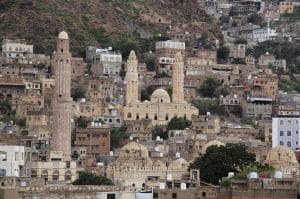
Ultimately, the statement by the Saudi Council of Senior Scholars and the fresh wave of religious-themed reports directed against Ansarallah should be viewed as part of Riyadh’s effort to leverage its religious and media assets amidst mounting pressures on the ground. While the Saudi state is deliberately curtailing the traditional role of religion within its own society, it continues to exploit sacred symbols beyond its borders to mobilize public opinion against its political rivals.