
PNN – Foreign Affairs magazine wrote that Riyadh, skeptical of Washington’s security guarantees and concerned about Iran and Israeli policies, is trying to adopt a more cautious approach to regional tensions.
According to the report of Pakistan News Network; the newspaper wrote: Iran’s attacks on US facilities in the Persian Gulf, followed by Tehran’s closure of the Strait of Hormuz and Washington’s subsequent closure of the Strait of Hormuz, ended a security paradigm that had prevailed for decades and facilitated the phenomenal growth of the Gulf economies. Although Saudi Arabia has allowed US forces to use its bases, it has refrained from directly responding to the Iranian attacks. It has issued brief diplomatic warnings, but unlike the UAE, it has not called for continued war or promised to join the US-Israeli aggression, and has implicitly supported Pakistan’s efforts to mediate to reduce tensions.
According to the report, Riyadh’s position is partly an extension of a long-standing defensive strategy. Riyadh fears a powerful Iran, but it is also wary of Israel’s ambitions in the Middle East and does not want Israel to become a regional hegemon. Riyadh is keen to preserve its ceasefire with Yemen’s Houthi rebels, which resulted from its normalization of relations with Iran. Any intervention by Yemen’s Houthi rebels in the US war on Iran could jeopardize Saudi Arabia’s oil exports through the Red Sea. Riyadh knows full well that it cannot rely on the United States to guarantee security in the Middle East.
Saudi Arabia’s priority is to avoid a war that would jeopardize its vital infrastructure, economy, and future development.
Riyadh believes that Israel sees this war as a way to make the Gulf Arab states dependent on it, to embroil Iran and Saudi Arabia in a longer conflict, to consolidate Israeli dominance, and to reduce the Gulf states to mere oil producers of little strategic importance, and that an alliance with the United States cannot secure the Gulf states.
Iran believes that after the war, the Gulf States will realize that their economic prosperity requires engagement with Tehran, and it has realized that controlling the Strait of Hormuz can be a powerful strategic tool to deter future aggression.
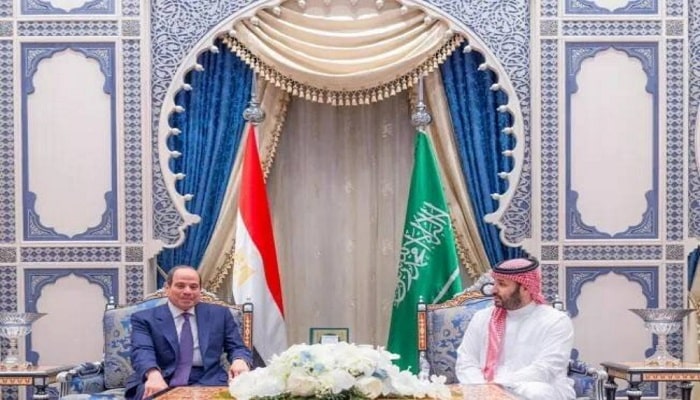
Riyadh is seeking to strengthen its position by forging new alliances. Shortly after the war began, Egypt, Pakistan, Saudi Arabia, and Turkey convened an emergency meeting of Muslim foreign ministers, bringing Pakistan as a mediator. This dynamic would not only help Saudi Arabia end the war, but also ensure that Riyadh is not excluded from any agreement that Tehran and Washington might reach.
It is clear that Riyadh is looking for security partners beyond Washington, hoping that together with Egypt, Pakistan and Turkey they can have a more effective influence than Israel and the US. Riyadh is also looking for defensive drone capabilities from other powers that are frustrated by Washington’s unpredictability, such as Canada and European countries. Ukraine is one of these countries; in late March, Ukraine signed a deal with Saudi Arabia to help the Gulf state integrate drone technology into its air defense systems. If the four countries strengthen their cooperation on defensive deterrence, Saudi Arabia will be better positioned to adapt to a long-term crisis and play a role as a mediator in other arenas, such as Lebanon or Gaza.
Saudi Arabia should also outline its framework for Gulf security and unite other Gulf States and the Quartet in support of an agreement with Iran on maritime security in the Gulf. Of course, Israel may view Saudi Arabia’s moves to strengthen its partnership with Egypt, Pakistan, and Turkey and engage with Iran after the war as dangerous. Geography limits choices. If Iran and the Gulf states engage in a continuous cycle of conflict rather than coexistence, this will lead to their destruction.