
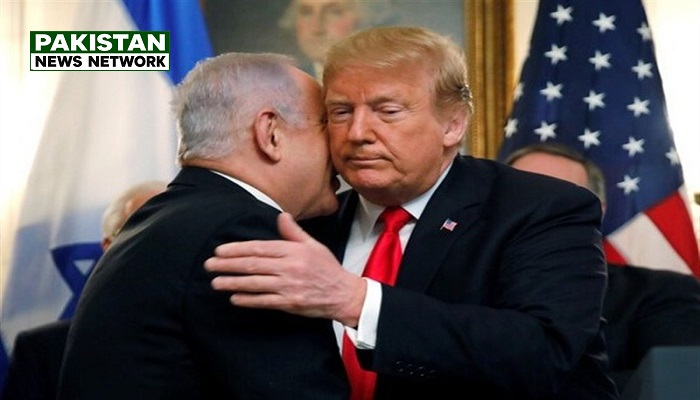
PNN – Hebrew media reported that a defeat for the Republican Party would effectively put an end to Donald Trump’s influence and authority over the next two years.
According to the report of Pakistan News Network; this admission was made by the website of the Zionist regime’s Channel 14, just 48 hours before the start of the U.S. midterm congressional elections.
This analytical report, released this Sunday evening, states: In 48 hours, American citizens will head to the polls. Donald Trump (a terrorist) will remain president, but he may face a Congress that makes it difficult for him to implement his policies.
On Tuesday, Americans will elect members of Congress who will serve during the final two years of Trump’s presidential term. The question is: Will the Republicans retain control of the House of Representatives and the Senate, or will the Democrats gain enough influence to keep the president in check?
The extensive experience an average Israeli citizen has with elections does not help in understanding the American electoral system. In the United States, the President and Congress are elected separately.
A defeat for the President’s party in the midterm elections does not signify the end of his presidency; he can remain in the White House until the end of his term, even if there is a majority that opposes his policies.
However, Congress itself possesses powerful tools. It enacts laws, approves government budgets and expenditures, and oversees the operations of the executive branch. Furthermore, one of its two chambers—the Senate—confirms the appointments of high-ranking officials. Consequently, the outcome of the election can determine whether the president will have partners to help implement their policies, or whether they will be forced into a political battle to advance any given initiative.
According to this media outlet—which is close to Netanyahu—the political conflict in the United States carries implications for Israel as well.
Relations with Washington are not limited solely to the President and his team; they also encompass the lawmakers who approve aid budgets and draft legislation. To understand what changes might occur we must begin with a simple question: what exactly are Americans voting for this week?
The President is halfway through his term, while the House of Representatives is starting anew.
Midterm elections are so named because they take place in the middle of a presidential term. A presidential term lasts four years, while congressional elections occur every two years—once coinciding with the presidential election, and again at the midpoint of the presidential term.
Losing control of the House of Representatives can alter the standard operations of the White House. Instead of committees that previously supported the administration, the executive branch may face leadership intent on investigating its decisions and demanding explanations from senior government officials.
Another tool available to the Senate is the confirmation of appointments. The President nominates candidates for numerous positions—including cabinet posts, ambassadorships, and federal judgeships—and it is the Senate’s responsibility to confirm these appointments.
A majority opposed to the President can delay the confirmation process or reject the nominees. In the case of federal judges, the consequences of such a situation could persist for years after Trump has left the White House.
The Zionist media outlet then turns to one of Tel Aviv’s primary nightmares regarding the election results, noting: U.S. aid to Israel requires the approval of funding by Congress. Therefore, even when the President supports such aid, the identities of the lawmakers who approve the budgets—as well as the composition of the majorities controlling congressional committees—are of critical importance.
However, a shift in the majority does not automatically translate into a change in aid. Altering policy requires taking concrete steps and securing sufficient support within the relevant institutions.