
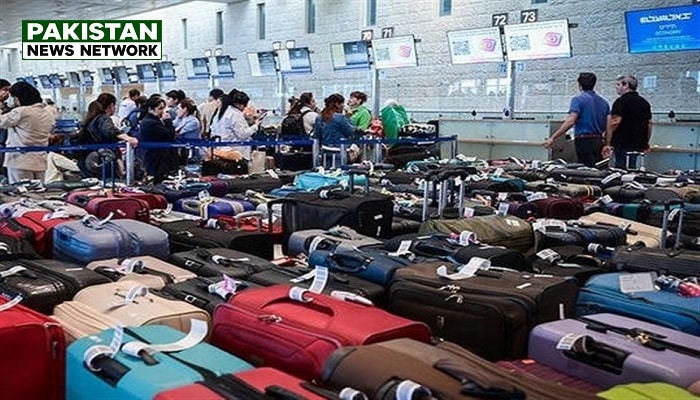
PNN – Zionists are rushing to obtain non-Israeli passports due to concerns about a potential crisis.
According to the report of Pakistan News Network; the Maariv newspaper reported on its website Wednesday evening that Zionists are scrambling to acquire passports from other countries, viewing them as insurance against any eventuality that could lead to Israel’s collapse.
The report’s introduction notes that while young Israelis view a foreign passport as a means to open up economic horizons and career opportunities, the primary reason individuals aged 50 and older seek one is to secure a form of insurance against a major crisis in Israel.
This finding comes from a survey conducted by the Shiluv (Shapir/Shapiro) Institute—involving 502 Jewish participants aged 18 and older—which examined the reasons why Israelis seek to obtain foreign passports.
Maariv added that these findings emerge against the backdrop of years of security, economic, and social instability in Israel. Factors such as the COVID-19 pandemic, the rising cost of living, nationwide protests, political and social divisions, the October 7 attack (Operation Al-Aqsa Flood), the Gaza war, and regional conflicts—all accumulating in recent years—have contributed to a climate of uncertainty regarding Israel’s future (or, to put it more plainly, most Zionists harbor fears about the future of their regime).
Data from the Central Bureau of Statistics for 2025 reveals a concerning picture regarding the international migration balance: 63,300 Israelis emigrated by the end of the year, while only 19,000 residents returned; combined with 24,600 new immigrants, this resulted in a net deficit of approximately 19,000 people.
One of the survey questions asked participants about the primary reason behind Israelis’ desire to obtain a foreign passport. The most common response, selected by over a quarter of the participants (26.5%), was “an insurance policy against catastrophe.” According to the organization conducting the survey, the term “catastrophe” lacks a precise definition but is generally viewed as an umbrella term for any scenario that renders life in Israel impossible or unbearable—whether resulting from deterioration in the security or economic situation or from fundamental changes to the structure of governance.
About one-fifth of the survey participants (20.7%) stated that economic opportunities afforded by a foreign passport were the primary reason for obtaining one, while security concerns were cited by another 18.9%.
Concerns regarding their children’s future were a significant factor for 15.9% of respondents, whereas the cost of living was the main reason for 14.9%. Internal divisions and polarization within Israel ranked last, accounting for only 3% of responses.
Overall, economic conditions have been identified as the primary concern for young Zionists in (occupied Palestine) and the driving force behind their emigration.
According to the data, 27.6% of young people aged 18 to 29 believe that the primary reason for Israelis obtaining a foreign passport is the economic opportunities such a passport can provide. 21.1% view the passport as insurance against catastrophe. 20.3% cited the security situation as the main reason, while smaller percentages pointed to the cost of living and their children’s future as less significant factors (14.6% for each).
The report’s authors suggest that these data may indicate a fundamental difference in how various generations view the acquisition of dual citizenship.
For a young person at the start of their career, foreign citizenship can primarily be viewed as a key that opens up broad horizons.
The survey also indicates that the situation is more complex among the 30-to-49 age group. Within this demographic, no single reason stands out above the others; factors such as insurance against catastrophe, the cost of living, and security concerns carry roughly equal weight. However, economic prospects were cited by a smaller percentage of middle-aged individuals—specifically 15.1%.