
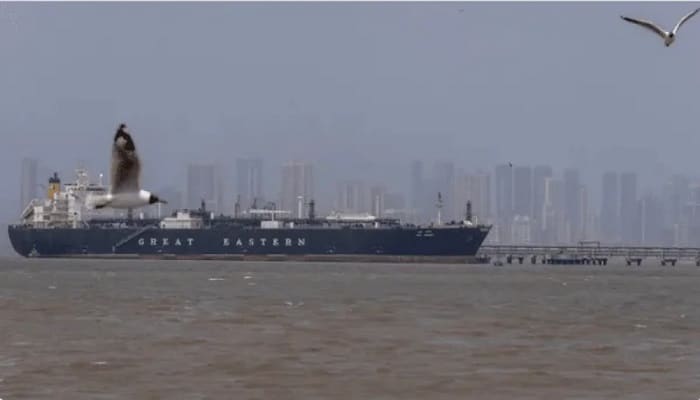
PNN – Iran has been planning for years to manage or close the Strait of Hormuz, sources familiar with the matter told Reuters. The report, citing Dmitry Medvedev’s comments, describes the Strait of Hormuz as a powerful deterrent that would allow Tehran to shift the balance of power without crossing the nuclear threshold.
According to the report of Pakistan News Network; According to the British media, Gulf officials and analysts predict that the next round of talks, likely to be held in Islamabad, “will revolve mainly around restrictions on uranium enrichment and how to manage Iran’s leverage over the Strait of Hormuz – the world’s most vital oil transit highway – rather than focusing on Iran’s missile program or proxy forces.”
Reuters news agency, citing its sources, said Gulf officials warned that “the new approach to the negotiations, rather than dismantling Tehran’s leverage in the Strait of Hormuz, merely ‘manages’ it.”
According to the Reuters report, these countries claim that this approach “while prioritizing global economic stability, marginalizes the security of countries most affected by energy tensions and excludes them from the formal decision-making process.”
According to Reuters, sources familiar with the Persian Gulf region believe that the current diplomacy between Washington and Tehran “is less focused on rolling back Iran’s missile program and more on the level of enrichment and Tehran’s implicit acceptance of control over the Strait of Hormuz, a strait through which about a fifth of the world’s oil passes.”
Although negotiations on enrichment remain stalled, Gulf officials warn that “the shift in priorities in the talks is itself worrisome.” A source close to government circles in the region told Reuters: Ultimately, the Strait of Hormuz will be a red line. Before, the Strait was not a topic of discussion, but now it is. The playing field has changed.
Moscow Pulse: “Hormuz is Iran’s nuclear bomb”
The pivotal role of the Strait of Hormuz was clearly outlined in statements by Dmitry Medvedev, Deputy Chairman of the Russian Security Council, on the social network X on April 8. Medvedev wrote: It is unclear how the ceasefire between Washington and Tehran will play out. But one thing is certain: Iran has tested its nuclear weapon. It is called the Strait of Hormuz. Its potential is inexhaustible.
These statements present the Strait of Hormuz as a lever that allows Iran to increase costs and set the rules of the game without crossing the nuclear threshold.
Hormuz; ‘Sword drawn from the sheath’
In private conversations with Reuters, Iranian security officials described the use of the Strait of Hormuz lever not as a precautionary measure but as a long-term deterrent, according to a senior Iranian security source who told Reuters: Iran has been preparing for the scenario of closing the Strait of Hormuz for years, planning every step. Today, the strait is one of Iran’s most effective tools. A kind of geographical lever that acts as a powerful deterrent.
This source described the Strait of Hormuz as a “golden and unique asset arising from Iran’s geography,” adding: The world cannot take this leverage away from Iran, precisely because it stems from Iran’s geographical location.
A second Iranian source close to the Islamic Revolutionary Guard Corps also stressed that the long-standing taboo on using the Strait of Hormuz had been broken, Reuters reported, calling the strait “a drawn sword” that the United States and regional countries could not ignore.
According to analysts, what has deeply worried the Arab countries of the Persian Gulf is that while missiles, drones, and alleged Iranian “proxies” have repeatedly attacked the region, the framework for negotiations has been shaped solely around the Strait of Hormuz – due to its global impact on the economy – and has marginalized the security concerns of the Persian Gulf countries.
Ibtisam Al-Kutbi, head of the Emirates Policy Center, warned in an interview with Reuters: What is taking shape today is not a historic agreement, but the deliberate engineering of a lasting conflict.