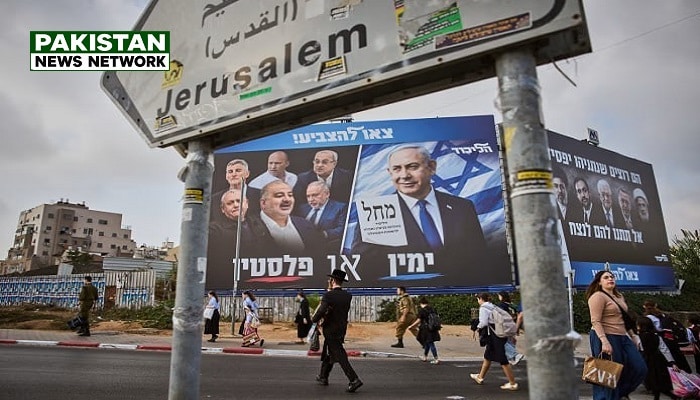
PNN – In this installment, we examine the stances of three other right-wing factions participating in the Knesset election regarding Iran and the “Axis of Resistance.”
According to the report of Pakistan News Network; in the report “An Analysis of the Positions of Parties Active in the Zionist Regime’s Knesset Elections,” we explore the approaches of three right-wing parties: Shas, United Torah Judaism, and “Omkha Yisrael.”
- Shas
Shas is a Haredi party that, in May—alongside the United Torah Judaism party—sought to influence the views of voters in the year leading up to the elections. They did so by pressuring Netanyahu and threatening to withdraw from the cabinet, aiming to secure a definitive exemption from service in the Israeli military for men within the Haredi community. Although Netanyahu managed to prevent this threat from being carried out—thereby averting the collapse of his cabinet during the final months of his four-year term—the party has emphasized that its participation in any future coalition depends on the resolution of this issue.
- Iran
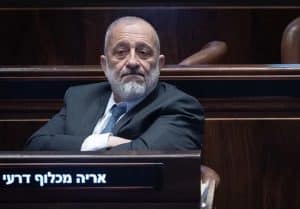
Aryeh Deri, the leader of this party, has explicitly stated that if the Islamic Republic of Iran does not truly abandon nuclear weapons, “we must confront them.” Echoing the baseless claims of senior Zionist officials, he views Iran’s nuclear program as an existential threat to Tel Aviv—one that cannot be ignored. In this context, Shas—as a party represented in the war cabinet—has supported military operations against Iran. Deri maintains that while Israel paid a heavy price in its recent conflicts with Iran, it achieved significant gains in pushing back Iran’s nuclear and missile programs, thereby largely neutralizing the immediate existential threat.
- The West Bank
Shas is among the parties that, in 2025, signed a joint statement calling for the imposition of the regime’s sovereignty over the settlement areas in the West Bank and the Jordan Valley. In this statement, the establishment of a Palestinian state was described as an existential threat to Israel. Furthermore, like other right-wing parties, Shas supports the expansion of settlements and the seizure of additional Palestinian land.
- Hezbollah (Lebanon)
Shas views Hezbollah as a serious threat to Israel and as aligned with the Iranian-led axis. Consequently, the party supports large-scale military operations by the Zionist regime’s army against Hezbollah. However, unlike the “Religious Zionism” or “Otzma Yehudit” (Jewish Power) parties—which belong to the same political bloc—Shas has not adopted radical positions regarding Hezbollah. The party’s approaches are largely defined within the context of the political bloc to which it belongs.
- The Gaza Strip
The party views Hamas as movement intent on the destruction of Israel; consequently, this threat must be eliminated, not merely weakened. Deri supports a large-scale military operation against Hamas and maintains that Israel must not allow the group to regain its military or political power. Nevertheless, during cabinet discussions, Shas leaders sometimes adopt a more cautious stance regarding a “full occupation” of Gaza.
- Arabs in the Occupied Territories
Aryeh Deri advocates for the integration of Arabs and their equal treatment—particularly regarding economic and social issues—emphasizing that many Arabs wish to be part of Zionist society. As such, compared to other right-wing Zionist parties, this party does not harbor particularly strong anti-Arab sentiments.
- Yemen
In the view of this party, Ansarullah is part of the “Iranian axis”—a characterization shared by other parties within this coalition. Consequently, aligning with the Likud party and Benjamin Netanyahu—who leads the coalition—they support any military or security measures taken by the Netanyahu cabinet against threats emanating from the Iranian axis, including those posed by Ansarullah.
- United Torah Judaism Party
This party falls within the category of Haredi parties. In recent months, following the directives of their rabbis, the party’s supporters have held weekly demonstrations in the streets of Jerusalem and Bnei Brak. These protests were staged in opposition to the arrest of Haredi draft evaders and the enforcement of military conscription laws for young men within this community. It is worth noting that these Haredi gatherings consistently take place without official permits and are frequently marked by clashes with police forces and the obstruction of vehicular traffic.
Consequently, United Torah Judaism focuses primarily on issues concerning the Haredi community—such as religious education and efforts to secure exemptions from military service—while its stance on foreign policy matters generally aligns with that of the other parties within its political bloc. The party is led by Yaakov Asher.

- Iran
While the party has not independently articulated its position regarding Iran, as part of the governing coalition, it supports the actions taken by the Netanyahu cabinet in the conflict with Iran. It has also been reported that the home of Moshe Gafni, the party’s former leader, sustained damage during one of Iran’s missile attacks.
- Hezbollah (Lebanon)
Much like Shas, United Torah Judaism views Hezbollah as part of the Iran-aligned axis and supports the cabinet’s military actions against the group; however, no official statements on this matter have been issued by United Torah Judaism officials.
- The West Bank
Unlike the Religious Zionism party, this issue is not an ideological priority for United Torah Judaism. While the party’s leaders and supporters generally back right-wing cabinets and do not openly oppose the expansion of settlements, they are not the driving force behind settlement activity; rather, they focus primarily on domestic issues.
- The Gaza Strip
United Torah Judaism holds clearer positions regarding Gaza. The party explicitly calls for the destruction of Hamas, yet it has repeatedly criticized the protracted, attritional nature of the war in Gaza. In this regard, Moshe Gafni has remarked on several occasions: I don’t understand what we are fighting for… our soldiers keep getting killed.
In general, the United Torah Judaism party is not driven by security or ideological agendas. Regarding foreign affairs and security matters, it typically follows the lead of the governing coalition; ultimately, the party’s absolute priority lies in the internal affairs of the Haredi community.
- The “Amkha Yisrael” Party
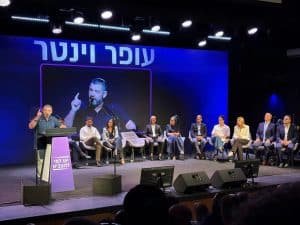
Founded this summer under the leadership of Ofer Winter, this party’s stated platform focuses on security, opposition to the establishment of a Palestinian state, and the “voluntary” emigration of Gaza’s residents. Consequently, this newly formed party—which only manages to cross the electoral threshold (securing 3.25% of the vote) in certain polls—risks negatively impacting the overall vote share of the right-wing bloc. Despite Netanyahu’s efforts to have the party merge with others, Ofer Winter has decided to run in the elections independently.
- Iran
Ofer Winter adopts a security-oriented approach rooted in preemptive strategies, advocating for the doctrine: “We do not wait for a threat; we eliminate it.” While the party has not issued an official stance specifically regarding Iran, it—much like other right-wing parties—favors taking action against the Islamic Republic. Furthermore, Winter advocates for a shift from a strategy of deterrence and containment toward one of preemption.
- The West Bank
The party’s leader views the West Bank as an inseparable part of the envisioned Zionist homeland; consequently, he is staunchly opposed to a two-state solution and the establishment of an independent Palestinian state. He calls for the strengthening and expansion of Jewish settlements, the disarmament of the Palestinian Authority (with the exception of police weaponry), and the extension of Israeli sovereignty over Areas B and C of the West Bank.
- Hezbollah (Lebanon)
The approach here is based on supporting the Israeli military’s freedom of action against Hezbollah within Lebanon. In this regard, Winter advocates for swift and decisive operations against the group—aimed at preventing its reconstruction—rather than engaging in repetitive cycles of war and ceasefires.
- The Gaza Strip
Winter has stated that he views “emigration” as the solution for Gaza, supporting the encouragement of voluntary emigration among its residents. He asserts that “no Arab should remain in Gaza” and that “any enemy who initiates a war against us will pay a heavy territorial price.” Furthermore, while opposing the establishment of a Palestinian state, he advocates for full Israeli security control over Gaza, the prevention of the resurgence of resistance groups, and the return of Jewish settlements to the Gaza Strip.
- Arabs in the Occupied Territories
This party actively seeks the votes of “loyal” Arabs; accordingly, it has placed Yoseph Haddad—an Israeli Christian Arab and pro-Israel activist—second on its list. Winter supports the integration of Arabs who accept Israel as a Zionist entity.