
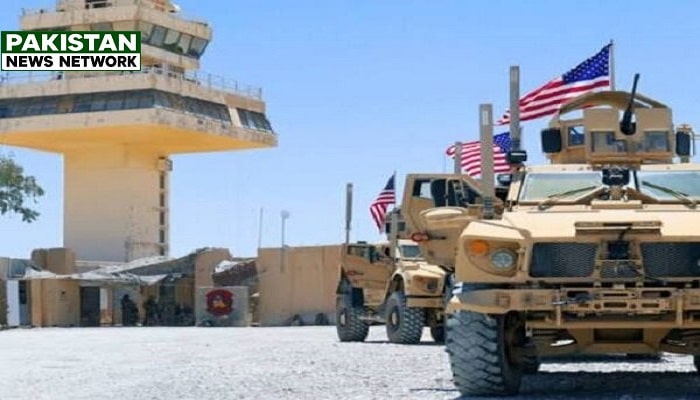
PNN – 23 years of U.S. crimes and genocide in Iraq—resulting in millions of martyrs, wounded, and displaced persons—finally came to an end with the withdrawal of the country’s military forces from Iraq.
After 23 years of military intervention, the US military ended its presence in Iraq; thus, the phase that began with the 2003 invasion—and which resulted in hundreds of thousands of deaths and injuries—concluded on September 30, 2026.
In a statement issued on September 30, 2026, the United States announced the completion of its troop withdrawal from Iraq, thereby ending a military presence that had begun with the overthrow of Saddam Hussein’s regime in 2003, paused with the withdrawal of US forces in 2011, and subsequently resumed in 2014 to combat ISIS.
Over the years, Iraq has weathered successive phases of war, insurgency, sectarian violence, and the rise of armed groups, eventually reaching the war against ISIS and the subsequent transition of the security relationship between Baghdad and Washington to a new stage.
The 2003 invasion of Iraq
The United States and the United Kingdom launched an attack on Iraq on March 20, 2003, in a massive military operation aimed at overthrowing Saddam Hussein’s regime. U.S. forces advanced from Kuwait toward Baghdad; the capital fell on April 9, and the Ba’ath Party regime—which had ruled Iraq for decades—subsequently collapsed. On May 1, 2003, then-U.S. President George W. Bush announced the end of major combat operations, though this declaration did not mark the end of the war. Following the fall of Baghdad, the United States established a “provisional authority” to govern the country during the transition period. In May 2003, the decision was made to disband the Iraqi army and implement measures to “de-Ba’athify” the country.
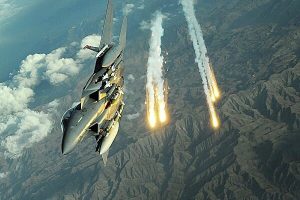
From the Overthrow of Saddam to Armed Insurgencies
Iraq did not experience peace following the fall of Saddam’s regime. Armed groups emerged as a result of American and British activities; these included Ba’athist remnants, Sunni militant groups, and Al-Qaeda in Iraq.
Fallujah and Abu Ghraib
The year 2004 witnessed one of the bloodiest phases of the war. In April, the First Battle of Fallujah began following an escalation of hostilities between U.S. forces and insurgents. Later that same year, the Second Battle of Fallujah took place, during which U.S. forces launched a massive offensive that resulted in a heavy death toll. Concurrently, the Abu Ghraib prison scandal broke after images of U.S. soldiers mistreating Iraqi detainees were leaked to the media. This incident became one of the events that most significantly damaged the image of the United States during the occupation.
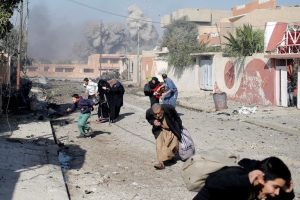
The New Political Structure and Escalating Sectarian Violence
In 2005, Iraq witnessed the holding of elections and the drafting of a new constitution—an effort to establish a new political system following the fall of Saddam’s regime. However, this political process coincided with a surge in violence. In February 2006, the bombing of the Al-Askari Shrine in Samarra ignited a widespread wave of sectarian violence. Targeted killings, abductions, and bombings proliferated under the U.S. security umbrella; the number of displaced persons rose; and Baghdad—along with several other Iraqi cities—became a theater of conflict orchestrated by the Americans from behind the scenes.
The 2007 “Troop Surge” Strategy
In January 2007, George W. Bush announced a new strategy that came to be known as the “troop surge.” This strategy involved deploying tens of thousands of additional troops to Iraq and altering military deployment tactics. The plan focused on protecting civilians and bolstering security in areas experiencing extensive activity by armed groups; at that stage, more than 270,000 U.S. troops were stationed in Iraq. Concurrently, the United States established the “Iraq Awakening Councils,” in which Sunni tribal groups united—ostensibly to counter Al-Qaeda in Iraq, but primarily to confront Shiite resistance groups.
Security Agreement
In 2008, the United States and Iraq signed a security agreement establishing a timeline for the withdrawal of U.S. forces. These troops began withdrawing from Iraqi cities in 2009, and Washington announced the end of major combat operations in 2010. The complete withdrawal of U.S. forces took place in December 2011, thereby concluding the first phase of the U.S. military presence that had begun with the 2003 invasion.
Returning to Iraq by using ISIS as a pretext
The American withdrawal did not bring an end to the unrest in Iraq; bombings, armed attacks, and political and sectarian tensions persisted. Meanwhile, the terrorist group ISIS had gained strength in Syria. The Americans, having been compelled to withdraw from Iraq under the terms of a security agreement, sought to leverage this group to facilitate their own return to the country. In June 2014, ISIS launched a massive offensive against Iraq, resulting in the fall of Mosul—the country’s second-largest city. Iraqi army units collapsed in the face of the assault, allowing ISIS to seize vast quantities of weapons, equipment, and funds. Capitalizing on this U.S. scheme, ISIS managed to seize control of large swathes of northern and western Iraq between 2014 and 2018, perpetrating horrific atrocities in the process.
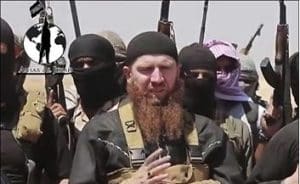
The Camp Speicher and Sinjar Atrocities
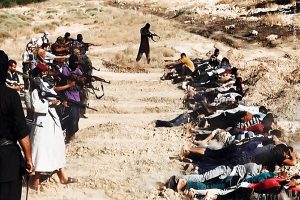
The year 2014 witnessed some of the bloodiest atrocities in the war against ISIS. The massacre of young Iraqis at Camp Speicher was one such event, in which hundreds of Iraqi soldiers and trainees were slaughtered after being captured by the group. Estimates place the number of victims between 1,095 and 1,700.
In August of that same year, ISIS attacked the Sinjar region, targeting members of the Yazidi minority for killing, abduction, enslavement, and displacement. The group’s atrocities against the Yazidis subsequently became the focus of international and human rights investigations and were characterized by international bodies as “genocide.”
Return of US forces to Iraq
As ISIS expanded and seized control of vast areas of Iraq, the Iraqi government requested international assistance, leading to the return of U.S. forces to the country in 2014. In October 2014, the U.S. Department of Defense officially designated the operations conducted by the U.S. and the coalition against ISIS in Iraq and Syria as “Operation Inherent Resolve.” Given that the terrorist groups operated as an insurgency, U.S. assistance—comprising airstrikes, intelligence support, training, advising, and military aid to Iraqi and Kurdish forces—played a limited role in the ultimate victory over ISIS; indeed, had it not been for the presence and assistance of Iran and other neighboring countries, the phenomenon of ISIS would not have been eradicated from Iraq so quickly.
Liberation of Cities by the People’s Army and Resistance Groups
Ayatollah Sistani’s fatwa of Jihad-e Kafa’i (collective obligation jihad)—which led to the formation of volunteer popular mobilization groups and paramilitary units numbering in the hundreds of thousands—combined with support from Iran, resulted in the liberation of several cities and regions held by ISIS in the years that followed. Tikrit was liberated in 2015, and Fallujah in 2016.
The most significant battle was the Battle of Mosul, which began in October 2016 and lasted until July 2017, when the Iraqi government announced the recapture of the city. In December 2017, Baghdad declared the end of major military operations against ISIS in Iraq. However, the organization was not eliminated; instead, it transformed from a force that dominated cities into armed cells that carried out attacks, ambushes, and assassinations across various regions.
The Assassination of Martyrs Soleimani and Al-Muhandis
On January 3, 2020, acting on the direct orders of Donald Trump, the United States carried out an attack near Baghdad International Airport—in clear violation of international norms—that killed Major General Qassem Soleimani, commander of the IRGC Quds Force, and Abu Mahdi al-Muhandis, deputy head of the Popular Mobilization Forces (PMF). This strike led to severe tensions between the U.S. and both Iran and Iraq; in response, Iran launched a missile barrage against U.S. bases in Iraq—an unprecedented move globally in recent decades—resulting in injuries to hundreds of personnel, according to official Washington sources. Notably, these figures were released gradually; initially, the U.S. claimed there were no casualties from the attacks, and ultimately, it never disclosed a figure for its own fatalities.
Concurrently with these attacks, calls within Iraq for an end to the U.S. military presence intensified. During this period, Iraq became the primary theater of tension between the United States and Iran.
Shifting U.S. Operations from Combat to Training
In response to this public discontent, the U.S. and Iraqi governments announced in 2021 that the U.S. mission in Iraq would be scaled back, transitioning from combat operations to a role focused on advising, assisting, training, and building the capacity of Iraqi forces.
Attacks on U.S. Forces Following the Gaza War
Following the onset of the Zionist regime’s genocide in Gaza in October 2023, attacks by Iraqi resistance groups against U.S. forces in Iraq and Syria intensified. Consequently, the United States found itself in a difficult position regarding the future of its military presence in Iraq, coinciding with Iraqi demands for an end to the presence of foreign troops.
Agreement to End the Coalition Mission
In September 2024, the U.S. and Iraqi governments announced a plan to terminate the mission of the international coalition against ISIS in Iraq. Under this plan, it was agreed that the coalition’s mission in Iraq would conclude by September 2025, while U.S. forces would remain in the country until September 2026—operating from bases within Iraq—to support operations related to the fight against ISIS in Syria.
Final Withdrawal
During 2025 and 2026, U.S. forces began scaling back their presence in Iraq and evacuating military bases. On September 30, 2026, the United States—whose bases had been targeted by Tehran’s missile strikes as a result of its warmongering against the Islamic Republic of Iran—announced the completion of its troop withdrawal from Iraq; thus, the U.S. military occupation, which had resumed in 2014 under the pretext of fighting ISIS, came to an end.
The Disastrous Toll of 23 Years of US Occupation and Atrocities in Iraq
The years of war inflicted immense human and material losses; however, determining the final death toll is difficult due to varying statistical methodologies and the lack of complete records covering the entire duration of the conflict.
A study by the “Costs of War” project at Brown University estimates the number of direct deaths in Iraq between March 2003 and March 2023 to be in the hundreds of thousands, with figures varying depending on the statistical methodology used.
According to official statistics, at least 315,000 Iraqis—including women and children—were directly killed as a result of this war, while the total human toll among Iraqis due to the use of unconventional, chemical, and nuclear weapons is estimated to exceed one million.
The number of displaced Iraqis resulting from this war—spanning more than two decades of US occupation and its aftermath—reached several million.