PNN – Criticizing the US-Saudi nuclear agreement, The Washington Post warned of the possibility of uranium enrichment in Riyadh.
According to the report of Pakistan News Network; The Washington Post expressed skepticism in today’s editorial regarding the nuclear cooperation agreement between the US and Saudi Arabia and the granting of nuclear concessions to Riyadh; the paper wrote that the Saudi government’s track record, combined with the terms of the new deal, raises significant concerns about the agreement’s consequences.
The newspaper argues that the US-Saudi nuclear agreement—which is now before Congress for review—lacks two key safeguards found in the similar 2009 agreement between the US and the United Arab Emirates.
According to The Washington Post, the UAE committed under that agreement not to engage in uranium enrichment or nuclear fuel reprocessing on its own soil; however, the new agreement allows Saudi Arabia to initially enrich uranium to 5 percent, with the potential for that limit to eventually reach 20 percent.
The Washington Post emphasizes that enriching uranium to the 20 percent level leaves a relatively short technical gap to the grade required for nuclear weapons.
According to the editorial, Saudi Arabia could—like the UAE—purchase the fuel it needs from international suppliers and would essentially have no need for domestic enrichment. Nevertheless, the agreement between Washington and Riyadh has left the door open for the construction of uranium enrichment facilities in Saudi Arabia following a joint U.S.-Saudi study.
The Washington Post identifies oversight mechanisms as its second area of concern. The newspaper notes that the agreement signed in July does not require Saudi Arabia to join the International Atomic Energy Agency’s (IAEA) Additional Protocol—a protocol that enables the agency to conduct more extensive monitoring, inspection, and verification of a country’s nuclear activities. In contrast, the UAE has accepted this level of oversight.
The Washington Post warns that the U.S.-UAE nuclear agreement includes a provision allowing Abu Dhabi to negotiate a revision of the deal should another Middle Eastern nation secure more favorable nuclear terms from the United States. According to the newspaper, if Saudi Arabia is granted permission for domestic uranium enrichment without accepting the IAEA’s most stringent inspections, the UAE is likely to seek similar terms.
The Washington Post also cites classified intelligence documents provided to Congress, noting the U.S. intelligence community’s assessment that Saudi Arabia has not ruled out the possibility of developing a nuclear weapons program.
The Washington Post editorial goes on to link this issue to U.S. policy toward Iran. The newspaper writes that granting Saudi Arabia the capability for domestic uranium enrichment contradicts the Trump administration’s primary justification for its campaign against Iran—a justification based on the premise that Iran must abandon its enrichment activities.
However, another significant part of the newspaper’s argument concerns the issue of trust in the Saudi government. The Washington Post notes that while Saudi Arabia is a U.S. strategic partner in an unstable region and a key oil supplier, Mohammed bin Salman has, in practice, shown little tolerance for opponents and critics.
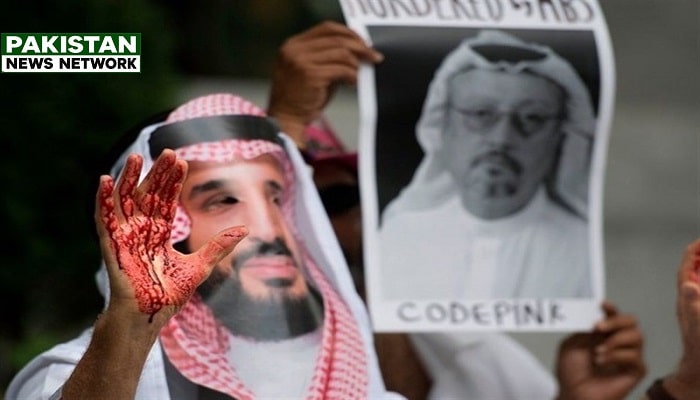
To explain its concerns, the newspaper once again turns to the case of Jamal Khashoggi, the journalist and Washington Post columnist. The editorial notes that Friday marks the anniversary of the killing of Khashoggi—a prominent critic of Mohammed bin Salman who was murdered inside the Saudi consulate in Istanbul, where his body was dismembered.
Citing an assessment by U.S. intelligence agencies, The Washington Post reports that Mohammed bin Salman personally approved the operation that led to Khashoggi’s murder. The newspaper also refers to the trial held by Saudi officials in 2019, describing it as a sham; eight individuals were convicted—with five sentenced to death—yet the identities of those convicted were not disclosed, and the proceedings took place behind closed doors.
According to The Washington Post, two senior officials alleged to have orchestrated the operation to kill Khashoggi never faced trial or punishment; eight years after his killing, no high-ranking official has yet been held accountable for the crime.
Citing human rights groups, The Washington Post also reports that activists, intellectuals, journalists, and social media users in Saudi Arabia continue to be imprisoned for their activities, including efforts to advocate for peaceful reform.
The editorial also points to Mohammed bin Salman’s efforts to project a modern image of Saudi Arabia—ranging from investments in esports and the hosting of comedy festivals to staging major sporting events like the 2027 Asian Cup and the 2034 World Cup. However, The Washington Post argues that, according to human rights groups, this modern image exists alongside the continued suppression of dissent.
In conclusion, The Washington Post notes that some members of Congress have expressed skepticism regarding the nuclear agreement with Saudi Arabia; however, it remains unclear whether opponents can garner enough support in the time remaining to pass a resolution opposing the deal. Even if such a resolution were passed, Trump could veto it.