
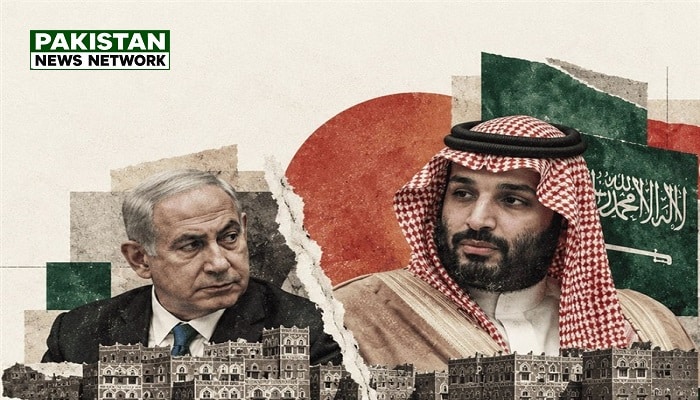
PNN – Saudi Arabia’s entanglement in the war in Yemen has prompted Bin Salman to seek an exchange of military and security intelligence with Tel Aviv.
According to the report of Pakistan News Network; a Hebrew-language media outlet has published a detailed report uncovering the historical background and previously undisclosed aspects of intelligence and security ties between the Zionist regime and Saudi Arabia—both in the past and in recent months.
In a detailed report on October 16, 2026, the newspaper Israel Hayom unveiled a new dimension of the clandestine relationship between Saudi Arabia and Israel: an intelligence partnership with roots tracing back to the 1960s. This cooperation took on a more direct form in 2006 through U.S. mediation and has now reached a stage where Riyadh seeks intelligence assistance from Tel Aviv for its war against the Yemenis. This revelation emerges even as Saudi Arabia continues to withhold official recognition of Israel in the public sphere, with its representatives in international forums walking out of the hall whenever Israeli officials take the floor to speak.
Saudi Arabia traditionally views itself as the “Custodian of the Two Holy Mosques” and a leading nation within the Islamic world—particularly among Sunni-majority countries. In international forums, its political representatives ostensibly walk out of the hall whenever an Israeli representative takes the floor to speak. Officially and publicly, Riyadh has set specific conditions for any potential normalization of relations with the Zionist regime. However, recent reports reveal a different picture, exposing direct contacts, intelligence exchanges, and even technical cooperation between the two sides that have persisted for many years.
The Beginning of Direct Contacts Mediated by the U.S
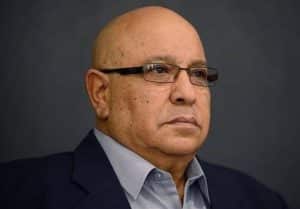
A report by Israel Hayom states that direct, covert contacts with Saudi Arabia began around 2006, during the tenure of Meir Dagan as head of the Mossad. Dagan was apparently the first Israeli to establish direct contact with Saudi officials. At that time, these interactions were conducted primarily through a third party—a method the Mossad referred to as a “special contact.”
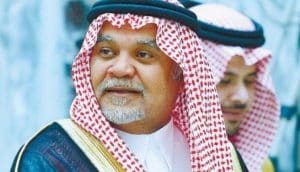
Among the Saudi figures with whom Israel maintained contact in the United States, Prince Bandar bin Sultan stands out most prominently. As the then-Saudi ambassador to Washington, he was one of the most influential figures in Saudi foreign policy. For years, Bandar bin Sultan served as the primary channel for informal, indirect communication between Riyadh and Tel Aviv; he later ascended to even more significant positions, including head of Saudi Arabia’s foreign intelligence service (General Intelligence Directorate) and Secretary-General of the country’s National Security Council. Some analyses have described him as the “architect of Riyadh’s clandestine relations with Tel Aviv.” At the same time, Bandar bin Sultan is known for his explicitly anti-Iranian stance.
These covert relations, like any relationship between states and intelligence services, are built upon mutual interests. Riyadh sought access to Israel’s valuable intelligence assets and diverse cyber-capabilities, while Tel Aviv hoped to establish contact with the highest echelons of one of the Middle East’s wealthiest and most significant nations—a country viewed as a potential counterweight to Iran.
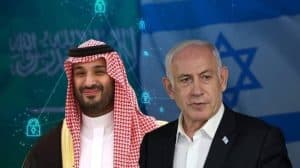
This logic is also rooted in Tel Aviv’s grand strategy. Perceiving itself as weaker than Iran within the regional balance of power, Israel has consistently sought to build alliances and leverage the capabilities of other nations—including Muslim-majority states—to contain Tehran. It is within the framework of this strategy that Saudi Arabia, possessing significant political, economic, and religious weight, has occupied a special position.
From Israel’s perspective, intelligence cooperation between the parties was not merely an end in itself; rather, it served as a means to achieve a larger objective: the normalization of diplomatic relations with Saudi Arabia. A report by Israel Hayom emphasizes that this intelligence cooperation helped lay the groundwork for future diplomatic ties—including the public normalization negotiations that took place in the months leading up to October 7, 2023. For Israel, normalization with Saudi Arabia is considered a strategic achievement.
However, in the public sphere, Saudi Arabia has made normalization contingent upon certain conditions. Riyadh has officially stated that it will not establish diplomatic relations with Israel absent a “clear and irreversible path” toward the establishment of an independent Palestinian state.
These positions are being articulated by officials in Riyadh against the backdrop of reports from recent years—surfacing during 2023 negotiations—indicating that Riyadh sought U.S. security guarantees, assistance in developing a civilian nuclear program, and the easing of restrictions on U.S. arms sales as the “price” for normalization with Tel Aviv.
Israeli Intelligence Assistance to Saudi Arabia in the Yemen War: A New Turning Point in Riyadh-Tel Aviv Relations
A report by Danna Zaken in Israel Hayom, published previously, indicates that Saudi Arabia recently reached out to Israel—via the United States Central Command (CENTCOM)—to request intelligence for countering Yemen’s Ansarullah (Houthis). Further reports suggest that this request was made after Ansar Allah forces succeeded in blocking the Bab el-Mandeb Strait, posing a serious threat to maritime security and Saudi oil exports. According to these reports, the intelligence assistance provided by Israel to Riyadh—second only to that provided by the United States—has been more extensive than that from any other foreign party.

A brief report by Israel Hayom documents a narrative suggesting that the reality behind Riyadh–Tel Aviv relations is far more complex—and long-standing—than what is visible to the public. On one hand, Israel views this cooperation as a precursor to the diplomatic normalization of ties with Riyadh. On the other, Mohammed bin Salman continues to publicly condition such normalization on the fulfillment of his country’s demands—including the establishment of a Palestinian state, as well as security and nuclear guarantees from the United States. The gap between these two levels is precisely what the Israel Hayom report has brought into sharper focus than ever before: behind closed doors, Saudi Arabia acts as an intelligence partner to Israel, yet in the public eye, it still refuses to grant it formal recognition.