
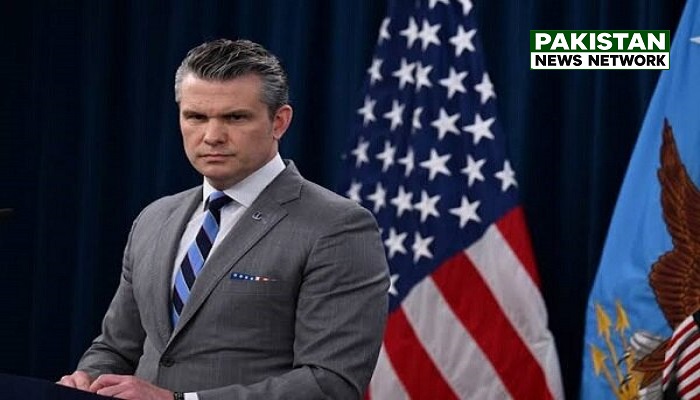
PNN – Following the U.S. Department of War’s move to block members of Congress from visiting American military bases in the Persian Gulf, former U.S. officials have accused Hegseth of concealing the extent of war-related damages.
According to the report of Pakistan News Network; the American publication Fortune reported that the U.S. Department of Defense (the Pentagon) has faced criticism from former officials for restricting congressional access to U.S. military bases in the Persian Gulf region. Critics argue that this action has fueled tension between the executive branch and Congress, and has raised questions regarding the administration’s efforts to withhold information concerning a war against Iran.
Evelyn Farkas, Executive Director of the McCain Institute and former U.S. Deputy Assistant Secretary of Defense for Russia, Ukraine, and Eurasia, characterized this move as a sign of a lack of transparency and an attempt to evade congressional oversight. According to her, the purpose of these restrictions could be to conceal the true costs of a war with Iran or to lay the groundwork for requesting additional funding.
Last month, Senator Chris Murphy (D-CT) stated that the Pentagon had blocked his visit to the Al Udeid Air Base in Qatar, where he intended to meet with military commanders. He described this action as part of an effort by the Department of Defense to obscure the real consequences and costs of a war against Iran.
Additionally, The Atlantic reported that Joni Ernst, a Republican Senator from Iowa, was also barred from visiting a military base during this same period.
Restrictions persist despite the conclusion of military operations.
According to the report, visits to U.S. military bases by members of Congress are considered part of their oversight duties—a practice dating back at least to 1943, during the Second World War.
In March—following attacks on Iran by the United States and the Zionist regime, and the subsequent decisive Iranian response involving a massive missile barrage against U.S. military bases in the region—U.S. Secretary of Defense Pete Hegseth issued a memorandum imposing restrictions on travel by members of Congress and their staff to the U.S. Central Command’s area of responsibility. Under this directive, such travel requires the personal approval of the Secretary of Defense.
These restrictions have remained in place even after the conclusion of U.S. combat operations against Iran in May—a development that, according to critics, has raised questions regarding the Pentagon’s true motives.
Growing Disagreement over War Costs and Defense Budget
Hegseth has also faced criticism regarding his approach to information dissemination, specifically concerning the reduction of regular press briefings and the restriction of media access. Previously, he withheld information from the Congressional Budget Office (CBO) regarding the costs of a potential war with Iran—data that would have informed the CBO’s updated estimates in September.
These developments unfold as the Pentagon seeks a $1.5 trillion budget for the 2027 fiscal year. If approved, this would represent the largest defense budget in U.S. history, intended to fund the modernization of military infrastructure and replenish ammunition stockpiles depleted during conflicts in the Persian Gulf region.
Citing Farkas, Fortune reported that sidelining Congress from the oversight process not only fails to assist in securing the funding required by the Pentagon, but could also further erode trust between the two sides.
According to her, given the growing sensitivity among lawmakers regarding the Department of Defense’s extensive financial requests, transparency and the provision of precise information would be a more effective approach to garnering congressional support—especially since the costs associated with base reconstruction and military contracts will ultimately be revealed through the bidding process and the activities of contractors.