
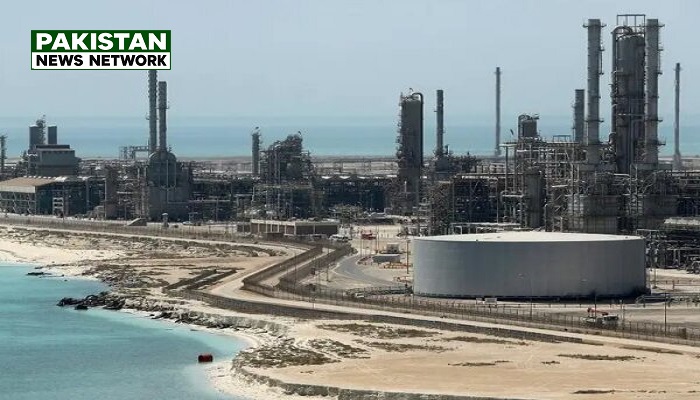
PNN – The “port-for-port” equation adopted by the Yemeni armed forces not only subjects Saudi Arabia’s economic lifeline to intense pressure from Yemeni attacks, but also alters the dynamics of mutual deterrence.
Recent developments in the confrontation between Saudi Arabia and Yemen’s Ansar Allah forces indicate that the scope of the conflict is expanding once again; this time, ports and economic infrastructure have moved to the center of the military equation. The announcement by Yemeni armed forces that they have targeted the ports of Jeddah and Jizan—in retaliation for attacks by the Saudi-led coalition on the port of Hodeidah—conveys a message that extends beyond a mere military operation: Sana’a is seeking to shift the cost of military pressure on Yemen’s vital infrastructure onto Saudi territory itself.
The Yemeni Armed Forces have announced that they targeted the ports of Jeddah and Jizan in two separate operations, confirming that the strikes hit their intended targets. In a statement, the forces described these operations as a response to Saudi attacks against Yemen and the port of Hodeidah, emphasizing a continued strategy of “port for port,” “blockade for blockade,” and “escalation for escalation.” However, details regarding the extent of the damage and the operational impact of these attacks have not yet been independently verified.
Jeddah and Jizan: Why Are These Two Ports Significant?
The selection of these two ports is noteworthy from the perspective of Saudi Arabia’s economic geography and security. Jeddah Islamic Port, located on the Red Sea coast, is considered one of the country’s most vital commercial and logistical hubs. According to statistics released regarding port activity in Saudi Arabia for 2025, Jeddah Port handled approximately 1,428,000 inbound and outbound containers. This figure underscores Jeddah’s significant role within Saudi Arabia’s maritime trade network—though it should be noted that King Abdulaziz Port in Dammam recorded a higher total container throughput during the same year.
The importance of Jeddah is not limited solely to the volume of its commercial trade. Situated on the Red Sea coast and in close proximity to major population and economic hubs in western Saudi Arabia, this port holds a unique position within the country’s supply and commercial connectivity network. Any threat to the security of its operations could drive up costs related to insurance, transportation, and supply chain management—even if it does not result in an actual cessation of port activities.
The port of Jizan is also significant from another perspective. Located in southwestern Saudi Arabia near the Yemeni border, its position on the Red Sea coast makes it a key component of the economic and logistical infrastructure for the Kingdom’s southern regions. According to official Saudi government data, Jizan ranks as the country’s third-largest port on the Red Sea in terms of design capacity and plays a vital role in the importation of livestock from the Horn of Africa. The port is situated approximately 266 miles from the Bab el-Mandeb Strait. Consequently, the targeting of Jeddah and Jizan should be analyzed within the context of two distinct yet complementary objectives: exerting pressure on a major Saudi maritime trade hub and creating a threat near the country’s southern borders.
Al-Hudaydah: The Starting Point of a Reciprocal Equation
To understand the rationale behind the operations announced by Yemen, one must consider the significance of the port of Al-Hudaydah. This port serves as one of the most vital entry points for goods destined for the densely populated regions of northern and western Yemen; its role extends well beyond the realm of commerce.
According to a report by the United Nations mission supporting the Al-Hudaydah Agreement, approximately 4.87 million tons of food and 3.04 million tons of fuel entered Yemen in 2024 through the ports of Al-Hudaydah, Al-Salif, and Ras Issa. Furthermore, the port of Al-Hudaydah alone has facilitated approximately 70 percent of commercial imports and nearly 80 percent of the humanitarian aid entering the country.
These figures illustrate why, from the perspective of the Ansarullah forces, an attack on Al-Hudaydah is not viewed merely as a military operation against a port facility; rather, it has the potential to impact the access of millions of people to food, fuel, medicine, and other essential goods.
In this context, the declaration of a “port-for-port” equation serves as an attempt to establish mutual deterrence. The logic behind this strategy is that if Yemen’s critical infrastructure comes under attack, the economic infrastructure of the opposing side may likewise face threats. In doing so, Sana’a aims to alter the cost-benefit calculations underlying Saudi Arabia’s military operations, linking the continuation of attacks on Yemeni ports to the prospect of instability spreading to Saudi ports.
Economic Deterrence: A New Tool for Pressuring Riyadh
The significance of this development lies in the fact that Ansarallah is seeking to expand the scope of its deterrence from military targets to economic infrastructure. In asymmetric warfare, the side that is weaker in terms of conventional military equipment and capabilities typically attempts to increase the cost of continuing operations for the adversary by threatening the latter’s critical economic and logistical assets.
In recent years, Saudi Arabia has made extensive investments in the development of ports, trade routes, industrial zones, and logistics infrastructure. The security of this infrastructure is vital to the country’s economic plans and its regional standing. Consequently, even a credible threat against ports and coastal facilities could influence the calculations of shipping companies, insurers, and investors.
Of course, one should not overlook the distinction between declaring a target and causing actual disruption to the Saudi economy. To date, no independent evidence has emerged to suggest that commercial activity in Jeddah or Jizan has come to a widespread halt, or that these ports have sustained significant economic damage. Nevertheless, the persistence of such threats could drive up the costs of maritime security and shipping, and affect the investment climate in coastal regions.
On the other hand, the expansion of the conflict to include civilian infrastructure poses serious humanitarian and economic risks for both sides. Disruptions to operations at the port of Hodeidah could directly impact the lives of Yemeni civilians, while insecurity at Saudi ports could have repercussions extending well beyond the country’s borders.
The Red Sea: Beyond a Bilateral Conflict
These developments cannot be viewed solely within the context of the dispute between Saudi Arabia and Ansarallah. The ports belonging to both sides are situated along the Red Sea—a region of strategic importance due to its role in connecting trade routes between Asia, Europe, and Africa, as well as its proximity to the Bab al-Mandab Strait.
Any escalation of tension in this region could affect the calculations of shipping companies and the security of international trade routes. Under such circumstances, threatening ports does not merely signify increased pressure on one party to the conflict; it can also heighten the risks associated with economic activity along a vital international route.