PNN – An Arab analyst wrote that, following successive defeats for the United States and the Zionist regime, Iran is approaching the theater of war from a position of victory and may unveil a major surprise in the coming days.
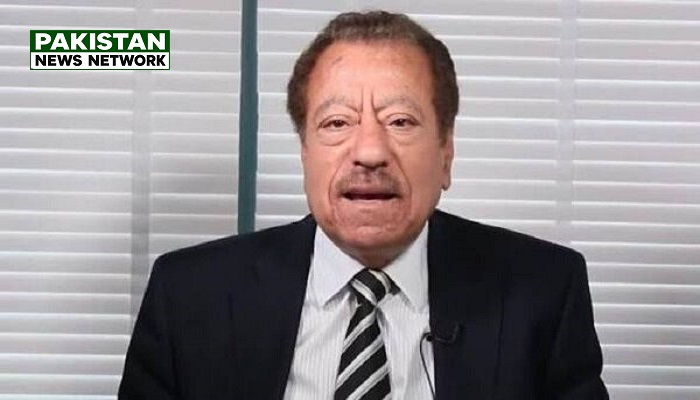
According to the report of Pakistan News Network; Abdel Bari Atwan—an analyst of regional strategic affairs—wrote in a recent article for the online newspaper Rai Al-Youm that the return of the Donald Trump administration’s focus to Iran’s nuclear program—specifically the renewed insistence that Iran’s uranium stockpiles enriched to over 60% be moved out of the country, a demand driven by pressure from the Zionist regime—signifies an admission that the military option has failed (at least for the time being). This is because such an option would entail grave risks for U.S. aircraft carriers and warships stationed in the waters of West Asia and the Indian Ocean.
He added that Iran considers its nuclear doctrine a “red line” that is absolutely non-negotiable. Through its steadfastness and victories across various battlefronts, the country has thwarted U.S. pressure. Furthermore, by leveraging a strong military resolve and possessing advanced missile and drone systems, Iran has managed to neutralize the air superiority of the United States and Israel.
Another indication that, according to the author, supports this position is the opposition of Iran’s leaders to any renewed inspections of the country’s nuclear facilities by the International Atomic Energy Agency (IAEA). Concurrently, there is talk regarding a potential withdrawal from the Treaty on the Non-Proliferation of Nuclear Weapons (NPT), as well as the issuance of a new fatwa that would deem the acquisition of nuclear weapons permissible—envisioning such weapons as a shield against any nuclear aggression by the United States or Israel.
These demands have emerged following Trump’s suggestion that the use of nuclear strikes remains a possible last resort—this, at a time when his administration has failed to achieve its war objectives against Iran, which included toppling the regime, permanently seizing the Strait of Hormuz, renaming it, and transferring Iran’s nuclear stockpiles to the United States.
Iran has also informed Pakistani and Qatari mediators that its nuclear dossier is not a subject for negotiation. Furthermore, it has stated that before the Strait of Hormuz is reopened to international shipping, Washington must accept seven conditions set by Iran—including halting the war, ending the blockade and sanctions, lifting restrictions, and releasing all of Iran’s frozen assets and financial resources held in American and European banks.
Atwan added that Iran engages with the United States from a position of victory—or, at the very least, from the standpoint of a party that has not succumbed to military threats. Tehran has made all necessary preparations to confront and defeat any new act of aggression by the United States or Israel.
According to the article, Iran’s new strategy involves expanding the geographical scope of its military response; this means that, in addition to U.S. bases in the Persian Gulf region and Jordan, American bases in Europe would also fall within range.
Pointing to the disruption of cyber networks in the United States, Atwan added that these cyber-attacks have compromised America’s secure communication channels and inflicted financial and operational difficulties upon the technology firm Microsoft. Despite efforts by Trump and U.S. intelligence agencies to conceal and deny these attacks, information regarding these developments is gradually emerging.
Furthermore, in order to refute claims of complete control over the Strait of Hormuz, Atwan cited missile attacks and the laying of naval mines by Iranian armed forces against vessels violating regulations; he noted that, on a daily basis, more than five oil tankers or commercial ships in this region are either targeted or destroyed.
Potential Attack on Internet Cables
The author suggests that a major surprise in the coming days could involve the continuation of cyber warfare, specifically the destruction of more than seven internet cables located along the seabed of the Strait of Hormuz.
He asserts that Iran possesses the capability to carry out such an action; should it occur, it would trigger a major crisis in global communications, potentially subjecting the world to widespread disruptions across the internet and social media networks.
In conclusion, this Arab analyst emphasized that Iran’s nuclear program remains secure, serving as a strategic shield for the country. Approximately 500 kilograms of highly enriched uranium are stored deep within Iran’s mountains; “Mount Tabar,” located near Isfahan, is one of the suspected sites for housing these stockpiles and the secrets associated with them.
According to the author, Iran—as a victorious, powerful, and resilient nation—will neither retreat from its nuclear program nor relinquish even a single gram of its highly enriched uranium. Tehran will not even permit experts and inspectors from the International Atomic Energy Agency (IAEA) to visit its nuclear facilities.