
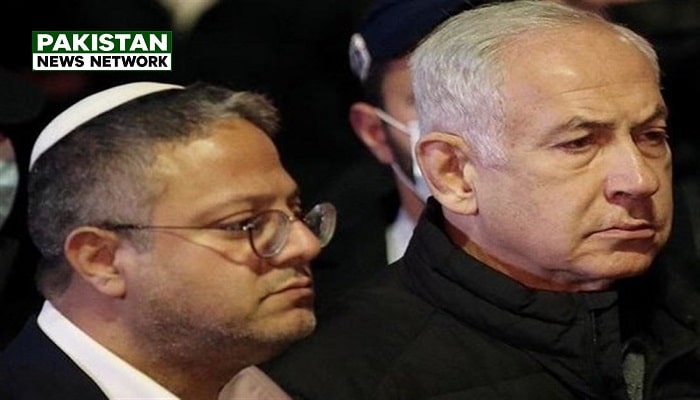
PNN – Maariv has reported an intensification of rifts within Netanyahu’s camp—most notably a severe tension between him and Ben-Gvir—on the eve of the elections.
According to the report of Pakistan News Network; with only days remaining until the elections in the Zionist entity, and at a time when Prime Minister Benjamin Netanyahu and his party are faring poorly in the polls—yet striving to remain in power at any cost—Hebrew-language media have reported that internal divisions within Netanyahu’s camp and coalition are deepening, fueled by intensifying competition among right-wing parties for Knesset seats and ministerial positions.
Escalating Rifts in the Far-Right Camp
The Hebrew-language newspaper Maariv, noting the intensification of rivalry and divisions within Benjamin Netanyahu’s camp, reports concerns that votes could be wasted—specifically if certain lists fail to cross the electoral threshold—which would undermine the camp’s chances of forming the next government.
The outlet further highlights that the Likud party aims to increase its own parliamentary representation while diminishing the strength of the “Otzma Yehudit” (Jewish Power) party, led by Itamar Ben-Gvir. Additionally, Likud is seeking to win back undecided voters from within the right-wing bloc.
The latest Maariv poll indicates that Likud has secured 18 seats, while the total number of seats for the Netanyahu camp—including the Noam party—has reached 51.
Maariv reported that Likud is intensifying its election campaign to increase its seat count and prevent the waste of votes within the right-wing bloc. This effort includes targeting undecided voters who may be wavering between Likud and the Otzma Yehudit (Jewish Power) party.
According to this report, Likud believes that Bezalel Smotrich’s party is no longer at immediate risk of failing to cross the electoral threshold. Consequently, Likud has shifted its focus toward competing for the top spot in terms of the number of seats won.
Meanwhile, the greatest risk lies with smaller right-wing lists, which may fail to meet the threshold—meaning the votes cast for them would not be counted during the allocation of seats. In this context, Yoseph Haddad, a Knesset candidate for the “People of Israel” party, revealed that Likud attempted to recruit him until the very last moment, offering him a ministerial position.
Tensions and Disagreements between Netanyahu and Ben-Gvir Over Ministerial Posts
Meanwhile, rifts between Netanyahu and Ben-Gvir regarding the allocation of ministerial portfolios in the next cabinet are widening, with Ben-Gvir laying claim to the Ministry of Defense.
Netanyahu promptly declared that the portfolios for Defense and Internal Security must remain under the control of the Likud party. In response, Ben-Gvir accused Netanyahu and Smotrich of orchestrating a campaign to undermine his party, asserting that should his party secure a significant number of seats, he would demand the Ministry of Defense.
According to Maariv, Smotrich has decided to strengthen his cooperation with Likud. His party, alongside Likud, has established a joint field office aimed at encouraging votes for the right-wing—part of an initiative to mobilize approximately 200,000 voters.
The report notes that Likud also approached figures associated with Ben-Gvir’s party to join the campaign; however, Ben-Gvir has shown no interest in participating in or funding the initiative. Meanwhile, Smotrich has accused Ben-Gvir of attempting to seize seats from Likud and the Religious Zionist camp, rather than working to increase the overall representation of the right-wing bloc.
The Likud party and the party affiliated with Smotrich have also reached an agreement to distribute surplus votes between them, whereas Ben-Gvir’s party remains outside of such an arrangement following the failure of its efforts to reach an understanding with other right-wing parties.
Meanwhile, the Haredi parties—which represent ultra-Orthodox Jews—are facing electoral challenges and internal divisions as they prepare to present their terms for future coalition negotiations.
According to a poll by the newspaper Maariv, the Shas party is projected to win seven seats; it is currently working to prevent its voters from shifting their support to Ben-Gvir’s party.