
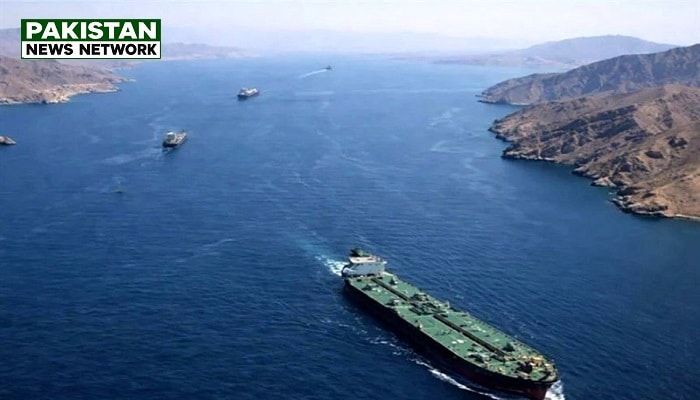
PNN – A report by a British newspaper indicates that global energy transit costs have surged.
According to the report of Pakistan News Network; the Financial Times has reported on the sharp rise in costs and risks associated with transporting oil through the Strait of Hormuz; tanker owners are now compelled to pay exorbitant fees, unprecedented freight rates, and hefty insurance premiums to navigate their vessels through this waterway.
Key points from the report include the following:
$100,000 Pay for Transiting Hormuz
Oil tanker captains, who typically earn around $15,000 a month, now receive $100,000 monthly for operating along the Hormuz route, plus bonuses of up to $50,000 for each transit. Ordinary seafarers—who might otherwise earn only $1,500 a month—receive four to six times their standard pay when passing through the Strait of Hormuz.
Oil Shipping Rates Hit $1.3 Million per Day
Transit costs are not limited to crew wages alone. Shipping rates for oil cargoes via the Hormuz route have surged to a record high of approximately $1.3 million per day—up from just $20,000 to $50,000 daily last year. In other words, the cost of operating a tanker on this route has multiplied several times over.
Only a limited number of oil tankers are willing to enter the Strait of Hormuz
With the rising risk of attacks, only a limited number of vessels are willing to enter the Persian Gulf. Tankers enter the strait, load their cargo, and then exit via Hormuz to transfer the oil to other tankers near Fujairah. This “shuttle” method has effectively added an extra, costly step to the oil transport chain.
War risk insurance for an oil tanker can reach $20 million
In addition to steep crew wages and freight charges, tanker owners must pay war risk insurance premiums. These premiums range from 6% to 10% of the vessel’s hull value; for a large tanker, the cost can reach $20 million for a single voyage to the Persian Gulf.
Even the fuel for oil tankers has become more expensive
Operating costs have risen due to the increase in tanker fuel prices. The price of fuel oil used by large tankers at the Port of Fujairah—the nearest bunkering hub to the Persian Gulf—has reached $686 per tonne, a 67% increase compared to the same period last year. This surge has directly driven up the cost of tanker voyages.
Tanker traffic through the Strait of Hormuz has dropped sharply
Before the war, approximately 135 vessels passed through the Strait of Hormuz daily, transporting about one-fifth of the global supply of oil and liquefied natural gas (LNG). However, following an escalation in attacks, the number of passing vessels fell to 13 on October 4.
Conclusion
A Financial Times report indicates that the war has transformed the transit of oil through the Strait of Hormuz from a routine, high-traffic shipping route into a high-risk, extremely costly one. Monthly payments to captains reaching $100,000, voyage bonuses of $50,000, charter rates climbing to $1.3 million per day, war risk insurance premiums hitting $20 million, and rising fuel costs have collectively imposed a new set of expenses on oil transport via this waterway.