
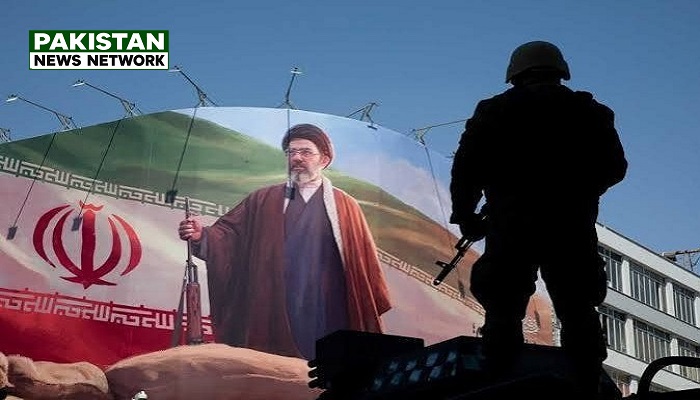
PNN – Tehran possessed more constructive ideas than any other regional actor for curbing Israel’s war machine in the period leading up to the Al-Aqsa Flood.
According to the report of Pakistan News Network; when Saudi Crown Prince Mohammed bin Salman, Pakistani Prime Minister Shehbaz Sharif, and Turkish President Recep Tayyip Erdoğan were signing the Makkah Agreement, many well-informed sources believed that the agreement had been signed quite “suddenly,” with apparently only a few individuals from the leaders’ inner circles aware of it.
Three major Islamic powers—Saudi Arabia, the Republic of Turkey, and the Islamic Republic of Pakistan—despite being situated within the “Western security orbit” and each possessing significant weight in the region spanning the northern Indian Ocean to the eastern Mediterranean, have drawn closer together. This shift is driven by escalating tensions resulting from the activation of geopolitical fault lines across West Asia. These nations now seek to recalibrate the regional security order, independent of the ongoing struggle between the “Axis of Resistance” and the “Deal of the Century” axis. If we view the “Deal of the Century” and the Mecca security agreement as indicators of an emerging new security order in the Middle East, how do the interests of the Islamic Republic of Iran align—or intersect—with these new alignments, and what “action” or “reaction” should we adopt in response?
The “Deal of the Century”: A Product of Great-Power Rivalry
The emergence of China as a major power in the economic and technological spheres—coupled with the geopolitical resurgence of a new Russia toward Eastern Europe—has led the United States to perceive its own hegemony as being in a state of “decline.” This is more pronounced now than at any other time since the fall of the Berlin Wall or the U.S. wars in Iraq and Afghanistan. Consequently, the U.S. is seeking to alter the “rules” and the “playing field,” with the aim of preventing the rise of rivals and restoring its own position within the international system.
The “new America” is no longer as committed as it once was to the Bretton Woods order, the NATO security framework, or its traditional allies across the globe. Instead, it seeks to shape a new order designed to curb China’s economic growth while simultaneously consolidating Russia’s position in the Donbas-Crimea region as a Eurasian power. In this context, West Asia holds immense significance—situated as it is at the epicenter of the rivalry between land-based and maritime powers, while also possessing vast hydrocarbon resources.
To explain the “cause” behind the emergence and development of the normalization of relations between Israel and the Arab world within the context of this “great game” played by global powers, one must point to the United States’ need for a greater presence in China’s periphery, alongside its adoption of an “offshore balancing” policy aimed at safeguarding U.S. interests against global and regional rivals.
The U.S. government intends to establish a new security order in the region by defining new political, economic, and security pacts—such as “I2U2,” “IMEC,” the “Deal of the Century,” and the “integration of CENTCOM”—that would connect the southern Persian Gulf, via the Arabian Peninsula, to the Eastern Mediterranean and the occupied territories. In this new order, countries such as Iran, Turkey, Egypt, and Pakistan would emerge as major “losers,” relegated to a peripheral status within the region’s future architecture.
The key point is that this new order defines its “other” as Iran and the members of the Axis of Resistance; consequently, following October 7, 2023, it has sought to construct two conceptual zones—the “Axis of Prosperity” and the “Axis of Misery”—with the aim of destabilizing the northern coast of the Persian Gulf, thereby bolstering the “Deal of the Century” and the normalization of relations between regional states and Tel Aviv.
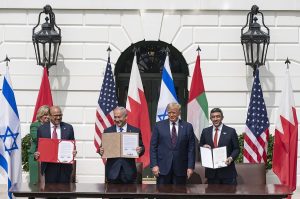
The Mecca Security Agreement: A Response to the Aftermath of October 7
A preliminary look at the text of the Mecca agreement reveals a mention of “joint defense”; however, other clauses clearly point to a mechanism characterized by a degree of “caution”—a deliberate avoidance of hasty action. The Yemeni government’s efforts to break the Saudi-led blockade and impose costs on the Kingdom—thereby shifting the security equation in the Red Sea—have left the young Saudi prince, now disillusioned with the Beijing agreement, seeking a new instrument to safeguard his country’s infrastructure against attacks by Ansarallah.
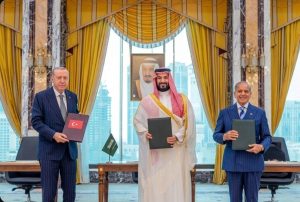
Some experts believe that prior to the emergence of the “Mecca Agreement,” Turkey and Pakistan were considered Riyadh’s primary military and arms-related backers. In reality, however, this new pact serves less of a military-security function and more to bolster Riyadh’s bargaining power vis-à-vis Tehran, Washington, Brussels, Moscow, and Beijing. The quadrilateral meeting in Tehran—involving Asim Munir, İbrahim Kalın, and Khalid bin Salman, alongside the Secretary of Iran’s Supreme National Security Council—should be viewed in this very context.
What has become evident thus far is that the region’s Sunni powers are seeking to reconstruct a new order—one in which they are not necessarily in a state of hostility toward Iran or the Zionist regime, yet one that acknowledges a dynamic of both competition and cooperation. Although the order emerging from the Mecca Agreement purports to establish indigenous security arrangements, it continues to recognize the role of major powers such as the United States, Russia, and China; it aims to create an overarching framework for regional peace while simultaneously establishing a counterweight to both Tehran and Tel Aviv.
The imminent accession of Egypt, Syria, and even Qatar to this pact should be analyzed and evaluated within this context. The key point is that the order emerging from the Mecca Agreement—rather than stemming from a prudent and deliberate effort to reshape the security architecture of the Middle East or to help resolve the region’s “security dilemma”—is actually aimed at safeguarding the foundations of the conservative Saudi monarchy and ensuring the transfer of financial resources to Ankara, Islamabad, and other purveyors of “security commodities” to the Persian Gulf region.
How is Iranian order created?
Perhaps the greatest uncertainty for the “Iranian” perspective concerns the nature and definition of the post-Al-Aqsa Flood order. Although Tehran—more than any other regional actor—possesses substantive, proactive ideas for curbing Israel’s war machine, securing the withdrawal of occupying American forces, and countering Salafi-Takfiri terrorists, these concepts have arguably not been given the serious consideration they deserve in the construction of a new security order. In the past, Iranian administrations sought to propose an indigenous security framework—through initiatives such as a defense pact among Islamic nations or the “Hormuz Peace” plan—aimed at minimizing the Middle East’s enduring historical dilemma: the persistent intervention of extra-regional powers. The goal was to enable regional states to independently and autonomously safeguard their shared destiny.
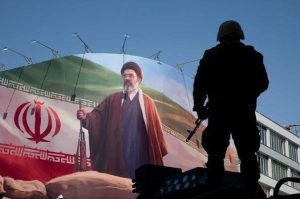
Although the relationship between the “Iranian order” and the “Zionist order” is a zero-sum game, there remains a possibility that Tehran—drawing inspiration from Chinese President Xi Jinping’s four-point proposal and Russia’s concept of a security mechanism involving Tehran, Moscow, and Beijing—might explore the feasibility of joining the “Mecca Pact” or establishing a collective security alliance.
Although Turkey, Pakistan, and Saudi Arabia are considered regional rivals of Tehran, the aggressive and bellicose actions of the right-wing government in Israel—led by Benjamin Netanyahu—have heightened concerns among the region’s Muslim nations regarding Zionist warmongering and expansionism. Consequently, these states now prioritize the containment of Israel within the territory of occupied Palestine. Achieving this objective hinges on the regional powers developing a shared perception of the Israeli threat, as well as an understanding of the necessity to establish an indigenous security order during this period of international transition.