
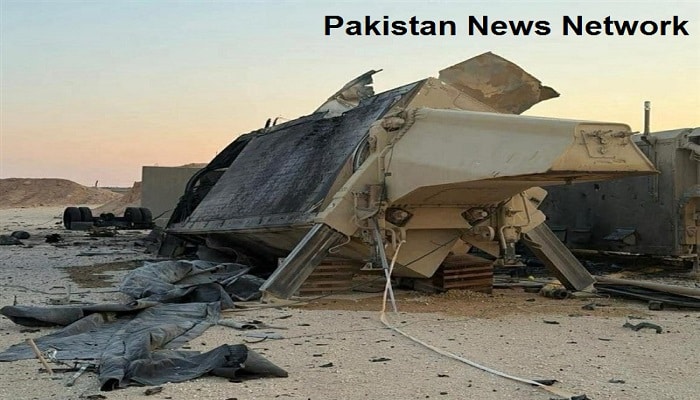
PNN – Top experts in the Turkish security establishment believe that Iran challenged the capabilities of the US and Israeli radar systems.
According to the report of Pakistan News Network, a group of researchers from the “National Intelligence Academy” affiliated with the “Turkish Intelligence Service” have commented in a detailed report on the various dimensions of the US and Israeli regime’s war against Iran.
Iran and Israel’s Weak Air Defense
The war definitively revealed a long-debated truth in the field of Integrated Air and Missile Defense (IAMD): there is no such thing as an impenetrable air defense umbrella.
Iran demonstrated that even the most advanced multilayered systems can be compromised under the pressure of saturation, innovative munitions, and cost. This situation necessitates a redefinition of the paradigm regarding the nature of air defense.
A significant rethinking of the traditional layered approach to air and missile defense has emerged. Israel’s multi-layered air defense architecture, consisting of the Iron Dome, David’s Sling, and Arrow systems, has long been considered one of the most advanced IAMD structures in the world. However, the multiple warheads containing small bombs used by Iran in ballistic missiles such as the Khorramshahr have exposed critical vulnerabilities in this system.
These types of warheads confront defense systems with dozens of targets instead of just one. This situation greatly complicates missile defense at the final stage and limits the effectiveness of systems such as David Sling and Patriot.
This development shows that the classic layered defense approach is not enough. Because defense systems are optimized for single targets, they have limited capacity against saturation attacks and unstable cost asymmetry against ballistic missiles, cruise missiles, and kamikaze drones.
By simultaneously launching low-cost drones and advanced missiles such as the Fatah-2, Iran set out to cripple the radar system and exhaust Israel’s interceptor missile stockpiles. Although Israel claims to have countered Iran with a high interception rate of 92 percent, mathematically, as the volume of attacks increases (as the number n increases), the probability of hitting the target increases, regardless of how high the probability of interception is. It is these probabilities and seemingly insignificant leaks that allowed Iran to hit critical targets such as the Haifa oil refineries.
Iran’s strategy of using relatively inexpensive missile and drone systems to eliminate expensive interceptors challenges the defense sustainability of the other side. Examples include Iran’s destruction of the AN/FPS-132 early warning radar in Qatar, at a cost of approximately $1 billion, by a ballistic missile, and the AN/GSC-52B satellite communications terminal in Bahrain by a Shahed-136 kamikaze drone.
The destruction of these strategically important systems with less costly munitions highlights the fragility of the defense architecture.
Iran demonstrated that flexible, mobile, and dispersed elements can have a significant impact on the creation of an air defense architecture. During the Twelve-Day War in June 2025, Iran’s air defense early warning and weapons capabilities suffered heavy losses. Despite this qualitative and quantitative advantage, the United States and Israel lost a large number of their drones to ground fire.
Furthermore, as seen in incidents such as the F-35A fighter jet crash and the forced emergency landing and downing of an F-15E near Isfahan, Iran’s air defenses are not destroyed and are operational.
This also underscores the need to build and maintain air defense capabilities at the tactical and even operational levels. This highlights the importance of mobile, distributed, and autonomous target detection and identification sensors in low-to-medium altitude/short-to-medium range air defense systems.
In a significant portion of its operations, Iran targeted not directly the air defense weapon systems themselves, but rather their supporting infrastructure. The targeting of radars, communications systems, and command centers demonstrates that air defense is no longer a stand-alone shield but rather part of a broader integrated combat system. The effectiveness of air defense depends largely on early warning networks and sensors.
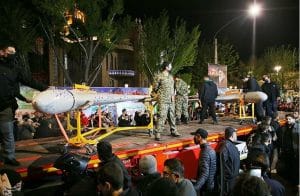
Iran’s targeting of radar systems has shown how fragile these networks are. Therefore, modern air defense must include elements of distributed sensing, redundancy, and mobility.
Iran’s systematic missile and drone attacks on US and Gulf early warning system networks since the beginning of the war, as well as the significant breaches in the air and missile defense umbrella in the region as a result of these attacks, provide an important doctrinal lesson in modern air defense warfare.
It has become clear that air and missile defense cannot be created solely with defensive systems, but must also be supported by offensive elements, cyber and electronic warfare systems.
The destruction of air threats before they attack, their functional neutralization before they reach the target, and the elimination of elements that support the enemy’s offensive capabilities, such as the command and control network, its production and logistics infrastructure, must be considered within the framework of air and missile defense. In other words, air defense cannot be provided solely with air defense weapon systems.
Iran’s Smart Attacks
One of the notable aspects of the war is that Iran’s retaliatory strikes targeted not only aircraft on the runway or classic military targets, but also directly the electromagnetic and intelligence infrastructure behind the Air Force.
According to open source data, Iran attacked mission-critical platforms such as radar systems, SATCOM infrastructure, refueling aircraft, and AWACS at at least seven US bases.
The attacks specifically targeted the functions of “threat detection, aircraft maintenance, and air operations management.”
In this context, three distinct sets of targets stand out:
- Communications infrastructure: The attack on SATCOM terminals in Bahrain demonstrated how critical communications are to joint air and naval operations. For a network-centric force, SATCOM is not just a data transmission channel, but one of the main arteries of battlefield awareness.
- Early Warning Radars: The targeting of the AN/FPS-132 early warning radar in Qatar and the AN/TPY-2 and THAAD radars in Jordan demonstrate that Iran is directly attempting to blind the “eyes” of the air and missile defense network. It should be particularly emphasized that the AN/TPY-2 is the primary sensor of THAAD, without which the system cannot independently search for and track targets.
- Airborne Early Warning and Command Control Platforms: The damage to the E-3 Sentry AWACS aircraft at Prince Sultan Air Base and the earlier targeting of tankers are signs that Iran is targeting the “flying nerve centers” of the Air Force and the support structure that feeds them. These attacks are not random; they demonstrate a conscious understanding of the Air Force’s operational logic in targeting.
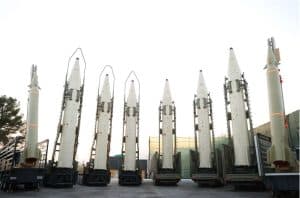
Although the United States claimed to have achieved air superiority during the war, it was also observed that Iran’s dispersed and mobile air defense systems still posed a serious threat.
The damage to an F-35 and its emergency landing, coupled with assessments that Iran’s mobile and electro-optical/infrared (EO/IR) air defense systems still pose a threat, suggest that the claim of air superiority in the classical sense does not fully reflect the reality on the ground.
In particular, the fact that EO/IR-based air defense systems are not directly affected by electronic jamming suggests that spectral warfare is not one-dimensional.
In other words, even if radar is suppressed, EO/IR threats can still exist; even if data links are operational, the network collapses if sensors are hit. Even if the aircraft can take off, early warning and tanker aircraft losses can slow down operations.