PNN – The nature of the polls conducted in the occupied territories suggests four possible scenarios regarding the post-election cabinet.
With five weeks remaining until the Zionist regime’s parliamentary elections, polls released from within the occupied territories have heightened uncertainty regarding the future of the ruling coalition and the opposition in Israel. A consistent theme across most surveys and polls is the existence of a “fine balance” between the two rival camps, with no “definitive outcome” yet guaranteed for either group.
On October 27, 7.3 million voters residing in the occupied territories—including 1.2 million Palestinian Arabs (16–17%)—will head to the polls to elect the 120 members of the next Knesset. Of the 38 registered lists, polls suggest that 12 are likely to cross the electoral threshold (3.25%, equivalent to four seats).
With the exception of polls conducted by centers, networks, and newspapers loyal to the Likud Party and aligned with Netanyahu, other polls agree that neither of the two main rival camps is likely to secure the 61-seat threshold—barring any unexpected developments.
According to the polls, the current ruling coalition—or the more far-right camp led by Netanyahu and including Ben-Gvir, Smotrich, and other religious parties—is projected to win between 50 and 54 seats, a figure that could potentially rise to 58 or 60.
The situation is similar in the opposing camp—that is, the moderate right-wing opposition. Most polls project this bloc securing between 52 and 56 seats, with the breakdown of party support as follows: Yesh Atid (21–24 seats), Blue and White (10–13 seats), The Democrats (9–10 seats), and Yisrael Beiteinu (8–9 seats). By factoring in the seats held by the “United List” or assuming one of the smaller blocs joins the coalition, this camp could approach the pivotal 61-seat mark.
Post-Election Scenarios
Given the balance between the two camps observed in public opinion polls, determining the identity of the future government and its prime minister will be difficult. Accordingly, four of the most likely election scenarios for the Zionist regime are as follows:
First: The return of Netanyahu and his coalition to power (probability: medium-to-high).
Netanyahu will wage the battle for his own survival—which is, in reality, a personal struggle—with the utmost seriousness. Far-right and fascist elements, meanwhile, view this fight not merely as a “decisive battle” against the Palestinians, Arab neighbors, and Iran, but as a “rare opportunity” to reshape the “Jewish state” according to their own model and style.
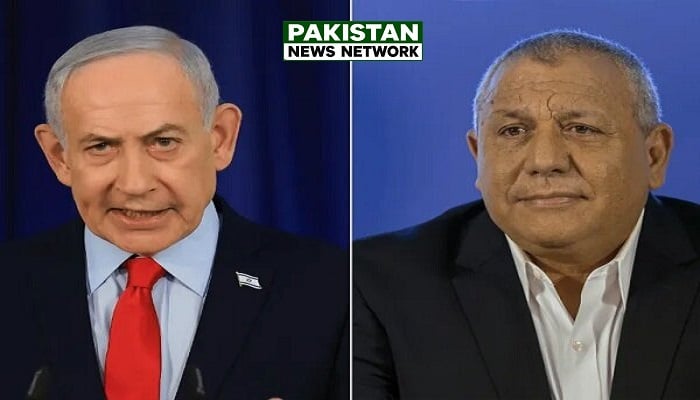
Netanyahu will exert his utmost effort during this war to drive a wedge within the opposition and lure its undecided members with promises of ministerial posts. As in the past, he will seek out his rivals’ weaknesses and points of vulnerability in order to break them. He will play against Gadi Eizenkot by leveraging the “alliance with the Left and the Democrats” and reliance on Arab votes to form a coalition, and will move against Naftali Bennett by exploiting the issue of “liberalism”—which could threaten the project of “ethnic nationalism and the Judaization of the state.”
Netanyahu has a long track record of sowing discord among his opponents; he did so in 2011 with Ehud Barak and several Labor Party lawmakers, in 2020 with Benny Gantz—then heading the “Blue and White” alliance—and in 2022 with the “Yamina” party led by Naftali Bennett, ultimately toppling Bennett’s 61-member coalition by luring two Knesset members (Idit Silman and Amichai Chikli) into his own ranks. These two subsequently secured guaranteed spots on the Likud electoral list and were appointed to ministerial posts in Netanyahu’s cabinet.
On the other hand, Gadi Eisenkot stands to benefit from Netanyahu’s declining popularity among the Israeli public, as well as from a regional and international climate seeking his ouster. This sentiment is evident in the stances taken by Europe and the United States, as well as in the repercussions surrounding regional warnings issued prior to October 7—warnings that went unheeded at the time.
Second: A coalition led by Gadi Eisenkot and the opposition (Probability: equal to the first scenario)
Gadi Eisenkot might secure the opportunity to form a cabinet, yet he would face significant challenges at this stage. Notably, the two key pillars of the opposition coalition—Bennett and Lieberman—refuse to rely on Arab votes, whether from within the coalition or from outside it. He would also encounter opposition from the leader of the “Yisrael Beiteinu” party regarding the inclusion of religious parties (such as Shas) in the coalition—parties that had previously allied with Labor and Likud to safeguard their share of the budget.
Gadi Eisenkot will capitalize on Netanyahu’s declining public popularity and an international climate inclined toward ending the Netanyahu era. He will rely on the slogan that currently unites the opposition: Anything but Netanyahu.
Third: The Isaac Herzog Scenario (Probability: Low to Moderate)
We term this the “Isaac Herzog scenario.” The President of the Zionist regime has demonstrated a readiness to employ all the legal, judicial, and moral tools at his disposal to break the deadlock over cabinet formation in the occupied territories. He also harbors a deep aversion to Netanyahu’s far-right cabinet, believing that its policies and actions have inflicted the greatest damage on the regime’s image and standing, while isolating it on the international stage.
Following the official announcement of the results—which must take place within eight days—and after consulting with parliamentary factions, Herzog will entrust the task of forming a cabinet to the figure capable of assembling the broadest coalition; he is not strictly required to select the leader of the winning bloc for this role.
According to Israeli sources, he has signaled a willingness to refuse any extensions to the deadlines granted to the designated prime minister. He has also announced his readiness to make the consultations public, thereby exposing—in the court of public opinion—whichever party is responsible for delaying the formation of the government.
However, the most significant obstacle Herzog will face is Netanyahu’s opposition to playing “second fiddle”—that is, allowing Gadi Eizenkot to serve as prime minister during the first term. Another hurdle is Eizenkot’s refusal to partner with Netanyahu in a unified cabinet, a stance shared by other opposition party leaders.
Fourth: The Vicious Cycle of Early Elections in the Occupied Territories
If the process of forming a cabinet does not proceed according to the statutory timelines set out in the Zionist regime’s constitution, a five-month period may elapse before a new cabinet is established. During this time, the Knesset is compelled to dissolve itself and submit to early elections within three months; throughout this interval, the incumbent cabinet continues to function as a “transitional cabinet,” retaining sufficient authority and power to carry out routine operations.
Israel has experienced early elections—particularly between April 2019 and March 2021, when it saw four elections in just two years—culminating in the formation of the Bennett-Lapid government, which, however, was short-lived.