
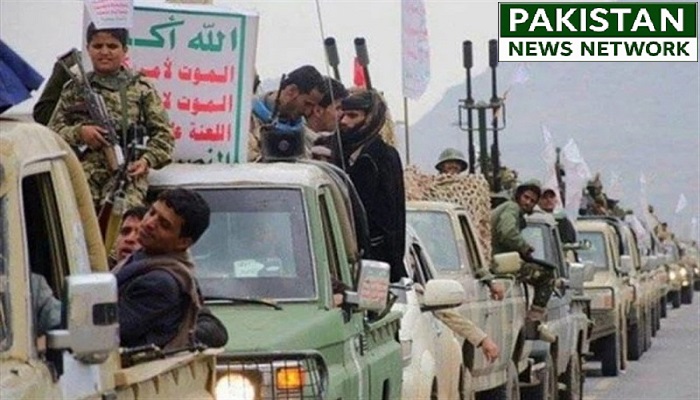
PNN – Sanaa’s battlefield gains in the conflict against Saudi-backed mercenaries have made the liberation of Marib a likely scenario.
According to the report of Pakistan News Network; the recent buildup of Saudi-backed mercenary forces and equipment across various parts of Yemen signals an attempt to prepare for ground operations against Ansarullah. These maneuvers, unfolding across multiple fronts, are taking place at a time when Sanaa’s forces have not only remained undeterred by the adversary’s preparations but have also sought to intensify pressure on Saudi-aligned forces through a series of missile and drone strikes prior to the launch of any ground offensive.
The recent operations by Yemeni armed forces are also notable for their geographical scope. These attacks have not been confined to a single front but have targeted locations across various parts of Yemen. An increase in attacks has been observed in the east, particularly in the city of Marib; the port of Mocha and its surrounding areas on the west coast have been targeted; and in the south, concentrations of Saudi-aligned forces in Lahj province have come under attack. This wide distribution indicates that Ansarullah’s response to the movements of Saudi-aligned forces is not limited to a specific axis but simultaneously exerts pressure on multiple points where these forces are deployed.
A crucial factor here is the success rate of these attacks. Ansarullah’s current security advantage has enabled Sana’a’s forces to effectively detect concentrations of Saudi-aligned troops and equipment, thereby increasing the success rate of missile and drone strikes. In reality, the assembly of forces intended for ground operations becomes a strategic asset only if those forces can be sustained and supported; under current circumstances, however, a significant portion of these troop concentrations has come under attack by Sana’a’s forces before the operations could even commence.

From this perspective, the buildup of troops and equipment by Saudi-aligned forces has yet to shift the balance on the ground in their favor. On the contrary, the rapid response of Sana’a’s forces has turned the opposing side’s military maneuvers into a catalyst for intensified pressure by Ansarullah across multiple fronts. This is particularly significant given that any potential ground operation would require the concentration of forces and equipment at specific locations—a requirement that, amidst the prevailing security situation, entails greater cost and risk for the Saudi-aligned forces.
Yet, more significant than the direct missile and drone attacks is the equation Ansarullah has established regarding the Saudi oil industry. To date, this dynamic has deterred Saudi Arabia from resuming airstrikes against the positions of Sana’a-aligned forces in Yemen. Consequently, Saudi-backed forces are ramping up preparations for ground operations without having regained the support of Saudi air raids.
This factor is crucial when assessing the current situation. Had Saudi Arabia resumed its airstrikes, ground operations by forces aligned with the Kingdom could have benefited from direct air support. However, the continuation of the status quo implies that Saudi ground forces and their mercenaries—at least for the time being—would have to engage in potential operations while facing pressure from Sana’a’s forces, and without the return of such air support. Consequently, a mere buildup of troops and equipment cannot, in itself, be interpreted as a sign that the balance of power on the battlefield is shifting.
The combination of these circumstances has created a distinct situation for Ansarullah. On one hand, Sana’a’s forces have managed to counter the movements of Saudi-aligned troops across multiple fronts using missile and drone strikes; on the other, by exerting pressure on the Saudi oil industry, they have deterred a resumption of Saudi airstrikes. Consequently, Sana’a’s forces currently retain the initiative, and opposing forces have so far been unable to alter this dynamic by amassing greater numbers of troops.
Accordingly, there is an increased likelihood that the launch of ground operations—rather than generating momentum for Saudi-aligned forces—will instead trigger a rapid response and an advance by Ansarullah forces across various fronts. This possibility becomes even more significant when considering the situation in Ma’rib; as a key theater of operations for Saudi-aligned forces, the intensifying pressure from Sana’a-aligned troops in the area has heightened concerns regarding the potential fall of the city.
This concern has now moved beyond mere military calculations, extending into the realms of political maneuvering and regional mediation. It is reported that the Islah Party forces stationed in Ma’rib—fearing the city’s fall to Sana’a-aligned forces—have sought to utilize regional intermediaries to avert such an outcome. In this context, the Islah Party has reportedly asked Hamas to mediate between itself and the Ansarullah forces.
In the current climate, the significance of this request lies less in the potential outcome of the mediation itself and more in the picture it paints of the situation on the ground. When a party to the conflict—amidst escalating military activity—seeks an intermediary to avert the possible loss of one of its most critical positions, it signals serious concern over a rapid shift in the battlefield landscape. In the case of Ma’rib, this development is unfolding as Sana’a forces intensify their offensive along this axis while simultaneously maintaining pressure in other areas.
Overall, the current situation in Yemen cannot be assessed solely based on the volume of troops and equipment deployed across various fronts. While Saudi-aligned forces are ramping up preparations for a ground offensive, Ansarullah holds a security advantage; they have successfully targeted concentrations of opposing forces in various areas and exerted significant pressure through missile and drone operations. Furthermore, the strategic dynamic established regarding the Saudi oil industry has thus far deterred a resumption of Saudi airstrikes.
Consequently, the net result of current developments points to the continued military and security superiority of Ansarullah, rather than a shift in the balance of power in favor of Saudi-aligned forces. The growing anxiety among Islah Party forces in Marib—and their attempts to leverage regional intermediaries—serves as a key indicator of this reality. Under current circumstances, Sana’a forces hold the absolute upper hand on the ground; thus, the launch of a ground offensive by Saudi-aligned forces could well pave the way for a rapid Ansarullah counter-response and further advances by the latter across multiple fronts, rather than serving as a prelude to a Saudi-aligned advance.