

PNN – Increased Western support for Saudi Arabia reflects the growing significance of the pressures the Saudis face in the conflict in Yemen.
According to the report of Pakistan News Network; as the operations of the Yemeni Armed Forces—aimed at imposing a reciprocal aerial blockade on Saudi Arabia—begin to impact Riyadh’s economy and international standing, the Saudis continue to seek military aid and external support to counter the forces from Sana’a. The postponement of the Future Investment Initiative conference—dubbed the “Davos in the Desert”—originally scheduled for next week in Riyadh, coupled with the expansion of Western military cooperation with Saudi Arabia, highlights two concurrent trends: on one hand, rising security and economic costs for the Saudis, and on the other, the Kingdom’s attempt to compensate for its own military limitations by relying on foreign allies.
The postponement of the “Davos in the Desert”—one of Saudi Arabia’s most significant economic events and a showcase for Mohammed bin Salman’s “Vision 2030” agenda—is significant because the repercussions of the confrontation with Ansarullah are no longer confined solely to the battlefield. Saudi Arabia, which has sought in recent years to position itself as a secure destination for international investment, now faces a situation where security concerns could cast a shadow over its economic plans and efforts to attract foreign capital. This issue becomes even more critical when viewed alongside reports regarding the expansion of defensive measures and the strengthening of Riyadh’s military cooperation with Western nations.

In this context, the UK Ministry of Defence officially announced yesterday the deployment of Typhoon fighter jets, military advisors, and a military transport aircraft to Saudi Arabia. According to the Ministry, these assets and personnel are being sent to support Saudi efforts to counter projectiles launched by Ansarullah and to bolster the country’s defensive capabilities against such attacks. This decision marks the latest sign of expanding British military support for Riyadh, coming at a time when attacks by Ansarullah have intensified security pressures on Saudi Arabia.
The significance of the British move should be viewed as extending beyond the deployment of a few fighter jets or military advisors. The introduction of equipment and military personnel from a European nation into the defense of Saudi Arabia indicates that Riyadh does not rely solely on its own domestic capabilities to counter emerging threats, and continues to require operational support from foreign allies. While this support may address some of the Saudis’ defense needs, it simultaneously underscores the growing scale of the challenge Saudi Arabia faces regarding operations by Ansarallah.
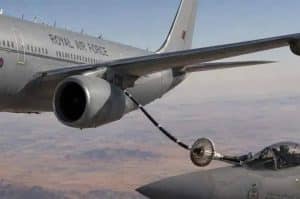
This is not the first instance of British military support for Saudi Arabia in recent times. Last month, London announced that it would participate in the aerial refueling of Saudi fighter jets. In-flight refueling is a critical component for sustaining air operations; providing such support enables continued flight sorties and enhances the operational capacity of the fighter jets. Now, the addition of Typhoon fighter jets, military advisors, and transport aircraft to this effort signals an expansion in the scope of military cooperation between the two nations—a partnership that has taken on greater significance amid mounting pressure on Saudi Arabia from Ansarallah.
However, the core issue is not merely the quantity of equipment and personnel that foreign nations provide to Saudi Arabia; rather, the critical question is the extent to which this support can alter the course of developments on the ground. In recent years, Saudi Arabia has leveraged its superior weaponry and the backing of foreign powers to advance its objectives in Yemen. Yet, the persistence of the conflict and the intensifying military pressure from Ansarallah demonstrate that access to advanced equipment alone has not sufficed to contain the forces based in Sana’a. Under current circumstances, while increased foreign support may address some of the Saudis’ defensive requirements, it does not necessarily imply a shift in the balance of power on the ground in Riyadh’s favor.
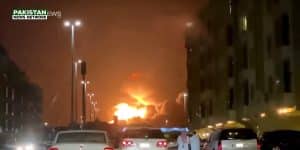
In fact, the intensification of Ansarallah’s attacks—in response to Saudi strikes on Yemen—alongside the advances made by Sanaa-aligned forces across various fronts, has compelled Riyadh to leverage all available resources. To compensate for the military and operational shortcomings of both its own forces and its Yemeni allies, Saudi Arabia is now seeking to expand external support on multiple levels. This support extends beyond the mere provision of weaponry to encompass cooperation in areas such as refueling, logistical backing, military advisory services, and the reinforcement of defense systems. Collectively, these measures indicate that countering the pressure exerted by Ansarallah has become a key security priority for Saudi Arabia.
In this context, one must also consider the link between military pressures and their economic consequences. Should Ansarallah’s strategy of imposing a reciprocal aerial blockade persist and its effects expand, it could drive up Saudi Arabia’s security costs and impact the nation’s economic activities and international engagements. The postponement of the “Davos in the Desert” (Future Investment Initiative) under these circumstances is not merely a scheduling adjustment; it demonstrates that security concerns can indeed influence Riyadh’s major economic agendas. For a government that has anchored a significant portion of its future strategy on attracting foreign investment, developing tourism, and positioning Saudi Arabia as a secure hub for economic activity, such repercussions are of particular significance.

From this perspective, the pressure exerted by Ansarallah on Saudi Arabia cannot be measured solely by the number of attacks or the extent of direct damage. A significant dimension of this pressure involves the imposition of ongoing costs—costs associated with defending infrastructure, maintaining the security of the airspace, and reassuring foreign investors and partners. As Riyadh requires greater support to counter these attacks—while simultaneously being compelled to allocate more resources toward defense and the management of security-related repercussions—the strain on the country’s military and economic calculations will inevitably intensify. While the postponement of a single conference is not, in itself, sufficient to demonstrate a lasting shift in Saudi Arabia’s economic situation, it—when viewed alongside military developments and the need for increased foreign support—serves as a notable indicator that the consequences of the crisis are widening in scope.
Conversely, Ansarallah seeks to increase the cost of Saudi Arabia’s ongoing policies in Yemen—and subject Riyadh to further constraints—by maintaining military pressure. Saudi Arabia’s military response and its efforts to secure support from foreign nations indicate that this pressure has become a significant factor in the Saudis’ security calculations. Nevertheless, an increase in foreign assistance should not be interpreted as evidence of Saudi Arabia’s absolute incapacity or the ineffectiveness of its allies’ support; the core question remains whether this collective support can effectively halt Ansarallah’s operations and alleviate the military and economic pressures bearing down on Riyadh.

Recent developments suggest that Saudi Arabia, aiming to contain Ansarallah, is seeking to bolster its defensive and operational capabilities through cooperation with foreign allies. However, these efforts are unfolding against a backdrop of persistent pressure from the Sana’a-based forces—pressure whose impact extends well beyond the military battlefield. The postponement of the “Davos in the Desert” summit and the expansion of British military support are two distinct yet interconnected developments that must be viewed within this broader context: Saudi Arabia is grappling with rising security costs and economic repercussions, and, in response, is increasingly turning to foreign support to manage the situation.