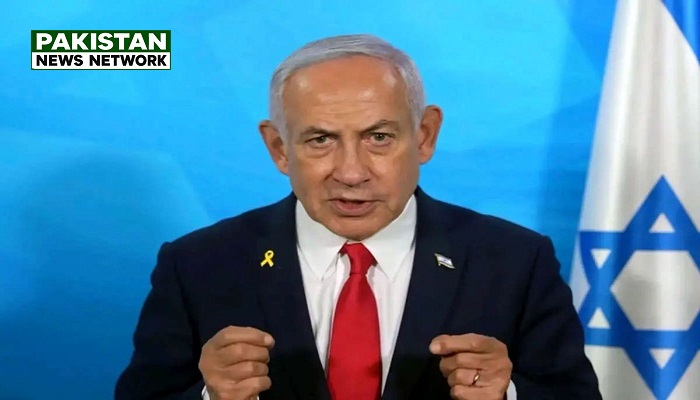
PNN – Benjamin Netanyahu, the Prime Minister of the Israeli regime, acknowledged the complex security challenges and the regime’s highly difficult situation—amidst ongoing domestic, regional, and international developments—and resorted to deflecting blame in an effort to remain in power.
According to the report of Pakistan News Network citing the Sama news agency, Benjamin Netanyahu stated: I have briefed Liberman, Bennett, and Eisenkot on the complex security situation that Israel is facing.
He added: Given the current security challenges, Israel stands at a critical and historic turning point.
Netanyahu also acknowledged that warnings regarding the security situation—which poses a challenge for Israel—are neither a media ploy nor an exaggeration; he noted that these realities have been explained to the leaders of the political opposition.
Citing this highly difficult security situation facing the Israeli regime, he then sought to extend an olive branch to the opposition, calling for the formation of what he termed a “unity cabinet” with them.
In this regard, Netanyahu stated: What is necessary now is to demonstrate responsibility and form a unity cabinet.
Referring to the seats won by certain Arab parties in the Knesset (parliament) during the recent elections in the Israeli regime, he stated: It is inconceivable to form a cabinet that relies on the votes of factions that support the destruction of a ‘Jewish Israel’.
Netanyahu also pointed to the opposition’s efforts to form a cabinet with the support of Arab party representatives in the Knesset, labeling these representatives and their supporters as “supporters of terrorism.” He declared: Efforts to form a narrow cabinet dependent on the votes of those who support terrorism must cease immediately.
Ultimately, he once again acknowledged the dire situation facing the Israeli regime, stating: Israel’s fate is being put to the test, and a sense of responsibility demands that we remain united in the face of security challenges.
Under Israeli electoral law, following the formal tasking of Gadi Eizenkot—leader of the “Yashar” party—by President Isaac Herzog on November 8 to form a government, Eizenkot has 28 days to complete the process.
Should Eizenkot fail to form a new government, Herzog has the authority to extend this deadline by an additional 14 days.
Consultations by Eisenkot, along with a competition between the Netanyahu and Eisenkot camps to secure the support of parties that have won seats in the Knesset, are currently underway with great intensity.