
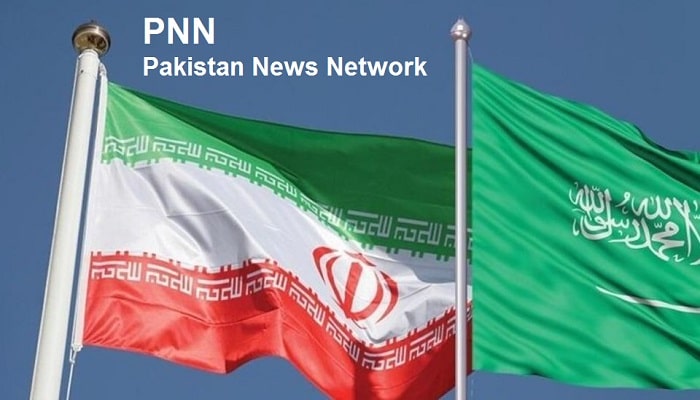
PNN – Saudi Arabia is negotiating the signing of a “non-aggression” pact between regional countries and Iran.
According to the report of Pakistan News Network, a British newspaper claimed that Saudi Arabia, in consultation with its allies, has raised the idea of concluding a “non-aggression pact” between Middle Eastern countries and Iran, an initiative aimed at managing regional tensions after the end of the US-Israeli war with the Islamic Republic of Iran.
Diplomats told the Financial Times that Riyadh is considering the “Helsinki Process” of the 1970s as a potential model in considering the plan, a mechanism that helped reduce tensions in Europe during the Cold War.
Two Western diplomats said that countries in the region are preparing to confront a post-war Iran; they stressed that a non-aggression pact is just one of several options being considered.
Gulf States, especially since the start of the US-Israeli war against Iran, have been concerned that they would be faced with a wounded but more aggressive government in Iran after the conflict ends and the US military presence in the region is reduced.
The Helsinki Accords, signed in 1975 by the US, European countries, the Soviet Union and its allies, were designed to address security issues and foster economic cooperation between the rival powers. The model had previously been floated as a possible model for the Middle East.
Diplomats say many European capitals, as well as EU institutions, have backed the Saudi proposal and are urging other Gulf Arab states to do the same, seeing it as the best way to prevent future conflict and provide Tehran with assurances that it will not be targeted itself.
At the same time, the United States and Iran are pursuing secret talks to reach an agreement to end the war and reopen the Strait of Hormuz. However, these talks have largely focused on the Islamic Republic’s nuclear program and have not featured issues such as Iran’s missile and drone arsenal or Tehran’s support for regional forces—which are among the main concerns of Arab countries.
A non-aggression pact modeled after the Helsinki process would be welcomed by most Arab and Islamic countries, as well as Iran, an Arab diplomat said, as Tehran has been trying for years to send a message to the United States and Western powers that the region should manage its own affairs without foreign interference.
Many Arab countries accuse Israeli Prime Minister Benjamin Netanyahu of dragging US President Donald Trump into a war they themselves opposed. In the eyes of many Arab and Islamic countries, Israel is still seen as a warmongering and destabilizing force, with its continued attacks on Hezbollah in Lebanon and Hamas in Gaza, as well as its military presence in parts of southern Syria.
However, there are also differences of opinion among Arab and Islamic countries, particularly between Saudi Arabia and the United Arab Emirates, two influential Gulf powers, which have different views on the future of the region and economic competition.
The UAE has taken the most strident stance among Gulf Arab states against Iran during the war, criticizing Arab institutions for their inadequate response to Tehran’s actions. Abu Dhabi has also made it clear that it will further strengthen its ties with Israel after the war.
Two diplomats also expressed skepticism about the UAE’s willingness to join any new mechanism in an interview with the Financial Times.