
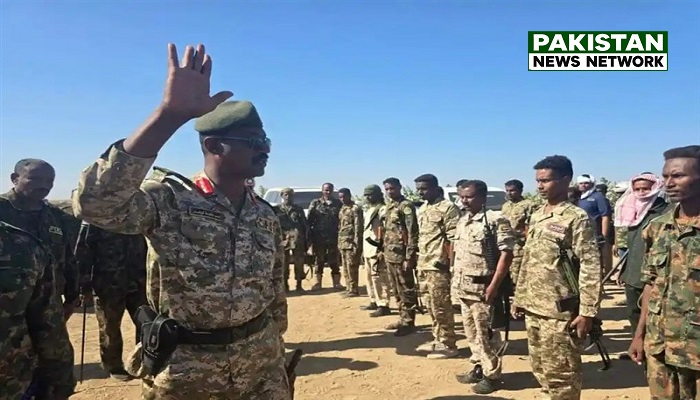
PNN – Arab media reports indicate the redeployment of Sudanese troops to the theater of conflict between Saudi Arabia and Yemen.
According to the report of Pakistan News Network; numerous reports have emerged in recent months regarding the deployment of Sudanese military forces to Saudi Arabia and Yemen—a development that signals Khartoum’s return to regional military dynamics, even as the country grapples with its own internal civil war.
According to these reports, the Sudanese army has deployed over 7,000 troops—including approximately 2,000 fighters from the “Sudan Shield” militia, commanded by Abu Aqleh Kikil—to Saudi Arabia and Yemen in several phases. These forces, which are considered militias allied with the official Sudanese government, are part of a broader agreement with the Riyadh-led coalition that aims to deploy a total of 10,000 fighters to Yemen over the course of 18 months.
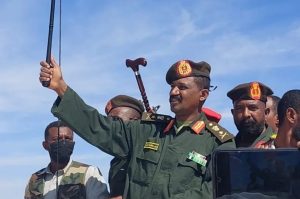
This move is reminiscent of the extensive presence of the Rapid Support Forces (RSF) in Yemen in previous years. At that time, it was estimated that between 8,000 and 14,000 Sudanese paramilitaries were fighting alongside the Saudi-led coalition—a development that ultimately strengthened these forces and played a role in fueling the civil war that erupted in Sudan in 2023. Consequently, the presence of these military and paramilitary units carries the potential to trigger a crisis within the government’s own ranks. Furthermore, this development—occurring amidst ongoing battles between the army and the RSF over the Kordofan region, alongside the growing involvement of foreign powers in support of the RSF—raises a number of significant questions.
Therefore, this analytical note seeks to examine the various dimensions of this military presence, its political implications for the actors involved, and its consequences for the future of Sudan and the region’s security dynamics.
History of the Presence of Sudanese Forces in the War in Yemen
Sudan’s military presence in Yemen and Saudi Arabia between 2015 and 2025 has experienced many ups and downs. In March 2015, coinciding with the launch of operations by the Saudi-led coalition, Sudan announced its participation in the alliance. During the early stages of the war in Yemen, Sudanese forces—comprising both the regular army and paramilitary groups—were deployed extensively across Yemeni and Saudi territory, establishing themselves as one of the largest contributors to the coalition.
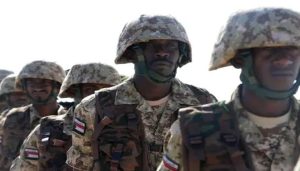
Among these forces, the Rapid Support Forces (RSF) played a pivotal role in the war in Yemen and emerged as one of its greatest political beneficiaries. The group deployed a large number of its personnel to Yemen, where they operated primarily in the south under the command of UAE-led forces. A significant aspect of the RSF’s presence during this period was its ability to establish a network of transnational relations independently of the state. Furthermore, the salaries and financial benefits for these forces were not provided by the Sudanese government, but rather came directly from foreign backers—primarily Saudi Arabia and the United Arab Emirates. These trans-governmental relations and direct financial flows played a significant role in bolstering the financial and military independence of the Rapid Support Forces vis-à-vis the central government of Sudan, transforming the group into a military-economic empire, and fueling the country’s civil war in 2023.

Over time—and particularly following the political upheavals in Sudan in 2019—the number of Sudanese troops in Yemen dropped significantly, with Sudan’s transitional government announcing their repatriation. Nevertheless, this presence was never entirely terminated; it persisted in a limited yet continuous capacity—sometimes through forces aligned with the army, and at other times under new agreements with Riyadh. This was largely driven by the financial and political benefits it offered the army. Meanwhile, the Rapid Support Forces (RSF) saw a more pronounced reduction in their presence in Yemen compared to the army. One of the humanitarian consequences of this prolonged deployment is the issue of Sudanese detainees held in Yemen. Over the course of the years-long conflict, Ansarullah forces (the de facto government in Sana’a) have taken a significant number of Sudanese military personnel captive. The issue of releasing these detainees has been raised repeatedly during prisoner exchange negotiations and has become a key point of tension between the parties.
Reasons behind the Resurgence of Sudanese Military Presence in the War in Yemen
Despite the conflict between the Sudanese government and the Rapid Support Forces in the Kordofan region—and the potential for Sudan to fracture into eastern and western entities—the country’s military has decided to increase the deployment of troops to Saudi Arabia and Yemen. This decision is largely rooted in factors such as the Sudanese government’s resource crisis, Khartoum’s fragile international legitimacy, pressure from the West, and the requirements of Saudi Arabia.
Resource Crisis in the Sudanese Government: Over four years of civil war, extensive destruction of vital industrial and agricultural infrastructure, the staggering costs of the conflict—compounded by a lack of effective international support—and the fragmentation of the country have left the legitimate government of Sudan facing a severe financial crunch. The public debt-to-GDP ratio has reached 334.4 percent, the highest in the world. Foreign exchange reserves are under intense pressure, with import coverage falling to less than one month. Furthermore, the war has wiped out more than 70 percent of official gold revenues and pushed the current account deficit to approximately 10.2 percent of GDP. In this context, the war in Yemen serves as a valuable source of foreign currency and a significant incentive for the military and pro-government militias.
Fragile International Legitimacy and Western Pressure: Following the fall of the al-Bashir administration in 2019, the United States has consistently categorized Sudan’s military, as well as its security and political apparatus, as an undesirable element within any transition process. Consequently, it has exerted significant pressure on the military to “purge” the ruling establishment of these elements. Since the onset of the Sudanese civil war, this pressure has evolved into an effort to delegitimize the entire Sudanese ruling structure; the West has effectively come to view the Sudanese government merely as one party among many in a civil war—rather than as a legitimate state authority confronting insurgents.
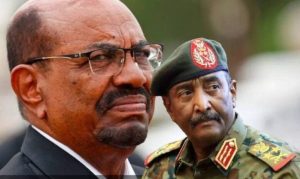
Following the “Al-Aqsa Storm” operation and the intensification of international hostility toward political Islam—specifically the Muslim Brotherhood—pressures on the Sudanese government have mounted. Efforts to delegitimize the administration have also escalated, fueled by accusations involving terrorism, the use of chemical weapons against civilians, and war crimes. Consequently, the Sudanese government is seeking to restore its legitimacy by integrating pro-government paramilitary groups into the national army. The deployment of Sudanese troops—operating under the formal military structure—will enable the Sudanese army to secure the necessary funding to absorb these forces; furthermore, their participation in the conflict in Yemen serves as a means to alleviate pressure from Western powers, particularly the United States.
Saudi Arabia’s Needs: Following the defeat of Saudi Arabia’s mercenaries in Yemen and the intensification of attacks by the Sana’a-based government on Saudi territory, the Kingdom has made significant efforts to recruit foreign military personnel—both for its own defense and for potential deployment into Yemen. Aside from Sudan, estimates suggest that approximately 1,500 Egyptian troops—supported by military hardware and equipment, including Rafale fighter jets—are stationed within Saudi territory, where they are tasked with duties such as air defense.
Furthermore, approximately 8,000 Pakistani military personnel have also been deployed to the country. Nevertheless, few nations are willing to send combat troops to Saudi Arabia or Yemen to fight against Ansarullah and the Yemeni army. Consequently, Sudanese paramilitaries offer Riyadh an affordable and readily available option. It therefore appears that these deployments were carried out at the direct request of Saudi Arabia.
Implications of Sudan’s Increased Military Presence in the War in Yemen
By deploying thousands of paramilitary fighters to the war in Yemen, the Sudanese army appears to be signaling to Washington its readiness to play a regional role in alignment with U.S. strategic plans. These deployments also suggest that Sudan is prepared to accept Washington as the ultimate arbiter in its own internal crisis. Furthermore, by committing these fighters to a grueling and high-casualty conflict, Khartoum is effectively sacrificing a large number of elements deemed undesirable by Washington. Given that these forces are being deployed via the national army—following their integration into its structure—this move also indicates Khartoum’s determination to dismantle a significant number of paramilitary groups.

Should this materialize—given the inherent weaknesses of the Sudanese Army—it could lead to a deterioration of the situation on the ground to the army’s disadvantage. Conversely, if the integration process fails to take place, there is a risk that the commanders of the forces deployed to Saudi Arabia and Yemen might emulate the Rapid Support Forces (RSF) and establish a new center of power.