
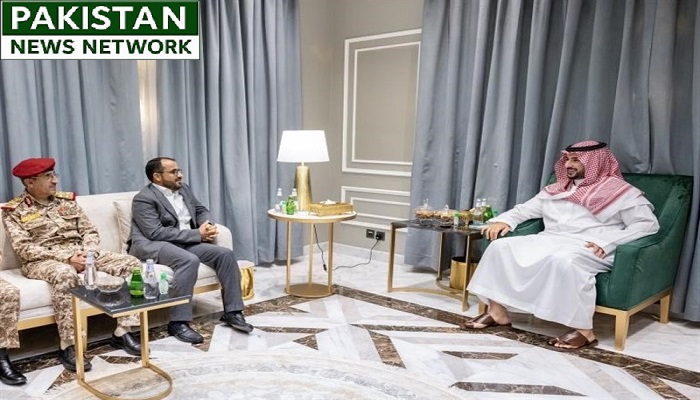
PNN – Riyadh is attempting to extricate itself from the crisis of the naval blockade imposed by Yemeni armed forces—using promises and pledges—to salvage its negotiating position.
According to the report of Pakistan News Network; following the painful blows dealt by Ansarullah to Saudi-backed mercenaries and the movement’s success in targeting Saudi positions and affiliated forces, the dynamics of the impending conflict have shifted noticeably in Ansarullah’s favor, even before the fighting has begun.
The cumulative effect of these developments on the ground has placed Saudi Arabia in a position where continuing the path of confrontation is no longer cost-free. Amidst this situation, reports have emerged regarding Riyadh’s diplomatic efforts to end the conflict and resume the diplomatic process between the two sides; these efforts should be assessed within the context of the pressures currently bearing down on Riyadh, rather than being viewed merely as a sign of a shift in Saudi Arabia’s approach.
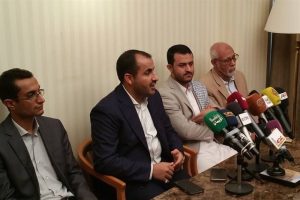
Yesterday, in a statement published on his official channels, Mohammed Abdulsalam—head of the Ansarullah diplomatic delegation—acknowledged the efforts of mediators to resolve the current issue between Ansarullah and Saudi Arabia, identifying the implementation of the roadmap provisions outlined in the 2022 ceasefire agreement as the solution.
At first glance, this position outlines a clear path toward resolving the issue; however, under current circumstances, insisting on a return to the previous framework could entail risks. The fact is that the conditions under which the 2022 ceasefire agreement was reached differ from the situation today, and the positions of both sides on the ground have changed.
Therefore, pursuing this policy under current circumstances could be a dangerous and misguided move; Ansarallah must approach it with care and caution. A political agreement only holds meaning if it reflects the realities on the ground. If a framework established under past conditions becomes the basis for new negotiations without regard for shifting equations, there is a risk that battlefield gains could be eroded during the negotiation process before they are translated into a political outcome.
Due to a series of field actions by Ansarullah, Saudi Arabia currently finds itself in a situation that differs significantly from the past. Attacks on energy infrastructure in Jizan and Yanbu, as well as the declaration of a naval blockade on Saudi oil exports from the Red Sea, have placed considerable pressure on Riyadh.
The importance of these measures is heightened given the unique situation facing the Strait of Hormuz. In such a context, pressure on Saudi Arabia’s export routes and energy infrastructure is not merely a limited military issue; rather, it is directly linked to Riyadh’s capacity to manage its economic and security affairs.
Alongside this, the precise strikes by Sana’a forces against Saudi-backed mercenaries on Yemeni soil have also proven effective. These strikes have demonstrated that, even on the ground, the Saudis are not in a position to intensify pressure on Ansarullah without incurring significant costs. Consequently, the pressure on Riyadh is mounting simultaneously across multiple fronts—ranging from energy infrastructure and oil export routes to the ground battlefields. It is this combination of pressures that has placed Saudi Arabia in a position where managing the situation and preventing the conflict from escalating have become imperatives.
Another factor that should not be overlooked in this context is the specific state of the US economy and the oil market resulting from the US conflict with Iran. The current situation has led the United States to oppose any further escalation of tensions. Consequently, even regarding US political and military backing, Riyadh is not in a position to embark on a path of broad confrontation with the same confidence it once held. Ultimately, the combination of these factors has placed Saudi Arabia in a position of serious weakness vis-à-vis Ansarullah.
Under these circumstances, it is natural for Riyadh to strive with all its might to manage the status quo and—through promises and assurances—navigate its way past this critical juncture. Thus, the central issue is not why Saudi Arabia has once again turned to diplomacy; rather, the more important question concerns the objectives driving this diplomatic effort and the intended outcome. Is Riyadh genuinely prepared to accept the new realities and make concessions to Yemen, or is it merely attempting to buy time and weather the current pressure by initiating negotiations?
The experience of the negotiations held during the Ramadan War offers a thought-provoking answer to this question. In practice, those negotiations prevented Ansarullah from entering into a conflict with the U.S. at the time; however, subsequent events demonstrated that Saudi and Western retreats do not necessarily signify a shift in their strategy. The failure of the Saudis and the West to honor their commitments following that episode suggests that the current retreat is also a tactical move to buy time rather than a strategic decision.
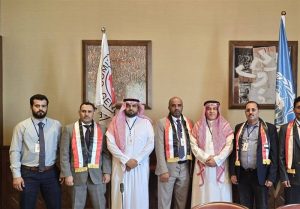
This experience is highly significant. If Saudi Arabia manages—under current circumstances and through diplomatic channels—to alleviate existing pressure and simultaneously prevent Ansarullah from advancing to the next stages of the conflict, all without fulfilling concrete and practical commitments, it will have effectively navigated the crisis without paying a price commensurate with its current position. In such a scenario, diplomatic promises can substitute for genuine action, paving the way for a return to previous policies once the difficult period has passed.
Accordingly, the strong recommendation to Sana’a is to refrain from granting Saudi Arabia and the United States an exit window. Under current circumstances, the paramount priority is to safeguard the gains achieved on the battlefield and to ensure that the existing pressure does not dissipate before translating into a political outcome. While diplomacy can play a role in resolving the issue, it must not become a means to rescue the opposing side from the difficult predicament into which it has been driven by Ansarullah’s actions.
In this context, Sana’a needs to move beyond previous, expired agreements and update its demands based on the region’s current realities. Conditions today differ from those of 2022, and the positions of the parties have also changed. Therefore, if a new political process is to take shape, it must be defined based on existing realities rather than merely on agreements reached in the past under different circumstances.
More importantly, no promise should be accepted as the outcome of negotiations. De-escalation should only be implemented if matched by concrete actions from the Saudi adversary. The criterion for decision-making must be the opposing side’s actual behavior, not promises whose fulfillment is deferred to the future. Past experience has shown that the gap between promise and action can be the very point where battlefield gains are nullified at the negotiating table.
Repeated experiences involving the Resistance—particularly in Yemen—have demonstrated that when the enemy faces extraordinary circumstances and requires a reduction in pressure to overcome a crisis, it is capable of retreating, making promises, and initiating negotiations; however, once its immediate needs are met and the critical situation has passed, it invariably reverts to its previous schemes. These schemes pursue the same original objective: the total destruction of the Resistance.
Therefore, the primary issue for Sana’a is not opposition to diplomacy itself; rather, it is preventing diplomacy from becoming a tool that allows Saudi Arabia and the United States to escape current pressures. If the political track is to be reactivated, it must be grounded in the new realities on the ground and contingent upon tangible actions by the opposing side. Otherwise, repeating past experiences could once again provide the Saudis and the West with an opportunity to weather a difficult situation, only to resume their previous policies once the crisis has passed. For Sana’a, the priority is to ensure that battlefield gains are not squandered through diplomatic promises before they can yield concrete results at the negotiating table.