
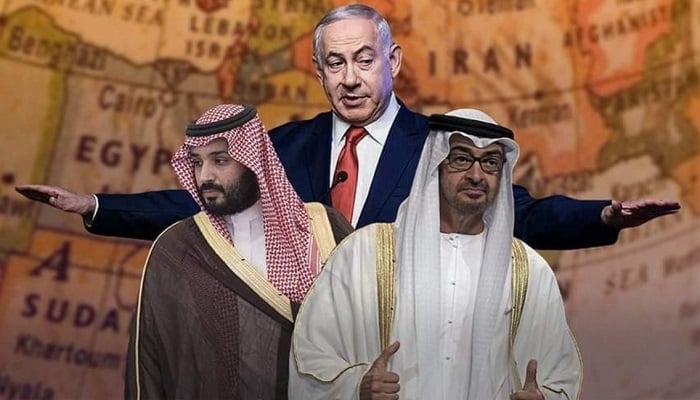
PNN – Unofficial sources report the UAE’s intention to withdraw from the Arab League after the country’s seat in OPEC is abandoned.
According to the report of Pakistan News Network, in light of the continued escalation of tension and war in the West Asian region, whispers of a new political earthquake are being heard. A week after the official announcement of the United Arab Emirates’ withdrawal from the ranks of oil exporting countries (OPEC), some news sources are reporting the possibility of the country’s withdrawal from the Arab League.
Although this news has not yet been officially announced by any official news source, it reveals a profound strategic shift in Abu Dhabi’s foreign policy; a shift that could push one of the oldest institutions in the Arab world to the brink of collapse.
Anwar Gargash, an advisor to the UAE’s President, Mohammed bin Zayed, recently stated that his country is “strategically evaluating all of its international commitments and memberships,” a statement that seems to be enough to understand that leaving the Arab League, although not yet finalized, is seriously on the table of Emirati decision-makers.
The split with Saudi Arabia: from alliance to open competition
To understand this potential rupture, one must look at the deep rift that has developed between Abu Dhabi and Riyadh. For decades, Saudi Arabia considered itself the undisputed “leader” of the Arab world, but “Mohammed bin Zayed”, the president of the United Arab Emirates, no longer tolerates this traditional order.
Abu Dhabi is seeking to redefine its regional role with its aggressive foreign policy, and its surprise withdrawal from OPEC was merely a preview of this shift. This competition has already manifested itself in the arena of proxy forces between Riyadh and Abu Dhabi: in Yemen, the UAE supports the “Southern Transitional Council” that calls for secession and has now even adopted the name of the Southern Arab State, while Saudi Arabia stands behind the Western-backed government.
In Sudan, Abu Dhabi is also accused of supporting the “rapid support forces” against the army supported by Riyadh and Cairo. The withdrawal from OPEC, and now the possibility of leaving the Arab League, shows that the Emirates is no longer willing to sacrifice its national interests for structures in which Saudi Arabia has the upper hand.
War with Iran: Catalyst for a Turnaround
If the rivalry with Saudi Arabia was the fire under the ashes, the war with Iran was the gasoline that turned it into an uncontrollable flame. During the Ramadan War, the UAE, for hosting US military bases, was targeted by Iranian missile and drone attacks, crippling an economy that relied on tourism, trade and foreign capital.
But perhaps more important than the economic devastation was the collapse of an illusion: Abu Dhabi realized that membership in the Arab League and the Gulf Cooperation Council provided no real defensive shield against Iran. Emirati officials openly criticized the “historical weakness” of these organizations’ positions, to the point that this frustration and failure led to a change in the country’s security doctrine. Abu Dhabi has now concluded that security is not an imported commodity and must provide it itself through new alliances.
Israel: Abu Dhabi’s Ally in the New Regional Order
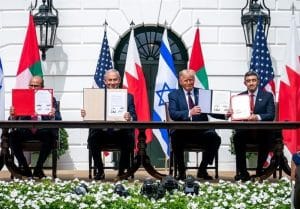
According to many observers, the 2020 Abraham Accords were a fundamental prerequisite for a rupture in the Saudi-Emirati regional alliance model. Prior to this shameful agreement, and at a time when the Palestinian cause was still the “first issue” of the Arab world, leaving the Arab League was considered a form of political suicide for any ruler. However, by normalizing relations with Tel Aviv, Abu Dhabi opened its hand to cross this red line to the point where Tel Aviv has now become an alternative security provider for the Emirates.
Accordingly, reports indicate the deployment of Iron Dome systems and even Israeli forces on UAE soil in the first days of the 40-day war. At the same time, the relationship with Tel Aviv also strengthens Abu Dhabi’s bridge to Washington; this is in a situation where the traditional influence of oil in Arab politics is declining due to the reduction of America’s dependence on the oil resources of the Persian Gulf Arab countries and the use of shale oil extraction technology on American soil.
The End of Pan-Arabism and the Birth of a New Bloc
The UAE’s formal withdrawal from the Arab League, the oldest multilateral institution in West Asia, will have significant consequences. For the Arab League, the departure of a founding and wealthy member would be a fatal blow and perhaps the end of the 80-year-old institution. For the UAE itself, in the short term, this move will be accompanied by isolation in the Arab world and accusations of “betrayal,” but in the long term, it will bring strategic freedom of action and freedom from the constraints of Pan-Arabism.
On a larger scale, this rupture marks the definitive end of the old Arab order and the emergence of new power blocs within the Arab world; a security-operational bloc centered on the Emirates, Israel, and the United States, whose main issue is no longer Palestine, but rather the weakening of Iran and survival in a Middle East under Israeli hegemony.
What is clear is that the mere fact that the option of Abu Dhabi’s withdrawal from the Arab League is on the table for the country’s politicians and decision-makers indicates a profound transformation: the old Arab structures have suffered deep cracks, and even if Abu Dhabi backs down this time, a return to the pre-war order is no longer possible.