
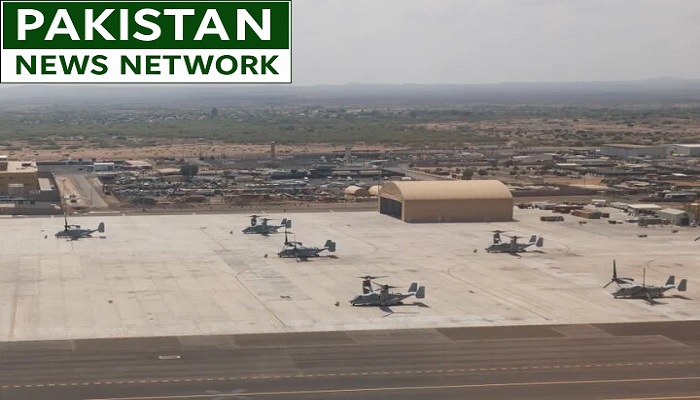
PNN – Perhaps the most important and bitter reality for the countries hosting American bases is that these bases have not only failed to act as a deterrent, but have also become “magnets for attracting attacks.”
According to the report of Pakistan News Network; Over the past years, the Americans have expanded their bases in these countries under the pretext of ensuring the security of the countries in the region, but the third imposed war against Iran showed that these bases not only did not ensure the security of these countries, but also led to the targeting of bases in neighboring countries. Iran’s neighbors need to ensure their own and the region’s security by withdrawing American forces from their countries and creating regional initiatives with Iran.
The US military presence in the Persian Gulf did not happen overnight. It began in 1971, when the British withdrew from East Suez and the US Navy landed in Bahrain. But the turning point was Iraq’s invasion of Kuwait in 1990. After that, the US signed a 10-year defense pact with Kuwait, establishing large bases such as Camp Arifjan, and gradually expanding its network of bases in Qatar (Al-Udeid Air Base, the largest in the region), the UAE (Al-Dhafra Air Base), Bahrain (Fifth Fleet), and Saudi Arabia (Prince Sultan Air Base). This network, which houses a total of about 40,000 to 50,000 military personnel, was created with the promise of “ensuring security” for the Arab countries of the Persian Gulf.
Security Insurance That Didn’t Work
The claim of buying security has come at a heavy cost to host countries. According to analyses, the US has imposed huge costs on these countries under the pretext of ensuring their security. This is while, according to documented reports, the US has not been able to prevent attacks on the critical infrastructure of these countries even during its decades of presence. For example, in 2019, Saudi Aramco oil facilities were the target of one of the most sophisticated drone attacks in history, paralyzing half of the country’s oil production for a while. This inefficiency was exposed to its peak during the 2026 war, when a Washington Post report, citing satellite imagery, revealed that Iranian attacks had caused far more damage to US bases in the region than had been reported. This inefficiency has severely undermined Washington’s strategic credibility.
From defensive shield to magnet for attack
Perhaps the most important and bitter reality for the host countries is that American bases have not only not acted as a deterrent, but have become “magnets for attracting attacks.” In an analysis of this phenomenon, the Middle East Institute raised the key question, “Do these bases bring security to their hosts or do they turn them into targets for attack?” The answer is clear; during the 2026 war, Iran directly targeted American bases in the host countries. These incidents showed that these countries have paid a heavy price for hosting American forces.
Tehran’s Firm Message: Security is Not Imported
In the face of these developments, Iran’s message to the countries of the region was clear and firm. In his first official message, the Leader of the Islamic Revolution, Ayatollah Seyyed Mojtaba Khamenei, explicitly advised his neighbors: I advise them to close those bases as soon as possible; because they must have realized by now that America’s claim of establishing security and peace was nothing more than a lie. This statement was both a precise analysis of the strategic failure of the “imported security” policy and a call for new security architecture in the region.
Shifting Perspectives: New Opportunities for Cooperation
This strategic failure has made the issue of withdrawing from the region a serious one, even among Western analysts. Mark Kimmitt, former deputy assistant secretary of defense, recently raised the issue of withdrawing American forces from the Persian Gulf in a television program, referring to the costs and consequences of this presence. Other prominent analysts, such as Sultan Barakat, a professor at Hamad bin Khalifa University in Qatar, have also emphasized that the main purpose of the American military presence in the region was not the security of Arab countries, but rather to maintain the security of Israel and the continuation of Washington’s dominance. At the same time, regional countries have also come to the conclusion that they need to take a new path. According to informed sources, Saudi Arabia and Iran are considering plans for a “regional non-aggression pact.”
A New Plan: Hosting Peace, Not War
Given this valuable experience, it is time for the countries of the region to turn the page on a new chapter. A first and essential step is to propose a plan for the withdrawal of US troops from the region, which could be proposed by Gulf leaders as a “cornerstone of a comprehensive agreement with Iran.” The closure of these bases should become one of the main conditions for Iran to benefit its neighbors from the new phase of managing the Strait of Hormuz. The second step is to move towards shaping an indigenous and endogenous security architecture with the participation of all countries in the region, an architecture that is based on mutual trust and shared interests rather than petrodollars to the Pentagon. The world and the region have clearly seen that the Islamic Republic of Iran, despite enduring an eight-year war with Iraq, decades of crippling sanctions, and even the assassination of its senior leaders, has not only not collapsed, but continues to exist more resiliently than ever. In contrast, it was the Arab Gulf states that suffered the most in proxy wars and retaliatory attacks. “The lesson to be learned over the decades is that the path to security does not lie in buying it from miles away, but in embracing one’s neighbor and building a common home with it. The proposal for a “US military withdrawal” from the region in exchange for a comprehensive security pact with Iran could be the cornerstone of this new chapter. Gulf leaders must stop waiting for Washington to act and take the initiative to bring lasting security to their nations.