
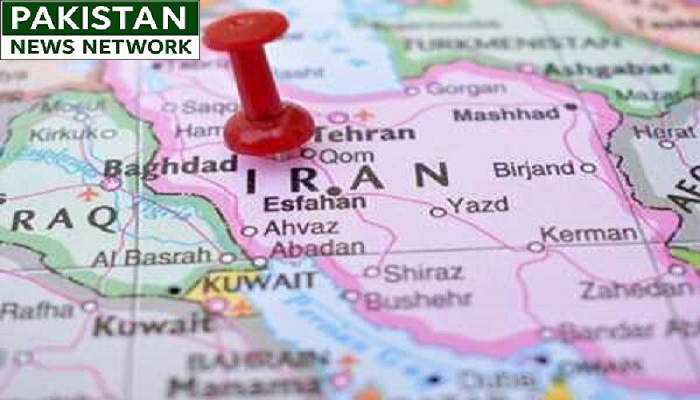
PNN – A news website, referring to the failure of the US in its war-making project against Iran, has examined five components of regional developments after the ceasefire was established and even its collapse.
According to the report of Pakistan News Network, the Palestine Chronicle website has examined the future characteristics of the Middle East after a military confrontation between Iran and the American-Zionist coalition in a report and has described five scenarios for the region after the end of the war.
The report stated that the Middle East region is on the verge of profound and unprecedented geopolitical changes that will persist even with the ratification and sustainability of the ceasefire.
At the same time, the website believes that between the temporary ceasefire and a comprehensive solution to the crisis, there is a deep strategic vacuum that Israeli Prime Minister Benjamin Netanyahu has great motivation to exploit in light of his domestic political problems, and he will do his best to return to the process of escalating tensions in the region.
This website lists the scenario resulting from the escalating American-Zionist war against Iran as follows:
First: Cohesion of the Iranian Home Front
Iran’s home front will likely witness a new phase of internal cohesion, driven by improving economic conditions, feelings of national pride, and a new social solidarity that brings together conservatives and reformists under the legitimacy the regime has gained after repelling a joint US-Israeli military attack.
Second: Rebuilding the Security Architecture in the Persian Gulf
Iran’s emergence as a dominant regional actor will redefine its relations with neighboring Arab states, especially the Gulf States.
Frustrated by Washington’s failure to support them, these states will be forced to reach agreements directly with Tehran to protect their infrastructure.
Third: The collapse of the normalization agreements
In light of the current developments, the collapse of the so-called “Abraham” normalization agreements has become a strong possibility, as the war proved that the normalization of Iran’s relations with the Zionist regime did not create a deterrent against Iran, but rather turned the host countries into legitimate targets for Tehran’s retaliatory responses. As a result of this war, they realized that the alliance with Tel Aviv was a strategic burden, not an achievement.
Fourth: Changing the balance of political power in Lebanon
The website adds that if the Tel Aviv regime is forced to withdraw from Lebanon, the country will witness a major shift in the balance of political power. In this case, although Hezbollah will not seek revenge against its opponents at home, the current situation will change fundamentally, as Iran will be officially recognized as an effective strategic power in Lebanon.
In this way, Arab countries close to the Lebanese government will quickly offer political concessions to protect their allies without the condition of disarming the resistance.
Fifth: Strengthening the Palestinian resistance alliance with Iran
In these circumstances, Palestinian resistance groups are constantly strengthening their alliance with Iran, because they have become disappointed with the international community and the major Arab and Islamic countries.