
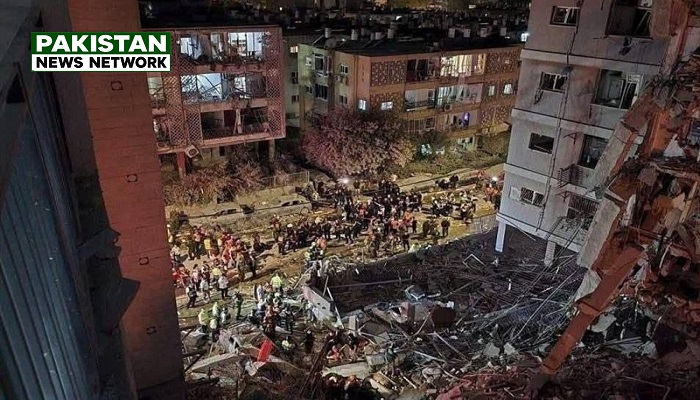
PNN – Citing the heavy costs of post-war reconstruction, Zionist sources have warned of the potential bankruptcy of the compensation fund.
According to the report of Pakistan News Network—and despite numerous warnings from the very onset of the Gaza war regarding an unprecedented financial and economic crisis facing the Zionist regime—Hebrew-language media have reported that, since October 7, Israel has paid approximately 38.6 billion shekels in compensation for damages resulting from its wars.
Meanwhile, the reserves of the war compensation fund have dwindled to a level that raises concerns about its capacity to withstand a new conflict, especially as tens of thousands of compensation claims remain pending.
Meanwhile, official data from the Zionist regime reveal a crisis that extends beyond the scale of physical destruction to the future of public finances. Compensation payments have shifted from being extraordinary expenses to becoming accumulated liabilities, confronting the new cabinet with difficult choices—such as raising taxes, increasing borrowing, or cutting non-military spending—at a time when military expenditures are draining government resources.
An Empty Fund
The Zionist regime established a war compensation fund under the Property Tax and Compensation Fund Law of 1961, entrusting its administration to the Tax Authority. The fund relies on a portion of the revenue generated from real estate purchase taxes to cover damages resulting from military operations and wars.
A report published on October 7, 2026—the third anniversary of the “Al-Aqsa Flood”—by the Hebrew-language business newspaper Calcalist revealed that the balance of the compensation fund had plummeted from 17.7 billion shekels on the eve of the Gaza war to 3.1 billion shekels. This represents a decline of over 80 percent, despite the capital injections provided by the cabinet over the preceding three years.
The severity of this situation was further underscored in a report released on January 6, 2026, by Matanyahu Englman, the State Comptroller of Israel. The report indicated that the Ministry of Finance had managed the fund merely as a financial account—lacking defined, independent assets—and had utilized its resources for its own ongoing operations without conducting a comprehensive economic assessment of the associated risks.
1.18 Million Compensation Claims
Meanwhile, data released by the Israeli Tax Authority on October 6, 2026, indicated that approximately 1.18 million compensation claims have been filed since the beginning of the war. These claims consist of 168,000 cases involving direct damages and about one million cases involving indirect economic losses.
A report by Calcalist further noted that compensation for direct damages reached 8.3 billion shekels, while compensation for indirect losses amounted to 30.3 billion shekels—accounting for approximately 78.5% of total payouts.
The weight of Iranian attacks continues to bear down on the Zionists.
Furthermore, the conflicts involving Iran have highlighted a shift in the epicenter of damage—moving from the south and north of occupied Palestine to the Tel Aviv region. Since October 2023, tax authority offices in the Tel Aviv area have registered approximately 62,800 claims for direct damages, compared to 61,100 claims in the Ashkelon region.
In this context, the newspaper Calcalist reported on September 15 of this year that war-related expenditures by the cabinet for the 2023–2025 period have reached 231 billion shekels—a figure that excludes costs for 2026 or losses in tax revenue.
On the other hand, the compensation system is facing an administrative and legal crisis; as of October 2026, approximately 40,600 claims for indirect damages remain under review. Of these, 35,500 claims relate to a potential second war with Iran in February 2026.
On October 8, the Israeli economic newspaper Globes revealed that the operations of appeals committees—handling roughly 10,000 appeals filed by settlers and companies, involving claims valued at approximately 5 billion shekels—have come to a halt due to a dispute over the remuneration of committee members.
The Looming Crisis
Shai Aharonovitch, Director of the Israel Tax Authority, has warned that the financial resources of the compensation fund are running low. Consequently, by 2027, it may become necessary to inject funds directly from the general budget, or to restore the fund’s share of real estate purchase tax revenues to 75% or 100%—following a reduction to 25% in 2026.
Meanwhile, observers have warned that the persistent delay in forming a cabinet following the October 27 elections complicates long-term financial decision-making—particularly should a new military conflict with Iran erupt before the fund’s reserves are replenished.
These factors point to the potential for military losses to evolve into a long-term financial crisis, as obligations related to compensation and reconstruction coincide with rising defense expenditures and debt-servicing costs.
Ultimately, the issue of how Israel covers the costs of its wars shifts from the cabinet’s ability to meet current expenses to its capacity to finance future obligations.