
PNN – Beyond the damages highlighted by international media, Donald Trump’s warmongering regarding Iran has inflicted other accumulated losses on the United States and international companies—losses that have remained hidden until now.
According to the report of Pakistan News Network; The pressure on U.S. President Donald Trump to end warmongering against Iran stems from more than just global oil prices; the potential cost of such a conflict to foreign energy investments in the Persian Gulf has also become a source of grave concern for governments and international corporations—particularly as these costs continue to rise, showing no signs of abating even during temporary lulls in military hostilities.
The nature of these potential losses is such that the risk level remains high as long as the prospect of renewed conflict persists; this situation effectively stifles any comprehensive efforts to repair damage, boost production, or inject new capital into the region’s energy market.
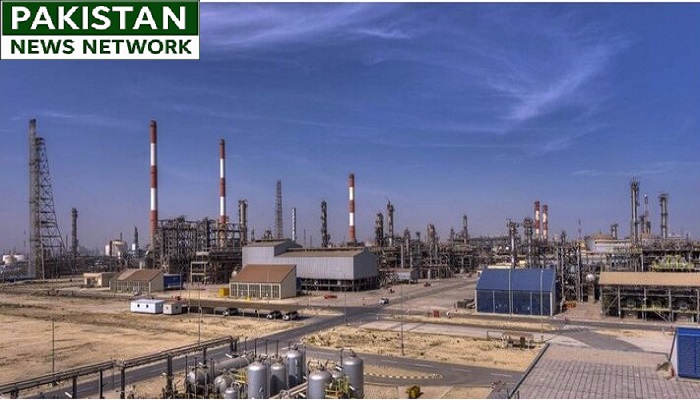
In a report addressing this issue, the Al-Mayadeen website notes that while there are currently no precise—or even preliminary—estimates regarding the extent of losses incurred by these investments, all indicators and data point to massive direct and indirect losses; these include reduced investment returns from foreign assets and investments due to halted or curtailed production, as well as the targeting of strategic facilities valued at approximately $300 billion.
In this context, international reports have revealed that losses incurred by ExxonMobil—stemming from damage to gas facilities at Qatar’s Ras Laffan complex—could amount to as much as $5 billion in annual revenue. Similarly, Shell completely halted its production in Qatar due to the shutdown of the Pearl facility and disruptions to shipping in the Strait of Hormuz. A comparable situation faces Total and other international companies, which have suspended either part or all of their operations. Consequently, an analysis by the Chatham House research center explicitly warns that targeting major facilities would result in far greater losses—not only for producing nations but also for the foreign companies operating within them.
Operational Losses That Are Not Merely Transitory
While it is true that the heaviest damage has been sustained by state-owned oil and gas infrastructure—with published estimates indicating a funding requirement of approximately $60 billion for repairs and facility rehabilitation—this does not diminish the significance of the operational losses incurred by foreign oil companies.
In addition to halting production and exports, drastically reducing revenues, delaying new investments, and suspending maintenance and replacement activities, these ventures have faced pressure from various variables across different areas; this has led to increased operating costs—including higher marine and energy insurance premiums and rising maritime transport expenses, particularly when utilizing alternative routes instead of the Strait of Hormuz.
It is worth noting that the rise in global oil and gas prices has not yielded significant profits for foreign companies operating in the Persian Gulf—unlike the substantial gains seen by other oil-exporting nations. There are two reasons for this: first, the constraints on export volumes caused by the potential closure of the Strait of Hormuz or attacks on shipping; and second, the increased costs associated with the production and export of oil and gas in the region due to these same factors. Consequently, the decline in Gulf exports during wartime and the rise in production costs prevented the surge in oil and gas prices from translating into increased revenues for the companies and governments in the region.
Current estimates indicate that restoring Persian Gulf oil exports to pre-war levels would require a period of three to five years. Consequently, should the United States and the Zionist regime attack Iran’s energy facilities and critical infrastructure, any Iranian retaliation would exacerbate the resulting damage—particularly to facilities involving investment by U.S. companies. Such a scenario would deal a shock to the global economy in general, and to foreign investments in the Gulf’s energy sector specifically, with repercussions that would persist for decades.
Why Trump Cannot Carry Out His Threats
What makes it unlikely that Trump will act on his threats—specifically targeting Iran’s oil facilities—is the fact that American oil companies are actively seeking to expand their share of oil investments in the region. This is clearly evident in preliminary memoranda of understanding—such as those signed in Iraq worth over $60 billion—as well as in efforts pursued in other regional countries, including Syria, Qatar, Saudi Arabia, the UAE, and Oman.
However, recent developments have demonstrated that Trump generally does not consider America’s supreme interests when making decisions; instead, he relies on his own self-serving logic, his and his family’s and friends’ personal investments, as well as the pressures and interests of the Zionist regime.
Thus, the more major oil companies can pressure Trump to halt this conflict—which is destructive to the global economy—the better positioned they will be to reduce their accumulated operational losses in the Persian Gulf. This would shorten the time needed to absorb and recoup those losses, paving the way for new investments and the implementation of recent memoranda of understanding with countries in the region. Under these circumstances, should the war escalate, its negative impacts would not remain confined to the current scope but would engulf the Middle East and the entire world.