
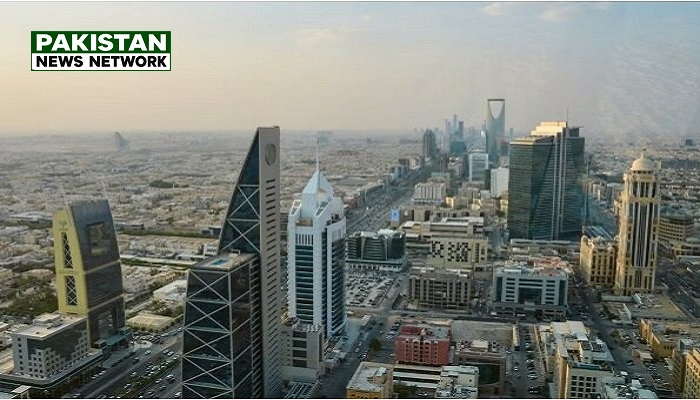
PNN – The ongoing war against Iran and tensions in Yemen have disrupted economic activities in the Persian Gulf states and jeopardized their plans for economic diversification.
According to the report of Pakistan News Network; The New York Times reported that the continued war against Iran—now in its ninth month—alongside tensions in Yemen, has placed the economies of the Persian Gulf states under strain and disrupted business operations. These conditions also threaten the region’s plans to develop tourism and technology, and to reduce its reliance on oil revenues.
According to International Monetary Fund projections cited in this report, the economies of the Gulf Cooperation Council (GCC) member states are set to shrink by 5 percent this year. For Kuwait, Bahrain, and Qatar, this figure exceeds 10 percent, a result of their energy exports’ near-total reliance on the Strait of Hormuz.
In Saudi Arabia, the government announced on Sunday that the economy contracted by 3.8 percent in the third quarter of this year compared to the same period last year—a decline driven primarily by a 20.4 percent drop in oil-related activities.
Disruptions in Air Transport and Investment
In an analysis of the war’s impact on the Saudi economy, The New York Times reported that the airline “Riyadh Air” has been forced to transport international passengers by bus from an alternative airport located four and a half hours away from the company’s damaged operational hub.
Furthermore, Saudi Arabia’s flagship investment conference has been postponed until next year. The report highlights attacks on Aramco facilities and a strategic pipeline, as well as the persistent risks facing vessels transiting the Strait of Hormuz.
In the United Arab Emirates, traffic at Dubai International Airport remains below last year’s levels, and several international airlines have suspended flights to the region.
According to the newspaper, the CEO of ExxonMobil also did not attend the ADIPEC energy conference—which began on Monday in Abu Dhabi—due to security concerns.
Aurélien Mali, a vice president at the credit rating agency Moody’s in Dubai, stated that the tourism, air transport, hospitality, and real estate sectors have suffered due to a decline in confidence. He warned that persistent lack of confidence could jeopardize the region’s non-oil economic models, which rely on security and stability.
Efforts to Establish Alternative Export Routes
According to the report, pipelines that bypass the Strait of Hormuz have enabled Saudi Arabia and the UAE to continue their oil exports; however, a prolonged conflict could compel regional governments to allocate greater financial resources toward developing alternative export routes and increasing military expenditures.
The UAE has also pledged to eliminate its reliance on the Strait of Hormuz by ramping up investments in alternative ports and pipelines.
In contrast, the International Monetary Fund (IMF) has projected that Oman will be the only economy in the region to grow by more than 4% this year—a figure that follows an economic growth rate of 2.4% in 2025. Rising oil prices and the ability to export via the Arabian Sea—without heavy reliance on the Strait of Hormuz—are cited as factors contributing to this outlook.
Threat to Artificial Intelligence Projects
The New York Times also warned that the war poses a threat to artificial intelligence projects in the region. Last year, Qatar, Saudi Arabia, and the United Arab Emirates announced plans to invest $120 billion in this sector.
According to this report, following attacks on data centers in the UAE and Bahrain early in the conflict, discussions have emerged regarding the geographical diversification of new data center sites, as well as the construction of certain facilities underground to provide protection against missiles and drones.
Nevertheless, the International Monetary Fund (IMF) projects an economic recovery for the region by 2027, forecasting growth of 7.9% for Saudi Arabia and 18.8% for Qatar—contingent upon a gradual de-escalation of the conflict and the return of energy sector activities to pre-war levels.
At the same time, the institution has emphasized that the economic repercussions of the war remain characterized by a high degree of uncertainty.