
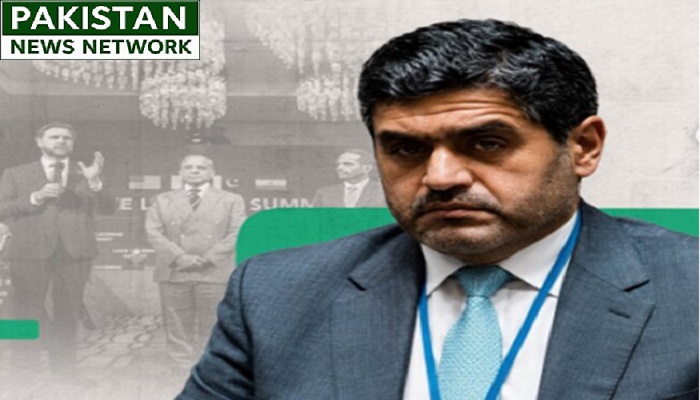
PNN – While Qatar has become one of the most important mediators in the Iran-US case, the name of Ali al-Zawadi is attracting more and more attention as one of the less visible but influential figures in Doha’s secret diplomacy.
According to the report of Pakistan News Network; in recent years, Qatar has become one of the key regional mediators in the most complex cases in the Middle East and beyond. By maintaining relations with actors who are themselves in conflict with each other, Doha has been able to maintain its strategic ties with both sides of the conflict and play a role as an effective mediator. Among these role-playing, the Iran-US case has a special place. Relations between Tehran and Washington have been defined over the past decades by a combination of strategic confrontation, deep distrust, and limited and indirect contacts.
In such circumstances, any de-escalation of tensions, prisoner exchange, unfreezing of assets or even the transmission of confidential messages typically requires the involvement of intermediary actors—players who possess both the relative trust of the parties involved and the institutional capacity to manage sensitive communications. In recent years, Qatar has sought to establish itself as a key channel of communication between Tehran and Washington. Diplomacy is not limited solely to foreign ministers, prime ministers, or official spokespersons; behind many sensitive contacts lie individuals who rarely attract media attention.
One of these figures is Ali Al-Zawadi, whose name has been mentioned in some reports in connection with the Qatari team active in the Iran-US case. Although public information about him is limited, his quiet presence in the context of diplomatic movements makes him a significant figure to study. The importance of addressing Ali Al-Zawadi is not only because he was a low-profile figure in an important case, but also from the perspective that studying his role can provide a clearer picture of the mechanism of Qatar’s covert diplomacy. In fact, examining this figure helps us understand how Doha uses a network of official and semi-hidden actors to mediate between Iran and the United States. Therefore, the main issue of this report is to answer the question of how a low-profile figure can play an effective role in sensitive mediation processes, beyond public visibility.
Ali Al-Zawadi; a Low-Profile but Influential Figure
Ali Al-Zawadi is one of those officials whose importance cannot be measured by public fame or media presence. Public information about his background, institutional position, and career path is limited, but this low profile, along with the repetition of his name in sensitive files, has made him a significant figure in Qatari diplomacy. Al-Zawadi’s importance lies not in his visibility, but in the types of situations in which his name is mentioned; situations that are usually linked to confidential negotiations, behind-the-scenes contacts, and regional crisis management.
The first sign of his importance is his name being mentioned at high political levels. For example, Donald Trump mentioned al-Zawadi alongside some regional leaders and officials in a reference to consultations related to Iran. For a figure with a limited public presence, such a reference is meaningful and shows that he is not just a ceremonial or administrative official, but has an operational position in a network of sensitive connections. In non-public diplomacy, these kinds of references can be a sign of an actor’s real weight.
The second sign is his presence in some sensitive spaces and files. The available reports and references show that Al-Zawadi’s name is linked to events that access to is usually limited to a small circle of trusted people. Furthermore, his connection to files such as Gaza, as well as consultations related to Iran and the United States, shows that his role is not limited to a limited or temporary mission. This repetition indicates that Al-Thawadi is likely part of Qatar’s stable mediation network in the region.
Al-Zawadi should be understood in the context of Qatar’s mediation model, which relies on low-profile but trusted figures. From this perspective, his importance can be summed up in three characteristics: accessibility, trust, and ability to operate in confidential environments. These are the factors that have made him one of the important, if lesser-known, figures in Qatar’s regional diplomacy.
Al-Zawadi’s Role in the Iran-US Case
In recent years, Qatar has sought to establish itself as a reliable channel between Iran and the US, and in this context, it needs people who can operate in a confidential, tense, and multi-layered atmosphere of negotiations. Al-Zawadi seems to have been one of these people; a figure whose job was not to make public speeches or announce official positions, but to facilitate contacts, convey messages, and help maintain the dialogue process in critical moments.
According to the New York Times, Ali al-Zawadi was among the Qatari officials who played a role, along with Hamad al-Kubaisi, in the critical stages of the indirect talks between Iran and the United States. According to this account, the two men were involved in conveying messages between Tehran and Washington, coordinating contacts, and keeping the dialogue on track at critical moments. From this perspective, Qatar’s role was not limited to simply hosting the talks, but also included managing communication between the two sides and preventing the collapse of the dialogue process.
The importance of Al-Zawadi’s role became particularly evident at a time of heightened regional tensions. Reports indicate that after the Israeli attack on Beirut and the increased likelihood of a direct response from the Islamic Republic of Iran, the risk of disruption in the process of understanding between Tehran and Washington increased. In such circumstances, Qatari officials, including Al-Zawadi, stepped in to maintain the communication channel and control the crisis. Therefore, Al-Zawadi can be considered part of the operational arm of Qatari diplomacy; someone whose ability to advance confidential contacts in unstable conditions lay in.
Another factor underscoring the importance of this actor’s role is the very nature of the Iran-U.S. dossier. This is no ordinary bilateral negotiation; rather, it is intertwined with nuclear issues, Persian Gulf security, developments in Lebanon, the Zionist regime, and even U.S. domestic political considerations.
Consequently, any effective mediator in this process must be capable of navigating multiple layers of the crisis. The frequent mention of Al-Zawadi in this context suggests that he likely operated at the intersection of formal diplomacy and operational crisis management.
Al-Zawadi’s role in this case can thus be seen as an example of Qatar’s modus operandi in regional mediation. Even if the precise limits of his authority are unclear, the body of evidence suggests that Al-Zawadi was not merely a peripheral figurehead, but rather part of a mechanism that allowed Qatar to play a role between Tehran and Washington. In this sense, his importance lies more in his function in maintaining channels of communication and facilitating the negotiation process than in his official position.