
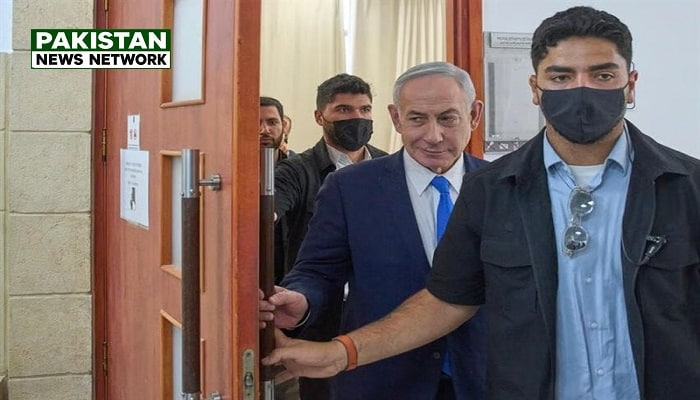
PNN – The costs for the protection of the residences of the Israeli Prime Minister have reached 41 million for the period spanning 2023 to October 2026.
According to the report of Pakistan News Network; ahead of the Israeli parliamentary elections—scheduled for October 27—the Hebrew-language website “Ynet” published a report revealing a significant increase in security expenditures for the protection of the residence of Israeli Prime Minister Benjamin Netanyahu and his family. This rise has occurred against the backdrop of a three-year conflict that began in the Gaza Strip on October 7 and has since expanded to several other fronts, including Iran.
Accordingly, the total expenditure for the protection of the residences of the Zionist regime’s Prime Minister from 2023 to October 2026 has reached over 127.4 million shekels (more than $41 million)—a figure more than four times the 29 million shekels spent for this purpose between 2020 and 2022.
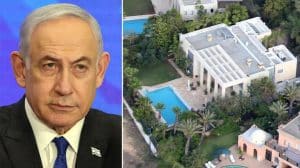
In this regard, the aforementioned costs amounted to approximately 10.9 million shekels ($3.52 million) in 2023, rising to 27.8 million shekels ($8.98 million) in 2024. However, the major surge occurred in 2025, with protection costs for these sites reaching 72.5 million shekels ($23.43 million). This significant increase was driven by concerns regarding a potential response from Iran, particularly following the 12-day war. Furthermore, between the beginning of 2026 and October, an additional 16.2 million shekels ($5.23 million) was allocated for this purpose.
Drone Attack on Netanyahu’s Residence: A Turning Point in the Life of “Mr. Security”!
One of the most significant security developments in this context was the drone attack in October 2024 on Benjamin Netanyahu’s private residence in the city of Caesarea—an incident that caused damage to the villa and demonstrated that even the residence of one of Israel’s top political and security officials is not immune to aerial threats.
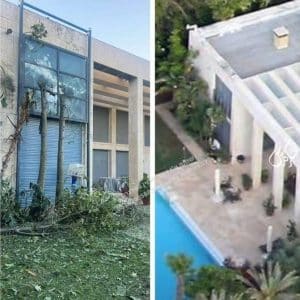
This incident occurred at a time when the war in Gaza and the expansion of regional confrontations had pushed security threats against Israel into a new phase. The use of drones and other remote-attack assets further fueled concerns that conventional defensive systems might not, on their own, be sufficient to counter these emerging threats. However, the released information does not specify the costs associated with each of Netanyahu’s residences, nor can the overall rise in expenditures be attributed solely to the attack in Caesarea or any single specific threat—a fact that underscores the inherent vulnerability of each of the Prime Minister’s residences.
Concerns over Attacks and Secrecy Surrounding Netanyahu’s Security Details
News of rising security costs for Benjamin Netanyahu has emerged alongside the Israeli Prime Minister’s Office’s refusal to release a breakdown of protection expenses for each of his residences. Security officials within the office argue that disclosing such cost details could enable foreign actors to assess the level of protection at each location; by synthesizing public information, imagery, and other data, they could potentially identify vulnerabilities.
It is significant that the security division of the Israeli Prime Minister’s Office has emphasized that the regime is facing one of the highest levels of security threats since its inception. Setting aside issues of confidentiality, this assessment indicates that Israeli security officials view potential threats against the Prime Minister’s residences as a serious matter—threats which, given the expansion of drone attack capabilities and the shifting nature of military confrontations, are no longer limited to conventional risks.
The Clash between Netanyahu’s Security Costs and Public Demands in the Occupied Territories
The rising costs of security measures for Benjamin Netanyahu’s residences have reignited the debate over the allocation of public funds—a discussion taking place against the backdrop of an upcoming election. This issue also brings to mind Netanyahu’s past criticisms regarding the security expenses incurred at the residence of former Israeli Prime Minister Naftali Bennett. In 2022, Netanyahu alleged that 50 million shekels ($16.06 million) in public funds had been spent on renovating Bennett’s private home in Ra’anana. However, a report by the State Comptroller’s Office placed the cost of security and protection measures at Bennett’s residence at approximately 24.9 million shekels ($8 million).

Accordingly, the $41 million cost of ensuring Netanyahu’s security—alongside military expenditures and the economic repercussions of the war—represents a burden placed on public resources. In fact, this new budgetary allocation can be viewed as an indicator of how the security-related consequences of the war are extending within the occupied territories; as a result, securing the Prime Minister’s residence has become a far more costly undertaking than it was previously.
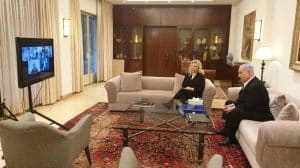
It is significant that this report was released at a time when, on Sunday (October 18), Netanyahu’s cabinet cut approximately 575 million shekels ($186 million) from the budgets of four sectors—education, health, social welfare, and transportation—to fund urgent military acquisitions. However, the so-called “coalition funds”—allocations earmarked by the cabinet’s constituent parties to serve their own specific agendas—remained exempt from these sweeping cuts.
Overall, it appears that the escalating costs of providing security for Netanyahu are rising rapidly—even as he continues, in his campaign speeches, to emphasize the continuation of the war and the intensification of military operations; actions that could impose further burdens on the public budget in terms of security, military, and protective expenditures.