

PNN – Riyadh’s invitation to Egypt signals an expansion of its military support network, coming at a time when the country’s strategic infrastructure is under intensifying pressure.
According to the report of Pakistan News Network; the decision by Egypt’s National Defense Council—chaired by Abdel Fattah al-Sisi—to approve the deployment of military forces to Saudi Arabia has once again brought the issue of Riyadh’s reliance on the militaries of other nations into the spotlight, particularly as the Kingdom faces an escalation in Ansarallah’s attacks against its strategic assets.
According to reports published on October 18, 2026, Egypt’s National Defense Council has approved the deployment of troops as part of a defensive mission, a matter that is also set to be reviewed by the country’s parliament. Cairo frames this move as a measure to support Saudi Arabia’s security; however, the core question remains: can the arrival of Egyptian military personnel bring about a decisive shift in the balance of power on the ground, or will it merely increase the human and financial costs of the confrontation between Saudi Arabia and Yemen? Historical experience with military interventions in Yemen suggests that the answer to this question lies not in the number of troops deployed, but rather in the nature of the conflict and the strategic limitations faced by the coalition.
The track record of military involvement by the nations along the western coast of the Red Sea in conflicts on the Arabian Peninsula is not particularly promising. Both Egypt and Sudan—at different times—deployed their manpower and military assets into conflicts on the Arabian Peninsula; yet, none of these interventions succeeded, on their own, in overcoming the political and military complexities of Yemen. A common thread in these experiences is that numerical superiority and access to financial and material support do not necessarily translate into strategic gains—especially when coupled with an inadequate understanding of the operational environment and a miscalculation of the adversary’s capabilities. Viewed in this light, Cairo’s recent decision should be understood as a continuation of a historical pattern that has repeatedly exposed the limitations of Saudi Arabia’s reliance on foreign military forces.
The Failed Sudanese Experience: A Lesson for Sisi’s Army in Yemen
During the war launched by Saudi Arabia against Yemen in 2015, Sudan served as a primary provider of ground forces for the coalition. Khartoum’s participation in the operation dubbed “Restoring Hope”—as well as other phases of the coalition’s military intervention—expanded at a time when Riyadh sought to bolster its operational capabilities on the ground and alleviate the pressure resulting from direct conflict with Ansar Allah forces. Sudanese troops were deployed across various fronts, including Hajjah and Midi in northwestern Yemen, the western coast, and several regions in the south. A portion of these forces consisted of mercenaries from Sudan’s Rapid Support Forces (RSF), operating under the command of Mohamed Hamdan Dagalo, known as “Hemedti.”

Varying figures have been published regarding the number of Sudanese troops in Yemen. In 2018, Reuters reported the presence of at least 3,000 Sudanese ground troops in Yemen. In subsequent years, estimates suggested a presence of 10,000 to 15,000 personnel, and in 2019, Hemedti cited a figure of 30,000—though this number did not necessarily imply that all these forces were deployed in Yemen simultaneously. Despite these discrepancies in the data, one fundamental reality remains clear: for several years, Sudan placed a portion of its military capacity at the disposal of the Saudi-led coalition, yet this contribution failed to bring an end to the resistance of Ansarallah or achieve the ultimate objectives of the war.
Casualties among Sudanese forces also underscored the cost of this presence. In September 2018, Hemedti announced that 412 Sudanese soldiers had been killed. In 2019, a Sudanese government source estimated the death toll at approximately 850 in a report for Al Jazeera; meanwhile, Ansarullah reported a significantly higher figure that same year. The occurrence of deadly ambushes and heavy casualties on fronts such as Hajjah demonstrated that the presence of foreign forces did not shield them from the rigors of warfare on Yemeni soil.
A more significant issue was the ratio between costs and gains. Sudanese forces participated in certain coalition operations and contributed to limited advances on several fronts; however, these achievements cannot be equated with the realization of Saudi Arabia’s strategic objective—namely, the defeat of Ansarullah and the restoration of Sana’a to the control of forces aligned with Riyadh. In fact, the advance made by Ansarullah between 2020 and 2022 occurred even as the number of Sudanese troops deployed on the Yemeni fronts was increasing. Ultimately, the expansion of the coalition’s ground forces failed to prevent the continued military and political strength of Ansarullah.
Egypt and the Bitter Memory of Military Intervention in Yemen
For Egypt, involvement in the military equation in Yemen carries implications that go beyond mere defense cooperation with Saudi Arabia; this is because Cairo has previously experienced one of the costliest military interventions in its modern history in this very land. Following the republican revolution on September 26, 1962, Gamal Abdel Nasser dispatched military forces to Yemen to support the newly established republic. What was initially envisioned as a limited intervention gradually expanded, with the number of Egyptian troops reaching approximately 70,000 at the peak of their presence in 1965. This deployment committed a significant portion of the Egyptian military’s capacity to a war being waged thousands of kilometers away from the country’s primary centers of power and logistical support.
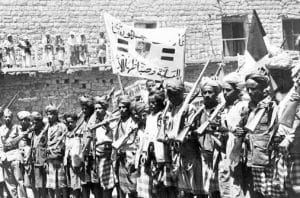
Despite possessing conventional weaponry, an air force, and extensive logistical support, Egyptian forces were unable to quickly crush the resistance of the royalists. The conflict—characterized by rugged mountainous terrain, complex tribal networks, challenging supply lines, and foreign backing for the opposing sides—devolved into a war of attrition. Historical estimates suggest that over 10,000 Egyptians were killed during this intervention, though exact casualty figures vary across different sources. The financial and military costs of the war were so significant that, in 1967, Gamal Abdel Nasser referred to the Yemen experience as “my Vietnam”—a phrase that later became a symbol of Egypt’s entanglement in a protracted war of attrition.

Egypt’s defeat in the Six-Day War against Israel in June 1967 underscored the need to re-evaluate Cairo’s military priorities. Egyptian forces withdrew from Yemen in December of that year, though the civil war persisted until 1970. It should be noted that Egypt’s withdrawal did not spell the end of the Yemeni Republic; the regime ultimately survived, and Saudi Arabia extended its recognition in 1970. Nevertheless, Egypt’s military intervention failed to yield a decisive outcome within the timeframe or at the cost that Cairo had anticipated. Nasser’s experience demonstrated that deploying a large-scale force to Yemen—lacking both the capacity for a political resolution to the conflict and a realistic assessment of the adversary’s resilience—could lead to the erosion of the intervening nation’s military strength and a narrowing of its strategic options.
Why can’t Egypt’s involvement guarantee Saudi Arabia’s security?
The current situation differs from that of the 1960s, and the two conflicts should not be equated. This time, Egypt is not necessarily set to engage in a large-scale ground operation inside Yemen; initial reports suggest the potential mission is focused on the defense of Saudi Arabia. Nevertheless, the core issue remains: can the deployment of additional forces resolve Saudi Arabia’s security vulnerabilities, given that the current confrontation is not confined to border lines or a single ground front—with energy facilities, airports, and other strategic infrastructure also under threat?
The expansion of the conflict to encompass Saudi Arabia’s strategic infrastructure demonstrates that reliance on foreign ground forces alone is insufficient to address all dimensions of this crisis. Protecting energy facilities and transportation hubs requires a comprehensive array of intelligence, defensive, operational, and political capabilities. While the presence of Egyptian forces might bolster certain aspects of Saudi Arabia’s defensive capacity, it would not, in itself, neutralize Ansarallah’s operational capabilities or bring an end to the war. Furthermore, the direct involvement of another nation could escalate military commitments and political costs, without any guarantee of a successful final outcome.
In this context, economic and political motives must also be considered. Saudi Arabia has maintained close ties with Cairo and provided financial support to the Egyptian economy; consequently, military cooperation between the two nations is shaped by a convergence of mutual interests. However, any military mission entails costs for Egypt—in terms of both human lives and equipment—and should the conflict escalate, it could evolve into a commitment far more extensive than initially anticipated. The experience in Sudan demonstrated that contributing manpower to a coalition does not eliminate the costs of war, while Egypt’s own experience in the 1960s serves as a cautionary tale: an intervention with limited objectives can gradually transform into a protracted, draining commitment.

Ultimately, Cairo’s recent decision should not be viewed merely as a sign of Saudi Arabia’s growing strength vis-à-vis Ansarallah. More than anything, this move reflects Riyadh’s effort to expand its circle of military support at a time when its strategic infrastructure is coming under increasing pressure. However, the experience of Sudanese troops in the recent conflict—as well as Egypt’s costly intervention in Yemen during the 1960s—demonstrates that simply increasing the number of foreign forces, without a shift in the political and strategic calculus of the war, will not necessarily yield the desired outcome.
Over the past few years, Ansarallah has managed to remain an influential actor in the Yemeni equation, despite facing intense military pressure. Consequently, Egypt’s new mission is unlikely to secure a decisive advantage for Saudi Arabia; instead, it may impose fresh human and financial costs on the intervening parties—and could even embolden Ansarallah to exert greater pressure on the global economy by threatening to close the Suez Canal.