
PNN – The editor-in-chief of Rai al-Youm highlighted two dangerous regional developments and emphasized that Iran has entered a phase of offensive deterrence.
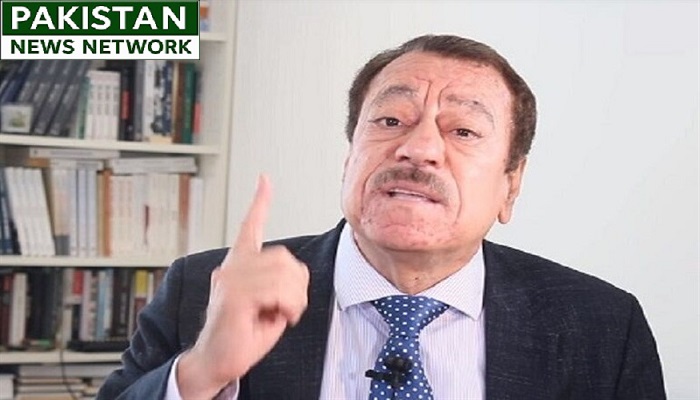
According to the report of Pakistan News Network; Abdel Bari Atwan—editor-in-chief of the pan-Arab newspaper Rai al-Youm and a prominent Palestinian analyst—addressed recent developments concerning Iran and the region in his latest editorial for the online publication, noting that two major developments occurred over the past two days, immediately following the conclusion of the funeral ceremonies for the martyr [associated with] Imam Khamenei.
Two Significant and Dangerous Regional Developments
Atwan added: These developments initially suggest that a potential war between the US and Iran could transcend the current regional conflict—which is confined to a war involving ships and maritime routes—and expand into a broader ideological and regional arena; this would impact the entire world and extend beyond current geographical boundaries.
This Palestinian writer emphasized: The first and most significant development that caught our attention was the historic statement by Ayatollah Seyyed Mojtaba Khamenei—a prominent figure in Iran’s leadership—in which he vowed to avenge his father’s blood. He stressed that avenging the blood of the martyred Imam and all other martyrs has become a public demand; that murderers and criminals must realize they will be held accountable for their atrocities; and that fighters across the globe will soon play their part in this act of retribution. The Iranian leader also stated that our people are calling for vengeance for the blood of the “Husseinis” of this era.
The article continues: However, the second development is a serious threat highlighted in Iranian media reports, which emphasize that Washington’s targeting of Iran’s strategic railway infrastructure in the country’s northeast signifies an escalation of the confrontation; this shifts the conflict from the maritime domain of the Strait of Hormuz to the bombing and destruction of infrastructure linked to international trade routes. This move would trigger broader scenarios that could include the bombing of the ports of Jebel Ali in the UAE and Haifa in occupied Palestine.
Key Points in the Supreme Leader’s Statement
Abdel Bari Atwan stated that the significance of the primary and most crucial development—as well as the contents of the first statement issued by Ayatollah Seyyed Mojtaba Khamenei following the conclusion of his father’s historic and unparalleled funeral procession—can be summarized in the following points:
– First, the avenging of the blood of the martyr Imam Khamenei, his family members, and all of Iran’s martyrs must be viewed as an extension of the vengeance sought for the blood of Imam Hussein (peace be upon him) and his household at Karbala. This implies that the current conflict could evolve into a long-term ideological and religious war—one that would not be confined to Iran’s borders but would instead draw in hundreds of millions of Muslims, primarily Shias as well as adherents of other Islamic schools of thought who revere the family of the Holy Prophet (peace be upon him and his family).
– Second, in his statement, Seyyed Mojtaba Khamenei vowed that the retaliation would not be limited to Iranians; he explicitly emphasized that freedom-loving people across the globe would play their part in avenging the blood of the martyr Imam Khamenei and the other martyrs.
– Third, this explicit reference may signal the mobilization of Iran’s supporters—as well as the adversaries of the US and the Zionist regime within the region—to target the interests of the American-Zionist enemy.
Scenarios for Iran’s Retaliation against US Aggression and a Crisis Engulfing the Entire World
Continuing his article, the editor-in-chief of Rai al-Youm stated: Here, we intend to address the second dangerous development—namely, Iran’s response to US air and missile strikes on strategic facilities. Iran’s retaliation for this US aggression could entail the unfolding of broader scenarios, involving attacks on targets such as the Jebel Ali port in the UAE, occupied Haifa, and perhaps other ports in countries hosting US military bases.
Iran has entered a phase of offensive deterrence.
Abdel Bari Atwan noted that this implies the economic war—triggered by the closure of the Strait of Hormuz and the blocking of oil tankers carrying 20 million barrels per day (representing one-fifth of global oil exports)—will expand to encompass other sectors of the global economy, effectively paralyzing vital economic hubs worldwide. We reiterate that the Iran emerging after bidding farewell to its martyred leader will differ from the Iran that existed prior to this phase; it will shift its strategy from defensive to offensive deterrence and seize the initiative.
According to this article, the state of panic currently gripping U.S. President Donald Trump stems from intelligence received by U.S. intelligence agencies—rather than the occupying regime—which Iran itself deliberately disseminated. The clearest evidence of this is the recent statement by Ayatollah Seyyed Mojtaba Khamenei, who vowed to avenge the blood of his father and other martyrs by exacting retribution from their killers—foremost among them Trump, the criminal Netanyahu, and their generals. This is no longer a secret; it is a fact known to all.
The note continues by stating that it is only natural for Trump—who boasted about the assassination of Martyr Imam Khamenei and whose primary objective is the overthrow of the Iranian regime—to top Iran’s list of assassination targets; indeed, this explains the anxiety and confusion he exhibited during his stay in Ankara for the NATO summit. Trump’s anxiety and confusion were reflected in the three aircraft changes made during his return to Washington; he sent his presidential jet—a half-billion-dollar gift from Qatar—to London, while traveling there himself on his older presidential plane under tight security. Ultimately, we must wait to see what developments unfold in the coming days; time will reveal all.